


























It’s a little after nine in the evening, and a woman in Ganja is rolling out dough on her kitchen table with her phone propped against a jar of flour. Around forty people are watching. One is in Istanbul, a couple are in Germany, and someone in Toronto keeps asking how thin the pastry should be. Her daughter, just out of shot, reads the questions out loud. Nobody planned it as a show.
Scenes like this are playing out all over the South Caucasus and Central Asia right now. Live streaming arrived here without a big launch or a viral moment everyone remembers. It simply crept into daily life, one phone at a time, until one day it was everywhere.
Forget the gamer stereotype
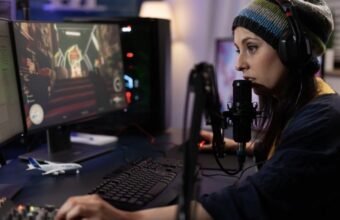
Say “live streaming” and most people picture a guy in a dark bedroom with a headset and a glowing keyboard. Sure, there are plenty of those in Almaty, Tbilisi and Yerevan. But they’re far from the whole story.
On an average evening you can drop in on a farmer in the Fergana Valley wandering between his apricot trees, a guide in Kazbegi pointing her camera at the snow on the ridge, or a music teacher in Kazakhstan giving a dombra lesson to students in four different countries. Half the time, the people on camera don’t think of themselves as creators at all. They just had something worth showing.
So why now?
There are a few reasons.
Better mobile internet is the obvious one. A decade ago, trying to broadcast from a village outside Shamakhi or Osh would have been an exercise in frustration. Coverage has improved a lot since then, and once the picture stops freezing every ten seconds, anyone with a smartphone can have a go.
Then there’s the diaspora, which might be the biggest driver of all. Huge numbers of people from the region live abroad, in Turkey, Germany, the Gulf, the US and beyond, and many of them are homesick in a way photos don’t fix. Watching your neighbour’s stream from the market back home, live, with the noise and the haggling, hits differently.
And yes, money plays a part. Virtual gifts, small donations, the odd sponsorship and live selling have turned streaming into a handy side income for some people. A few have managed to make it a full-time job, which in places where wages can be modest is no small thing.
The kids got there first
No surprise here: young people led the way. Students in Baku, Bishkek and Samarkand barely remember life without a smartphone, so going live feels about as dramatic to them as sending a voice message.
What’s fun to watch is how freely they mix languages. One stream can jump from Azerbaijani or Uzbek to English to Turkish and back again within a few minutes. A Georgian gamer might have Armenians, Azerbaijanis and Ukrainians all joking in his comments at once.
A lot of these young streamers also seem quietly determined to show their countries in a different light. Not the politics or the pipelines that usually make international news, but the food, the music, the jokes, the family dinners and the landscapes most outsiders have never seen.
Selling live, selling honestly
Some of the smartest uses of streaming come from small businesses that could never afford a proper advertising campaign. A family textile workshop in Uzbekistan can hold fabric right up to the camera and let viewers ask about the weave. A beekeeper in the Armenian highlands can walk people past his hives before they order a jar.
It works because it feels real. You see an actual person with an actual product, fumbling a little, answering questions on the spot. That builds more trust than any glossy product photo ever could.
Not everyone wants to perform
Still, streaming isn’t for everyone. Plenty of people love the live, unpolished feel of it but cringe at the idea of talking to a crowd of strangers. They want a conversation, not an audience.
That’s one reason one-on-one video chat has grown right alongside streaming. People who’d rather talk to a single person than broadcast to a hundred join Boolalive, where you’re matched with one other person at a time, straight from the browser, in any of 18 languages. A student in Tbilisi practising her English or someone in Bishkek curious about life elsewhere often gets more out of ten minutes with one real person than an hour of scrolling through a busy chat.
It’s not all smooth
None of this has been frictionless. Connection quality still swings wildly between cities and rural areas, and mobile data costs add up fast when you’re live for three hours a night. Online safety, moderation and how fairly platforms pay creators are all live debates. And burnout is real. Plenty of streamers admit that keeping an audience means going live almost every day, whether they feel like it or not.
There’s uncertainty about regulation too. Rules around online platforms can shift quickly in parts of the region, and anyone who has built everything on one app knows how fragile that can feel.
A region finding its own voice
Even so, it’s hard to see this slowing down. For many people across the South Caucasus and Central Asia, live streaming has become a way to share their lives on their own terms, messy kitchens and all. It’s informal, frequently chaotic and full of personality, which is probably exactly why people keep tuning in.
Nobody really announced it. But look closely and you’ll see the region is showing up on screens more and more, one unscripted broadcast at a time.