












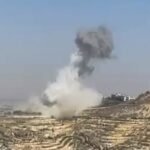




Speaking at a meeting on Sudan hosted by the Foundation for Political, Economic and Social Research (SETA) in Ankara on Tuesday, Ambassador Nadir Yousif Eltayeb criticized the international community’s response to the conflict and said Sudanese government forces had made extensive efforts to break the siege, Anadolu Agency reported.
Eltayeb said El Fasher had been under a complete siege for around 30 months, with approximately 1 million people relying on aid delivered by the armed forces by air.
***
“People could not access enough food, to the point that they had to eat tree bark,” he said, adding that government forces had made more than 200 attempts to break the siege.
The ambassador accused the international community of taking what he described as a biased approach to the conflict, arguing that it had hindered efforts to resolve the crisis.
### Sudan envoy alleges genocide in El Fasher
Eltayeb alleged that foreign countries had supported rebel forces in Sudan, saying their advances would not have been possible without external assistance. He also claimed that armed groups in El Fasher had deliberately targeted specific tribes.
“What happened in El Fasher is genocide,” he said.
The ambassador said the number of people killed in El Fasher and the wider Darfur region remained unknown. He further alleged that pressure from the United Arab Emirates had prevented Sudan from submitting reports on the killings to the UN Security Council, and accused Abu Dhabi of supporting armed groups.
The UAE has repeatedly denied the allegations.
Eltayeb thanked Türkiye for its support and said Sudan was seeking justice.
### Humanitarian conditions deteriorate after RSF takeover
El Fasher, the capital of North Darfur state in western Sudan, had been under siege since May 2024 before the paramilitary Rapid Support Forces (RSF) seized control on Oct. 26, 2025, after around 18 months of fighting. It had been the last major city in Darfur held by the Sudanese army.
During the siege, access to food and medical supplies became increasingly difficult, leaving civilians without essential goods and services.
According to the UN Human Rights Office, more than 6,000 people were killed during the first three days of attacks after the RSF took control of the city. Subsequent reports described killings, forced displacement, torture and sexual violence against civilians.
The UN has warned that violence against civilians, including women and children, has continued, citing reports of executions and sexual violence.
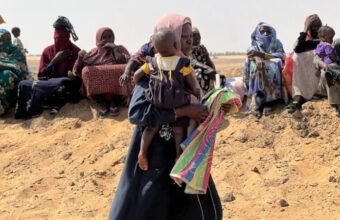
Around 138,200 people were displaced from El Fasher and nearby settlements between Oct. 26, 2025, and March 1, 2026, according to the figures cited in the report. The city, which had more than 1 million residents before the war, is now estimated to have fewer than 70,000.
Despite the mass displacement, security concerns and restricted access to food and health services continue to affect those remaining in the city, deepening the humanitarian crisis across Darfur.