



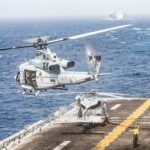





















The conflict entered a new phase following joint US–Israeli air strikes targeting Iranian facilities, marking a shift to open hostilities. Donald Trump has indicated that the campaign could last between four and five weeks, signalling a potentially prolonged and costly engagement, News.az reports.
***
Billions already spent in the region
According to estimates cited by analysts, US spending linked to Middle East operations has already reached significant levels. Since October 2023, Washington has allocated approximately $21.7bn in military aid to Israel, alongside an additional $9.65bn to $12.07bn for broader regional operations, including activities in Yemen and Iran.
This brings total US expenditures tied to the conflict to between $31.35bn and $33.77bn, with costs continuing to rise as operations expand.
Operation Epic Fury: large-scale military campaign
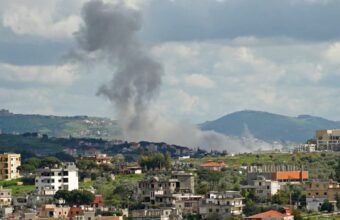
Operation Epic Fury involves a wide array of military assets across air, sea and land domains. US Central Command reports that more than 1,250 targets have been struck inside Iran, alongside the destruction of 11 Iranian vessels.
The campaign includes coordinated strikes on missile infrastructure, military facilities and nuclear-related sites. The operation also reportedly targeted senior figures within Iran’s defence establishment.
Iranian authorities have reported hundreds of casualties across multiple locations following the initial wave of strikes.
Advanced weapons systems deployed
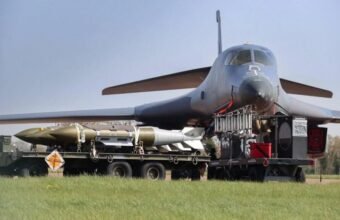
The operation relies heavily on advanced US military capabilities, including stealth bombers, fighter jets, drones and missile defence systems.
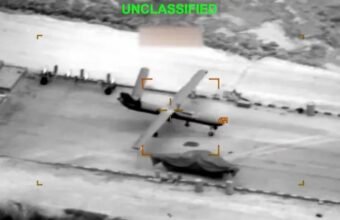
Among the key assets used are B-2 stealth bombers, F-35 and F-22 fighter jets, as well as Tomahawk cruise missiles launched from naval platforms. Unmanned systems such as MQ-9 Reaper drones and newly deployed low-cost attack drones have also played a role.
Missile defence systems, including Patriot and THAAD interceptors, are being used to counter Iranian ballistic missile and drone attacks, while two carrier strike groups provide naval support.
Early cost estimates highlight rapid escalation
While the Pentagon has not released official figures, early estimates suggest that the first 24 hours of the operation alone may have cost around $779m. Pre-deployment expenses, including repositioning aircraft and naval assets, are estimated at an additional $630m.
Operating costs continue to accumulate daily. For example, maintaining a single carrier strike group is estimated to cost approximately $6.5m per day, indicating how quickly expenditures could escalate if the campaign is prolonged.
Additional costs are also being incurred through equipment losses, including several US fighter jets reportedly lost in an incident over Kuwait.
Inventory concerns outweigh financial pressure
Despite the high financial burden, experts argue that the United States is capable of sustaining the campaign from a budgetary standpoint, given its defence spending, which exceeds $1 trillion annually.
However, analysts warn that the more pressing challenge may be the depletion of critical weapons stockpiles, particularly interceptor missiles used in air defence systems.
High usage rates of systems such as Patriot and SM-6 missiles could strain US inventories, especially as these assets are also required in other strategic theatres, including Europe and the Indo-Pacific.
Manufacturing replacement systems presents an additional constraint. Advanced interceptor missiles are complex to produce, and output cannot be rapidly scaled to match sustained high-intensity usage.
Uncertain outlook as conflict continues
With operations ongoing and no clear timeline for de-escalation, the total cost of the US campaign against Iran remains uncertain. Analysts stress that while financial resources may support continued engagement in the short term, logistical limitations and inventory pressures could shape the trajectory of the conflict in the weeks ahead.