

























The modern history of Azerbaijan is not merely a chronology of political events and military confrontations; it is also a period in which historical justice has been restored, albeit belatedly. Ending decades of occupation and ensuring the country’s territorial integrity and full sovereignty became the result of the Azerbaijani people’s national will, patience, and determination. This process did not conclude solely with military victory — it marked the beginning of a path toward restoring legal and moral justice.
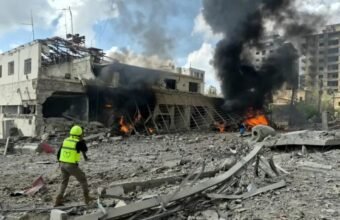
At the end of the 20th century, Azerbaijan faced profound historical trials. From 1988 onward, Armenia’s territorial claims against Azerbaijan, systematic deportations, and policies of ethnic cleansing resulted in severe humanitarian tragedies. The February 1992 genocide in Khojaly was the bloodiest manifestation of this campaign. On that night, hundreds of civilians, including women, children, and the elderly, were brutally killed. This event entered history as a grave crime against not only the Azerbaijani people but humanity as a whole.
***
Source: aircenter.az
At the time, the international political configuration and Azerbaijan’s internal political weakness prevented these crimes from receiving immediate legal assessment. Occupation persisted for years, and over one million Azerbaijanis were forced to live as refugees or internally displaced persons. Yet one truth remained in Azerbaijani society: justice must be restored, even if delayed.
Source: AzerTag
At this decisive stage, political will proved decisive at this stage. Even before the war, President Ilham Aliyev had openly stated that crimes committed against the Azerbaijani people, including the Khojaly genocide, would not be forgotten. Speaking at the nationwide march marking the 20th anniversary of the Khojaly genocide in 2012, he said:
“Those who committed the Khojaly genocide will sooner or later answer before the court of justice, and the blood of our martyrs will not remain unavenged.”
These words were not merely political rhetoric; they laid the ideological foundation for a future strategic roadmap.
Source: BBC
History offers similar examples. After World War II, Nazi criminals were pursued and brought to justice decades later. The open trial held in Jerusalem in 1961 demonstrated that grave crimes are not erased by time. At the same time, the evasion of responsibility by some criminals exposed gaps in the international justice system, showing that justice depends on strong political will.
Learning from these lessons, Azerbaijan pursued its own path. The 44-day Patriotic War in 2020 led to the liberation of occupied territories, marking a turning point both militarily and historically. President Aliyev’s raising of the state flag in Shusha, Khojaly, and Khankendi carried deep symbolic meaning. In a January 2024 interview, he reflected:
“When I raised the flag in Khojaly, I thought we can now say with full confidence that the blood of the Khojaly victims did not remain unavenged. Raising the flag in Khankendi was the complete restoration of justice.”
Source: AzerTag
However, Azerbaijan’s efforts did not end with military victory. History shows that sustainable conflict resolution is only possible when perpetrators are held legally accountable; otherwise, impunity fosters new violence. In this regard, the open and transparent trials at the Baku Military Court have been particularly significant.
During these proceedings, archival documents, material evidence, and confessions of the accused revealed the true nature of the occupation. Defendant Lyova Mnatsakanyan admitted that armed formations of the so-called regime were not independent but functioned as part of the Armenian army, with high-ranking appointments approved in Yerevan and weapons, ammunition, and financial support provided directly by the Armenian Ministry of Defence.
Similarly, Bako Sahakyan confirmed his direct participation in the occupation of Shusha. By detailing operational directions and armed units, he legally corroborated facts that had long been denied. These confessions demonstrated that the occupation policy was planned, centralized, and implemented at the state level.
Source: AzerTag
The experience of the tribunal established after the wars in the former Yugoslavia demonstrated that holding criminals accountable plays a crucial role in the post-conflict phase. At the same time, it showed that when not all perpetrators are brought to justice, the concept of accountability remains incomplete. To avoid repeating these shortcomings, Azerbaijan is continuing its legal process in a consistent and principled manner.
The primary purpose of this approach is not revenge. Its central objective is to establish the historical truth, openly identify the crimes committed, and shape a just collective memory for future generations. Legal recognition of these crimes also reflects respect for the fundamental principles of international law.
In conclusion, Azerbaijan today is not only restoring historical justice for itself but also advancing a more transparent, principled, and long-term model of conflict resolution. The essence of this approach is clear: crimes must not go unpunished, truth must not be obscured, and justice must be upheld regardless of time or political circumstances. The path pursued under the leadership of Ilham Aliyev demonstrates that when there is strong state will, justice ultimately prevails, even if belatedly.