



















The UN Security Council resolution sought to extend the mandate of the Panel of Experts supporting the 1737 Iran Sanctions Committee. The panel’s current mandate is due to expire on Sept. 26, according to the UN Security Council, Anadolu Agency reported.
Eleven of the council’s 15 members voted in favor of the resolution, while two abstained. Russia and China, both permanent members with veto power, voted against it.
***
The vote followed a dispute over the legal status of the sanctions regime and the council’s authority to consider the matter.
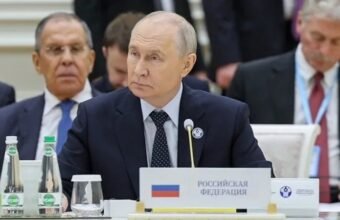
Russia argued that UN Security Council Resolution 2231, which endorsed the 2015 Iran nuclear agreement, expired on Oct. 18, 2025, and therefore there was no legal or procedural basis for the council to consider the issue.
China supported Moscow’s position and urged member states to avoid what it described as political confrontation and pressure, arguing that respecting the expiration of mandates is important for maintaining the credibility of the multilateral system.
Western members of the council take a different position. France has argued that the UN sanctions regime was restored through the “snapback” mechanism in September 2025, following action by European powers. Security Council reporting says most council members consider the 1737 sanctions committee and its expert panel to have been restored after the snapback took effect.
The panel was originally established under Resolution 1929 in 2010 to assist the 1737 Committee and investigate information concerning implementation of sanctions measures, including possible violations. Its work covers areas including arms control, nuclear issues, ballistic missiles, export controls, finance and maritime transport.
The United States criticized Russia and China for blocking the extension, arguing that the panel provides evidence-based reporting on sanctions violations and illicit military cooperation.
Washington said the veto would remove an important monitoring mechanism and create what it described as an enforcement gap that could benefit sanctions-evasion networks.
The US delegation said it would instead focus on other steps, including appointing a chair for the sanctions committee and updating sanctions designations.
The UK also criticized the veto, accusing Moscow and Beijing of shielding Tehran and raising concerns about Iran’s nuclear activities and restrictions on international inspections.
The dispute comes amid heightened international scrutiny of Iran’s nuclear program. Earlier this month, the International Atomic Energy Agency’s board reported Iran to the Security Council over its failure to cooperate with an investigation into uranium traces found at undeclared sites.
The Security Council’s disagreement over the expert panel reflects a broader dispute over the restoration of UN sanctions on Iran and the legal consequences of the snapback mechanism. Security Council analysts have warned that the absence of an operational expert panel would formalize a gap in independent reporting on sanctions implementation.