




















The long-anticipated summit between the United States and Iran has finally begun, raising faint hopes for a peaceful resolution to a protracted and increasingly dangerous conflict. Yet from the very outset, it became очевидent that the declared positions of both sides leave virtually no room for compromise.
Tehran continues to insist on its right to uranium enrichment and the development of its missile program. Beyond that, the leadership of the Islamic Republic is demanding nothing less than a fundamental geopolitical shift: the withdrawal of the United States from the region and a de facto recognition of Iran’s dominance in the Persian Gulf—complete with full control over the Strait of Hormuz. Unsurprisingly, such demands are entirely unacceptable to Washington, just as Iran rejects the extensive list of U.S. conditions.
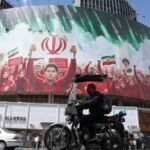
At the same time, the internal situation within Iran raises an equally important question: who is actually in charge? Supreme Leader Ali Khamenei, despite formally holding ultimate authority, has remained conspicuously silent throughout this critical period. There is growing speculation that real power may lie with a group of senior Islamic Revolutionary Guard Corps (IRGC) generals, many of whom are fundamentally opposed to any negotiations with the United States. This has reportedly led to a deepening split within Iran’s ruling elite, as factions struggle to define a viable path forward.
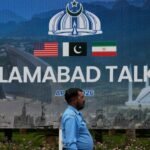
Among the more pragmatic figures in Iran’s leadership is believed to be IRGC General and current Parliament Speaker Mohammad Bagher Ghalibaf, who, according to statements by President Donald Trump, was involved in preliminary contacts. Against this backdrop, the third round of U.S.-Iran talks commenced in Islamabad on April 11, 2026.
The choice of Pakistan as a mediator is far from случайный. Islamabad maintains a defense agreement with Saudi Arabia—a country deeply concerned about Iran’s growing regional influence. Additionally, Pakistan hosts a significant Baloch population, many of whom also reside in Iran, while maintaining close ties with both China and the United States. These factors position Pakistan as a uniquely balanced intermediary.
***
The talks themselves took place under the fragile cover of a two-week ceasefire. The Iranian delegation included Ghalibaf and Foreign Minister Abbas Araghchi, while the U.S. side was represented by Vice President J.D. Vance, Special Envoy Steve Witkoff, and Jared Kushner. Despite lasting approximately 21 hours, the negotiations ended without agreement.
Washington claimed it had made “every effort” to reach a deal, while Tehran rejected the proposed terms. Iranian media described the talks as marked by “serious disagreements,” and according to Reuters, discussions have continued at the expert level through document exchanges.
At the heart of the dispute lies the Strait of Hormuz—a critical chokepoint through which a substantial portion of the world’s oil and liquefied natural gas supplies pass. The United States insists on maintaining freedom of navigation, while Iran has begun asserting unprecedented claims over control of the waterway. For Washington, this is a red line. Granting Tehran authority over the strait would effectively cement its dominance across the Persian Gulf.
Iran’s nuclear program represents another core issue. Tehran views it not only as a matter of sovereignty but also as leverage for sanctions relief, security guarantees, and even potential compensation for damages.
Iranian Foreign Ministry spokesperson Esmail Baghaei has stated that the success of negotiations depends on the “seriousness and goodwill” of the U.S. side, as well as a rejection of what he described as “excessive and unlawful demands.” At the same time, Iranian sources have accused Washington of seeking a pretext to abandon the переговоры, suggesting that the U.S. was more interested in restoring its global image than reaching a genuine agreement.
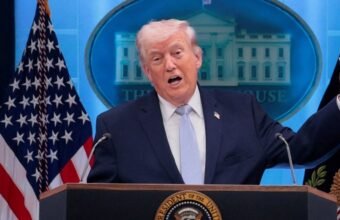
Meanwhile, the rhetoric has escalated dramatically. President Trump announced the launch of an operation to “clear” the Strait of Hormuz, framing it as a service to the global economy, including major energy consumers such as China, Japan, and South Korea. He подчеркнул that Iran’s military capabilities have already been significantly degraded, claiming that its remaining leverage lies primarily in the threat of naval mines—many of which, according to him, have already been neutralized.
Adding to the напряженность, reports indicate that U.S. naval vessels crossed the Strait of Hormuz without notifying Tehran—marking the first such passage since the outbreak of the conflict. According to American officials, the move was intended to reassure commercial shipping and demonstrate the continued viability of maritime transit through the strait.
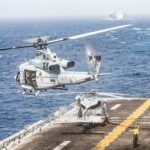
If confirmed, this development underscores a broader reality: Washington appears determined to impose stability in the region on its own terms. The deployment of a third U.S. aircraft carrier—USS George H.W. Bush—to join existing carrier groups in the Red Sea and Arabian Sea further highlights the масштаб of the American military presence. The United States now possesses a force capable of effectively controlling maritime trade routes in the region, including those critical to Iran.
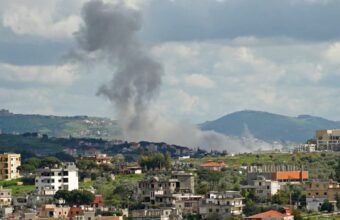
The recently declared 15-day ceasefire, in this context, may have served more as a tactical pause than a genuine step toward peace. It has provided the United States and Israel with time to replenish military stockpiles, rotate personnel, and continue operations against Iranian-linked infrastructure, including Hezbollah positions in Lebanon.
Taken together, these developments suggest that the current переговорный процесс is less about compromise and more about strategic positioning. Both sides remain entrenched, unwilling to уступить on fundamental issues. And while diplomacy, as Iranian officials insist, “never ends,” the path to any meaningful agreement appears as distant as ever.