


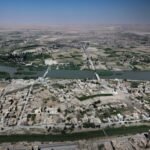
























Governments across Kazakhstan, Uzbekistan, Kyrgyzstan, Tajikistan and Turkmenistan increasingly face mounting pressure over access to shrinking water resources that millions of people depend on for agriculture, energy production and daily survival.
***
At the center of the crisis stand two major river systems:
The Syr Darya
The Amu Darya
These rivers have supported civilizations, economies and agricultural systems across Central Asia for centuries. Today, however, they are under growing stress from climate change, inefficient irrigation systems, population growth and geopolitical tensions.
Experts increasingly warn that water scarcity may become one of the defining security and economic issues shaping Central Asia’s future.
The central question now facing the region is whether countries can cooperate over declining water resources or whether competition may intensify into broader political instability.
Why is water so important in Central Asia?
Central Asia is one of the world’s most climate vulnerable and water dependent regions.
Large parts of the region consist of:
Arid landscapes
Semi desert zones
Mountain ecosystems
Irrigated agricultural areas
Agriculture remains heavily dependent on river systems fed primarily by glaciers and snowmelt from mountains located mainly in:
Kyrgyzstan
Tajikistan
These upstream countries supply water that flows downstream toward:
Uzbekistan
Kazakhstan
Turkmenistan
This creates deep interdependence between the region’s states.
Water is essential not only for drinking and agriculture, but also for:
Hydropower generation
Food production
Industrial activity
Urban development
Energy systems
As climate pressures intensify, managing this shared resource is becoming increasingly difficult.
Why are the Syr Darya and Amu Darya rivers so critical?
The Syr Darya and Amu Darya are Central Asia’s two most important river systems.
Historically, these rivers sustained:
Agriculture
Trade routes
Settlements
Regional economies
Today, they remain essential for millions of people across the region.
The Amu Darya flows through or along:
Tajikistan
Afghanistan
Turkmenistan
Uzbekistan
The Syr Darya flows through:
Kyrgyzstan
Uzbekistan
Tajikistan
Kazakhstan
These rivers support major agricultural sectors, particularly cotton and wheat production.
Any disruption in water flows therefore has major economic and political consequences across multiple countries simultaneously.
How is climate change affecting Central Asia’s water supply?
Climate change is dramatically reshaping water systems across Central Asia.
One of the biggest concerns involves glacier melt.
The region’s glaciers function as natural water reservoirs, gradually releasing water during warmer months. However, rising temperatures are accelerating glacier retreat across mountain regions.
Initially, melting glaciers may temporarily increase river flows.
Over the long term, however, shrinking glaciers threaten to reduce water availability significantly.
Climate experts warn that:
Higher temperatures
Droughts
Reduced snowfall
Changing precipitation patterns
could create severe long term water shortages.
Extreme heatwaves are also increasing evaporation rates, placing additional pressure on already stressed river systems and reservoirs.
As populations and agricultural demand continue growing, the gap between water supply and demand may widen further.
Why is agriculture central to the crisis?
Agriculture remains one of the largest consumers of water in Central Asia.
Large scale irrigation systems developed during the Soviet period transformed the region into a major agricultural producer, especially for cotton cultivation.
However, many irrigation systems remain highly inefficient.
Problems include:
Water leakage
Outdated infrastructure
Excessive irrigation
Poor drainage systems
In some areas, enormous quantities of water are lost before reaching agricultural land.
Cotton production in particular has historically required extremely high water usage.
As climate pressures intensify, governments increasingly face difficult choices regarding:
Agricultural reform
Water conservation
Food security
Economic diversification
Modernizing irrigation infrastructure is becoming an urgent regional priority.
How does the Aral Sea disaster relate to today’s crisis?
The shrinking of the Aral Sea remains one of the world’s most severe environmental disasters and serves as a warning about unsustainable water management.
During the Soviet era, massive diversion of river water for irrigation dramatically reduced inflows into the Aral Sea.
The result was catastrophic.
The sea largely dried up, causing:
Ecological collapse
Economic devastation
Health crises
Dust storms
Soil salinization
Fishing industries disappeared and surrounding communities suffered severe economic decline.
The Aral Sea disaster demonstrated how large scale mismanagement of water resources can destabilize entire ecosystems and societies.
Today, many experts warn that without better regional cooperation and climate adaptation, similar environmental stresses could intensify elsewhere across Central Asia.
Why does water create political tension between countries?
Water distribution in Central Asia reflects a difficult geographic imbalance.
Upstream countries such as:
Kyrgyzstan
Tajikistan
control much of the region’s water sources through mountain glaciers and reservoirs.
Meanwhile downstream countries such as:
Uzbekistan
Kazakhstan
Turkmenistan
depend heavily on stable river flows for agriculture and urban water supplies.
This creates competing national priorities.
Upstream countries often prioritize hydropower generation, especially during winter months.
Downstream countries generally require water primarily during agricultural growing seasons.
Balancing these different needs has historically been difficult.
Although regional tensions over water have so far remained manageable, climate pressures may increase competition in coming decades.
Could water shortages trigger conflict?
Most experts do not expect large scale wars over water in Central Asia in the immediate future.
However, water scarcity may contribute to:
Political tensions
Border disputes
Economic instability
Social unrest
Migration pressures
Local clashes and regional disagreements regarding water distribution have occurred periodically.
As climate change intensifies resource pressures, governments may face greater domestic political pressure regarding:
Agricultural losses
Energy shortages
Food prices
Rural livelihoods
Water insecurity therefore increasingly overlaps with broader national security concerns.
Many analysts argue that cooperation is ultimately more economically beneficial than confrontation because all regional economies remain interconnected through shared water systems.
How does hydropower complicate regional relations?
Hydropower plays a major role in upstream countries such as:
Kyrgyzstan
Tajikistan
These countries rely heavily on hydroelectric dams for energy generation.
However, hydropower management often conflicts with downstream agricultural needs.
For example:
Upstream states may release water during winter for electricity production.
Downstream agricultural systems often need larger water flows during summer growing seasons.
This seasonal mismatch complicates regional water management.
Large dam projects have therefore sometimes generated political disagreements within the region.
Balancing energy security with agricultural water demand remains one of the most difficult policy challenges facing Central Asian governments.
Why is Afghanistan becoming more important in regional water discussions?
Afghanistan is increasingly becoming a significant factor in regional water dynamics, particularly regarding the Amu Darya basin.
As Afghanistan expands irrigation and water infrastructure development, downstream countries are closely monitoring potential impacts on river flows.
Because the region’s water systems are already under stress, additional demand could intensify pressure further.
This adds another geopolitical dimension to an already complex regional issue.
Future regional water diplomacy may therefore increasingly involve Afghanistan alongside Central Asian states.
How are governments responding to the crisis?
Central Asian governments increasingly recognize water scarcity as a strategic priority.
Efforts underway across the region include:
Irrigation modernization
Reservoir upgrades
Water conservation programs
Renewable energy investment
Regional cooperation initiatives
Some countries are also investing in:
Drip irrigation systems
Digital water monitoring
Agricultural reform
Climate adaptation infrastructure
International organizations and development banks are supporting several regional water management projects.
However, progress remains uneven and funding challenges persist.
Infrastructure inherited from the Soviet era often requires extensive modernization.
Can regional cooperation solve the problem?
Many experts believe cooperation is essential because water systems cross national borders.
No single country can fully solve the crisis independently.
Regional coordination may involve:
Shared reservoir management
Seasonal water agreements
Hydropower coordination
Agricultural planning
Climate adaptation strategies
Some cooperative frameworks already exist, but implementation remains challenging due to:
Political tensions
Economic differences
National interests
Infrastructure limitations
Trust and long term coordination remain critical.
Climate change is increasingly forcing governments to recognize that water security requires collective regional management.
How does population growth affect the situation?
Population growth is placing additional pressure on water systems across Central Asia.
Urban expansion, industrialization and agricultural demand all increase water consumption.
Major cities including:
Tashkent
Almaty
Bishkek
require expanding infrastructure and stable water supplies.
At the same time, climate change may reduce overall water availability.
This combination creates growing pressure on governments to modernize water management systems rapidly.
Could technology help reduce the crisis?
Technology may play an increasingly important role in improving water efficiency.
Potential solutions include:
Smart irrigation systems
Satellite monitoring
Digital water management
Precision agriculture
Reservoir optimization
Climate forecasting systems
Modern irrigation methods can significantly reduce water waste compared with traditional systems.
Renewable energy expansion may also reduce pressure on hydropower dependence in some upstream countries.
However, implementing advanced technologies requires:
Investment
Regional coordination
Technical expertise
Political commitment
Why does this crisis matter globally?
Central Asia’s water crisis reflects broader global challenges linked to:
Climate change
Resource scarcity
Food security
Cross border cooperation
Many regions worldwide face similar tensions involving shared rivers and climate stress.
The success or failure of Central Asian cooperation may therefore offer important lessons for other climate vulnerable regions.
The crisis also affects:
Global agricultural markets
Regional energy systems
Migration trends
Geopolitical stability
As climate pressures intensify globally, water increasingly becomes not only an environmental issue, but also a strategic and political one.
What could the future look like?
Several future scenarios are possible.
In a positive scenario:
Countries improve regional cooperation
Infrastructure modernizes
Water efficiency increases
Climate adaptation strengthens resilience
In a negative scenario:
Climate change accelerates shortages
Agricultural losses increase
Political tensions intensify
Economic instability grows
The outcome will depend heavily on:
Regional diplomacy
Investment
Climate policy
Technological modernization
Political leadership
The rivers of Central Asia have connected the region for centuries.
Today, however, they also represent one of its greatest shared vulnerabilities.
The central question is no longer whether climate change will transform water politics in Central Asia.
It already is.
The real challenge is whether the region can turn shared dependence on shrinking rivers into a foundation for cooperation rather than conflict in an increasingly water stressed future.