






















According to the expert, the world is gradually dividing into two camps.
“The first consists of major powers — broadly speaking, the United States, China and Russia — which are seeking to maintain their leadership and have effectively appointed themselves as world leaders.
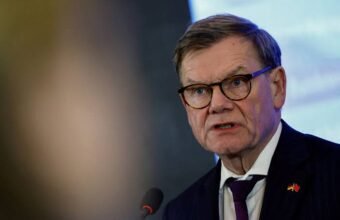
Russian expert Alexander Zhukovsky
“On the other side are many other countries, primarily European ones, which are searching for new meaning and a sense of internal balance. They seek a degree of independence but remain insufficiently organised,” Zhukovsky said.
In his view, the rhetoric of multipolarity could ultimately lead to the emergence of a different kind of two-pole world.
“We could witness a confrontation between a more or less organised minority — the United States, China and Russia — and a poorly organised majority consisting of the remaining countries,” he said.
Turning to the meeting of the three leaders in China, Zhukovsky said it was primarily an attempt to capture the attention of the global public and political circles.
Credit: Reuters
“Attention today is both one of the most important and one of the scarcest resources in political struggles and conflicts among elites. The meeting itself did not produce any major or noteworthy decisions, but it attracted the attention of political actors around the world,” the expert said.
He added that it was telling that European countries had swiftly organised an alternative meeting in Berlin in response to the talks in China.
“This suggests that decision-making centres on both sides are preparing for a serious political confrontation in the near future. At the very least, both sides are acting with considerable professionalism and determination,” he said.
At the same time, Zhukovsky pointed to contradictions facing the United States, China and Russia.
“Russia remains a weak link in international relations, as it has been unable to find a way out of its armed confrontation with Ukraine. Tensions between the United States and Iran also create an unfavourable public climate. These circumstances have a negative impact on the public image of the United States, Russia and China.
“At the same time, European countries have no single decision-making centre. There is an ambitious United Kingdom, a Germany that has lost its bearings, and a France that appears at a loss,” Zhukovsky concluded.