






















Table Of Content
Eurasianet
Eurasianet is an independent news organization that covers news from and about the South Caucasus and Central Asia, providing on-the-ground reporting and critical perspectives on…
Set us as your preferred Google source
Premium Content
By Eurasianet – Mar 06, 2026, 2:00 PM CST
- Iran conducted a drone attack on Azerbaijan’s Nakhchivan exclave, injuring four civilians and prompting a fierce diplomatic crisis.
- Azerbaijani President Ilham Aliyev has rejected Iran’s denial of responsibility, described the incident as a “terrorist act,” and warned of an “Iron Fist” retaliatory military response.
- De-escalation is complicated by the possibility that the strike was launched by a relatively junior Iranian officer due to pre-war plans that decentralized military decision-making authority.

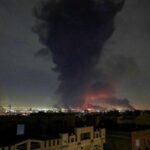
Azerbaijan risks getting sucked into a widening Middle East conflict after Iran conducted a drone attack March 5 on the Nakhchivan exclave, wounding four civilians.
One of four drones targeting Nakhchivan, a territory sitting on Iran’s northern border, hit a terminal at the region’s airport. Another narrowly missed a school building, according to a statement issued by Azerbaijan’s Defense Ministry. Azerbaijani anti-air defenses shot down one of the drones, the statement added.
Iran has denied initiating any attack against Azerbaijani territory. Baku has flatly rejected the denial. “We expect the Armed Forces of the Islamic Republic of Iran to cease their blatant denial, apologize for the incident, and have those responsible punished by relevant Iranian authorities,” the Defense Ministry statement read.
Iranian Foreign Minister Abbas Araghchi sounded a conciliatory note in a March 5 phone conversation with his Azerbaijani counterpart Jeyhun Bayramov. Responding to Baku’s protest over the incident, Araghchi said Iranian authorities had launched an investigation, adding that he ”wished a speedy recovery to the injured civilians,” according to an Azerbaijani readout of the conversation. Bayramov called on Iran to “take necessary measures to prevent such incidents from recurring in the future.”
In the days immediately following the start of the US-Israeli air attack on Iran on February 28, President Ilham Aliyev’s administration staked out a neutral stance on the conflict, keeping in mind Baku’s considerable trade interests with Iran, as well as the country’s close diplomatic ties with Israel and its strengthening relationship with the United States.
The drone strikes in Nakhchivan have exposed limits to Aliyev’s approach, as Iran’s defensive strategy appears to be to spread destruction and economic disruption as far and wide as possible with its abundance of drones, aiming to up international pressure on the United States and Israel to halt the air assault.
Underscoring the unpredictable trajectory of events, on March 4, Aliyev visited Iran’s Embassy in Baku to personally express condolences over the killing of former Iranian supreme leader, Ali Khamenei. The very next day the Iranian envoy found himself summoned to the Foreign Ministry to explain Iran’s actions.
In a speech delivered during an emergency meeting of Azerbaijan’s Security Council, Aliyev described the drone attacks as a “a terrorist act,” going on to repeat a demand that Iran apologize and swiftly punish those responsible.
Azerbaijan started positioning military units and air defense systems earlier in March near the country’s border with Iran, according to a report distributed by an independent Azerbaijani news platform, Qazetchi.
Another incident could lead to an armed response by Baku, Aliyev cautioned. “Our Armed Forces have been instructed to prepare and implement appropriate retaliatory measures,” Aliyev stated. “They [Iran] should not test our strength. Those who did so in the past had their skulls crushed with our ‘Iron Fist.’”
Aliyev also sounded personally aggrieved that Azerbaijan’s neutral stance, in particular statements by government officials that Azerbaijani territory would not be used to conduct operations against Iran, did not have a desired effect of shielding the country from the spread of destruction.
At one point in his Security Council speech, Aliyev described the attack on Nakhchivan as “a grave example of ingratitude.”
“As soon as recent incidents occurred, we conveyed our condolences. … I demonstrated my position by personally visiting their embassy to offer condolences—no other head of state has visited an Iranian embassy elsewhere for this purpose. To disregard such a gesture, to belittle it, and to conduct themselves in a base and ungrateful manner brings honor to no one,” Aliyev said.
A challenge for both Azerbaijani and Iranian diplomats hoping to deescalate tension is that military plans reportedly overseen by Khamenei prior to the start of the war called for the devolution of decision-making authority for conducting such drone strikes to field-level commanders in the event of a US and/or Israeli attack. The strategic logic behind the dispersal of authority was to maintain a suitable level of war-fighting ability in the event senior military command-and-control structures were neutralized, which, in fact, occurred during the early days of the US-Israeli blitz.
The upshot is that the decision to launch drones against Nakhchivan could have been made by a relatively junior officer far-removed from those now in charge of the Iranian military. If that is the case, the degree of difficulty for Azerbaijan and Iran in trying to settle relations is much higher than would otherwise be the case.
More Top Reads From Oilprice.com
- Oil Prices Surge Toward $90 as Middle East Tensions Escalate
- Europe’s Gas Price Set for Largest Weekly Gain in Three Years
- Reliance Industries Pivots Back to Russian Oil with U.S. Waiver
Download The Free Oilprice App Today


Eurasianet
Eurasianet is an independent news organization that covers news from and about the South Caucasus and Central Asia, providing on-the-ground reporting and critical perspectives on…
Related posts