



















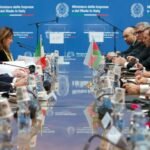




In a joint statement released during the IMF and World Bank Spring Meetings in Washington, D.C., the officials said renewed fighting or disruptions to key trade routes could pose serious risks to global economic stability, News.Az reports, citing Reuters.
The statement highlighted particular concern over the Strait of Hormuz, warning that any interruption there would threaten energy security, supply chains, and financial markets worldwide.
**
Signatories included finance ministers from the United Kingdom, Australia, Japan, Sweden, the Netherlands, Finland, Spain, Norway, Ireland, Poland, and New Zealand.
The group said that even if the conflict is eventually resolved, its economic consequences are likely to persist, continuing to influence inflation trends and global growth.
Officials also stressed the importance of fiscal discipline, saying that governments should ensure any domestic response measures are targeted and financially sustainable.
At the same time, they urged countries to avoid protectionist policies such as export restrictions, stockpiling, or trade barriers that could further strain global energy and supply chains.
The warning comes amid heightened volatility in global markets, where investors are closely monitoring geopolitical risks alongside inflation pressures and central bank policy decisions.
The statement reflects growing concern among policymakers that the conflict’s economic impact may be long-lasting, reshaping energy flows, trade patterns, and financial stability well beyond the immediate crisis period.