



























An Azerbaijani student at Columbia University was detained by federal immigration agents early Thursday morning in a dramatic pre-dawn operation — only to be released hours later following direct political intervention at the highest levels.
Table Of Content
The case quickly ignited national attention after New York City Mayor Zohran Mamdani announced that President Donald Trump had personally confirmed the student would be freed.
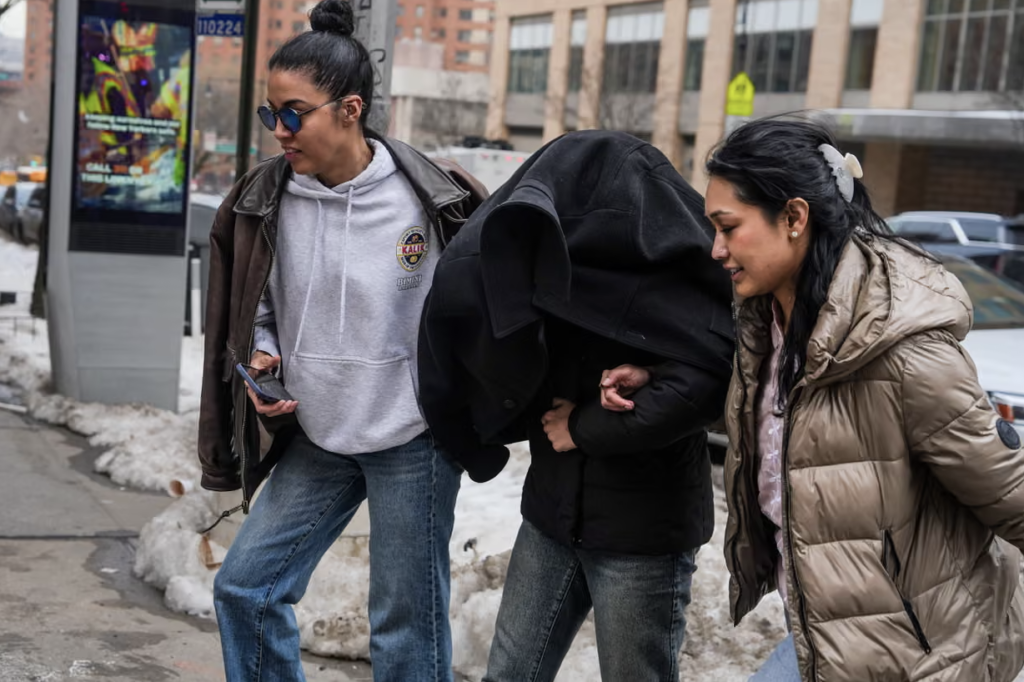
Dawn Detention Inside Campus Housing
According to university officials, agents from U.S. Immigration and Customs Enforcement entered a Columbia-owned residential building around 6:30 a.m. The student, identified as Elmina Aghayeva, an Azerbaijani national, was taken into custody inside her apartment.
A Department of Homeland Security official stated that her student visa had been terminated years earlier and that she had no pending immigration appeals. Officials also said building personnel allowed agents into the premises.
However, Columbia’s acting leadership later suggested federal agents may have misrepresented the purpose of their entry, alleging they referenced a “missing person” situation to gain access. That claim has intensified scrutiny over how the arrest was conducted.
Trump–Mayor Call Changes the Outcome
The situation escalated politically within hours.
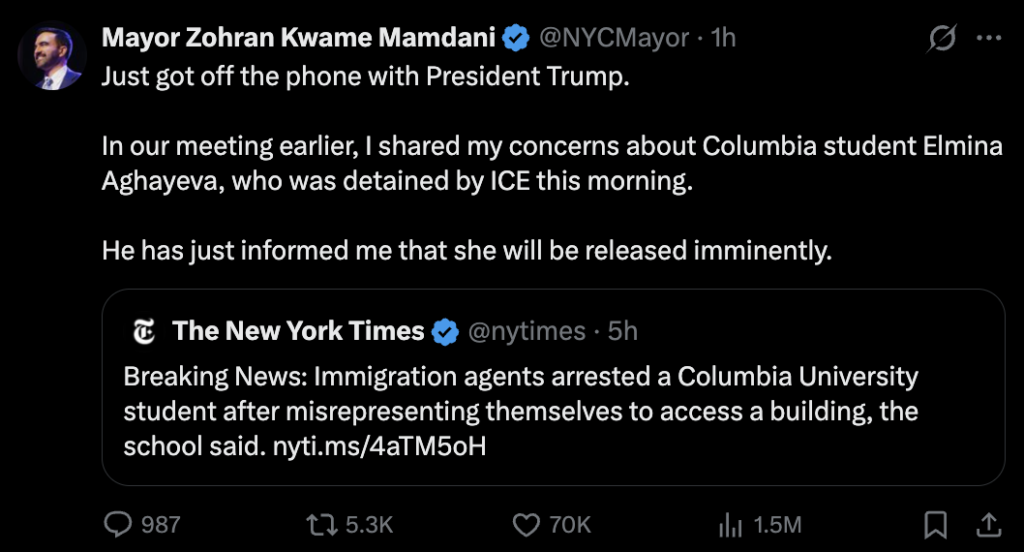
Mayor Mamdani posted that he had spoken directly with President Trump, who confirmed the student would be released “imminently.” Shortly after 4:15 p.m. ET, Columbia University confirmed that Aghayeva had been freed.
The White House redirected media inquiries to DHS prior to the mayor’s announcement, while DHS maintained that the detention followed standard enforcement procedure.
Immigration Tensions Back in the Spotlight
The incident comes amid renewed national debate over immigration enforcement. The Trump administration has prioritized immigration operations as a cornerstone policy, and federal activity on college campuses has drawn sharp reactions from both supporters and critics.
Columbia University has been under federal scrutiny in recent years, including funding disputes and compliance reviews tied to federal standards.
Within hours, the Azerbaijani student’s case became more than an isolated detention — it became a flashpoint symbolizing the broader clash between immigration enforcement, university autonomy, and high-stakes political maneuvering.
A Rapid Turn of Events
What began as a quiet early-morning enforcement action turned into a headline-making political reversal in less than a day.
For many observers, the speed of the release — following direct presidential communication — raises questions about how immigration enforcement decisions intersect with political realities.
For now, the student is free. But the controversy surrounding how and why the detention occurred is far from over.
🇦🇿 Developing story.
AzeriTimes.com, New York, NY