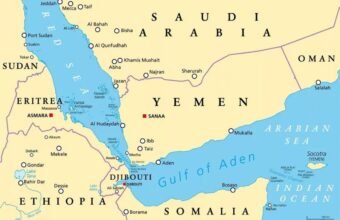

























In normal conditions, around 70 commercial vessels per day pass through the southern Red Sea corridor linking the Gulf of Aden with the Suez Canal. However, ship-tracking systems indicate that during the first week of March the daily number of transits dropped to approximately 30–35 vessels, reflecting a decline of nearly 50–60 percent, as reported by News.Az.
***
The Red Sea corridor is one of the most important maritime routes in the world, connecting Asian and Middle Eastern ports with Europe through the Suez Canal. Large volumes of oil, liquefied natural gas (LNG), raw materials and containerized cargo normally move through this route.
AIS tracking maps show that vessels continue to navigate the region, but traffic patterns have changed significantly. Most ships are moving individually rather than in large clusters, maintaining wider distances from the Yemeni coastline and reducing speeds in sensitive areas. The majority of vessels currently passing through the region are oil tankers, bulk carriers transporting raw materials, and general cargo ships, while container traffic remains noticeably reduced.
One of the key factors affecting shipping security in the Red Sea is the continued threat from Yemen’s Houthi movement, which controls large parts of the country’s Red Sea coastline. Over the past several years, the group has carried out or threatened attacks against commercial shipping using missiles, drones and naval drones, turning the southern Red Sea into one of the most sensitive maritime security zones in the world.
Although not every vessel transiting the area has been targeted, the risk of attacks has forced shipping companies to adopt precautionary measures. These include adjusting routes farther from the Yemeni coast, increasing onboard security procedures, and coordinating closely with maritime security monitoring centers.
The security risks have also prompted many global shipping companies to temporarily divert vessels away from the Red Sea altogether. Some container carriers have chosen to reroute ships around the Cape of Good Hope in southern Africa, bypassing both the Red Sea and the Suez Canal. This alternative route adds roughly 10–14 days to voyages between Asia and Europe and significantly increases fuel costs and freight rates.
Despite these challenges, the Red Sea has not been closed to navigation. Oil tankers carrying crude from Gulf producers, bulk carriers transporting commodities such as metals and grain, and certain cargo vessels continue to pass through the Bab el-Mandeb corridor each day.
Maritime analysts note that the Red Sea remains a critical artery for global trade. Any further escalation affecting navigation through the region could disrupt supply chains connecting Asia, the Middle East and Europe, potentially impacting global energy markets and shipping costs.
As of March 6–7, the corridor therefore remains open but operating under heightened caution, with shipping volumes reduced and vessels navigating the area under increased security awareness.