















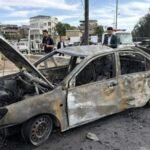


After nearly six months of war since the U.S. and Israel launched airstrikes against Iran on February 28, the sides are not firing at each other but also showing no sign of pursuing peace talks, Reuters reports.
***
Oil shipments are at a virtual standstill in the Strait of Hormuz, with Tehran threatening to strike any unauthorized oil tankers that try to transit the vital waterway, and Iran’s economy is already under immense pressure from sanctions.
U.S. Treasury Secretary Scott Bessent is due to hold a press conference at 2 p.m. EDT (1800 GMT) on Monday after threatening “the toughest sanctions in history” on Iran.
Bessent has also urged cooperation with Washington by China, which buys more than 80% of Iran’s shipped oil, according to 2025 data from analytics firm Kpler. Beijing has urged diplomacy.
Iran’s Foreign Ministry spokesperson, Esmaeil Baghaei, said on Saturday the imminent U.S. announcement of new economic sanctions was an “assertion of extraterritorial sovereignty over every independent member state of the United Nations.”
“Such secondary sanctions find no foundation in international law,” he said in a post on X.
The chief of staff of Iran’s armed forces, Major General Ali Abdollahi, promised on Friday that Iran would respond to enemy threats militarily with “crushing, punishing and devastating responses.”
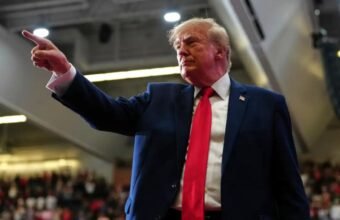
U.S. President Donald Trump, who has warned of economic consequences against any country that provides “any type of lifeline to Iran,” said on Friday that Washington was observing “what happens” in the conflict.
“They would love to make a deal, but they’re not ready to make the right deal, in my opinion,” Trump said of Iran.