



























Table Of Content
Eurasianet
Eurasianet is an independent news organization that covers news from and about the South Caucasus and Central Asia, providing on-the-ground reporting and critical perspectives on…
Set us as your preferred Google source
Premium Content
By Eurasianet – May 29, 2026, 11:00 AM CDT
- Georgia and Azerbaijan signed long-term energy and transport agreements after a May 18 meeting in Baku.
- Critics warn the undisclosed terms could weaken Georgia’s energy independence and increase reliance on older infrastructure.
- Regional transit competition is intensifying as Armenia, Azerbaijan, and Turkey move to open new trade routes.
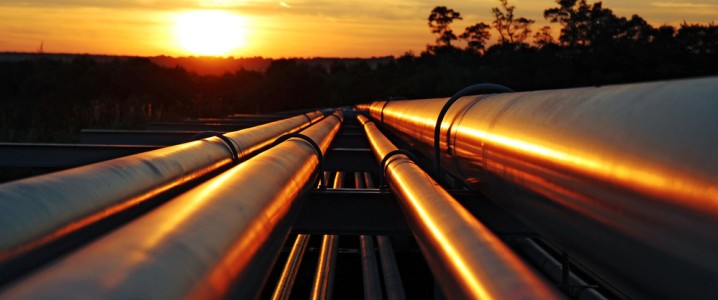
Recently signed deals between Georgia and Azerbaijan are raising fresh questions about Tbilisi’s strategic direction and energy security.
The deals flowed out of a May 18 meeting in Baku between Georgian Dream Prime Minister Irakli Kobakhidze and Azerbaijani President Ilham Aliyev. Those talks occurred just weeks after Aliyev’s visit to Tbilisi, where he also met Georgia’s de facto ruler, Bidzina Ivanishvili. Despite their political significance, the full texts of the agreements signed while Kobakhidze was in Baku remain undisclosed, fueling criticism that the Georgian government is making decisions without sufficient transparency or regard for the country’s long-term energy independence.
According to official statements, the sides agreed to a 20-year inter-governmental framework governing electricity supply and transit, along with a 20-year extension of a 2003 gas-purchase agreement. The Georgian government emphasized that the purchase deal “guarantees the security of social gas supply.”
The agreements also restored daily passenger rail service between Tbilisi and Baku after a six-year gap. A separate protocol, cited by the Georgian government, also claimed “the new section of the Baku-Tbilisi-Kars (BTK) railway will become fully operational.”
With Azerbaijan and Armenia moving to normalize relations and new transit routes like the Trump Route for International Peace and Prosperity (TRIPP) corridor threatening to bypass Georgia, Tbilisi needed a deal to stay relevant in trade discussions.
Georgian Dream officials hope the agreements signed in Baku will ensure Tbilisi remains a factor in the Caucasus’ trade equation. Baku appears to have taken full advantage of Georgia’s desperation, securing very favorable energy deals.
Aliyev’s administration welcomed the agreements, stressing their “importance” and highlighting Kobakhidze’s positive tone during the visit. It noted that the Georgian prime minister had expressed appreciation for Aliyev’s recent trip to Georgia, saying it left “a profound impression.”
However, the lack of transparency, combined with shifting energy trends, continues to fuel concerns about Tbilisi’s energy-supply vulnerability and the country’s growing dependency on Russia. Over the past year, Georgia’s reliance on Azerbaijani gas has declined, while imports from Russia have surged. In 2025, gas purchases from Azerbaijan fell by around 6 percent, while imports from Russia increased by roughly 23 percent. Russia’s state-owned Gazprom reported supplying 40.4 percent more gas to Georgia in 2025 compared to the previous year, despite Russian gas being significantly more expensive.
For some analysts, this trend is not accidental. Economist and former National Bank president Roman Gotsiridze argued that the recent gas-supply agreement runs counter to Georgia’s national interest. “It appears that Georgia has given up its share of transit capacity in the Baku-Tbilisi-Erzurum gas pipeline to Azerbaijan for the next 20 years,” he said. “Georgia will receive gas only through the old, worn-out Soviet-era Gazakh-Saguramo pipeline.”
Gotsiridze also believes the recent increase in Russian imports may be part of a longer-term shift. “In the future, as gas consumption increases, the only alternative will be to import gas from Russia, since bringing additional supplies from Azerbaijan will become physically impossible,” he warned. “Signs of this are already visible: for the third consecutive year, Azerbaijan has been using Georgia’s allocated capacity in the Baku-Tbilisi-Erzurum pipeline to boost gas deliveries to Europe, while imports of Russian gas into Georgia have been rising in parallel.”
For some critics, the pattern reflects a calculated trade-off by Ivanishvili and his Georgian Dream government – securing for Georgia a role in trade routes connecting Europe and Asia while trying to claw back leverage with Western partners alienated by the government’s authoritarian turn. Higher-priced Russian gas may hit consumers, but it poses little threat to the government’s grip on power.
Kobakhidze’s remarks after the signing confirmed the government’s strategic thinking. Framing the agreements in terms of “connecting the Caspian Sea with the Black Sea” and linking “Europe with Asia,” he pointed to transit and geopolitics, not energy security, as the government’s priority.
Georgia is not alone in trying to reposition itself. Armenia is also moving to expand its regional connectivity. Prime Minister Nikol Pashinyan just announced that a railway route linking Armenia through Georgia’s Akhalkalaki to Turkey is now open for export and import, opening a connection for the country to EU markets.
By Eurasianet
More Top Reads From Oilprice.com
- Suriname Wants Two Wins From One Block: Gas Is Done, Oil Could Follow
- India’s Energy Investment Set for Record $170 Billion in 2026
- Uniper Sees Gas Shortage in Winter If Storage Rates Don’t Speed Up
Download The Free Oilprice App Today


Eurasianet
Eurasianet is an independent news organization that covers news from and about the South Caucasus and Central Asia, providing on-the-ground reporting and critical perspectives on…
Related posts