




















The ultimatum comes amid rapidly intensifying hostilities between the United States, Iran and Israel, raising fears of a wider regional conflict and severe disruption to global energy markets, News.az reports, citing Xinhua.
***
Escalation on multiple fronts
Iran said it is deploying new domestically produced air defence systems to target American aircraft, according to statements carried by state media. The announcement followed claims that Iranian forces shot down two U.S. warplanes, including an F-15E and an A-10, with one crew member reportedly missing.
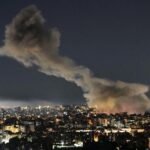
At the same time, Israel said it carried out a wave of strikes on Iranian air defence systems and missile-related facilities in Tehran, describing the operation as part of efforts to weaken Iran’s military infrastructure.
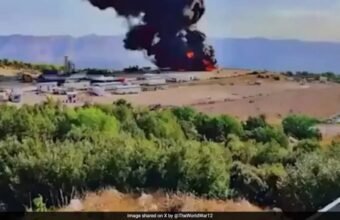
The situation has expanded beyond direct military exchanges. Iranian state media reported a drone strike on an إسرائيل-linked vessel in the Strait of Hormuz, which set the ship on fire, further escalating maritime risks in one of the world’s most critical shipping lanes.
Strike near nuclear facility raises alarm
The International Atomic Energy Agency said a projectile struck near the Bushehr Nuclear Power Plant on Saturday, killing one staff member and damaging part of the facility.
While no increase in radiation levels was detected, the agency’s Director-General Rafael Grossi expressed deep concern, warning that attacks near nuclear installations carry serious risks and could lead to catastrophic consequences.
Strategic choke point under pressure
The Strait of Hormuz, a narrow maritime corridor through which roughly 20 percent of global oil supply passes, has become the central battleground of the crisis.
Recent intelligence assessments suggest Iran is unlikely to relinquish control of the waterway in the near term, viewing it as its primary leverage against Washington. Analysts say Tehran’s strategy aims to maintain pressure on global energy markets by keeping oil prices elevated.
The disruption has already pushed crude prices to multi-year highs, intensifying inflation concerns globally and adding political pressure on the White House.
A “weapon of mass disruption”
Experts warn that Iran’s ability to obstruct the strait represents a form of asymmetric power that may be more effective than traditional military deterrence.
Even if U.S. forces were to attempt to secure the waterway militarily, Iran’s Islamic Revolutionary Guard Corps retains the capacity to disrupt shipping using drones and missile systems launched from inland positions.
Security analysts note that even limited attacks could deter commercial vessels, making the route effectively unusable for insurers and shipping companies.
Wider geopolitical implications
The crisis has also prompted calls from Washington for greater involvement from NATO allies and Gulf states, many of which rely heavily on energy shipments passing through the Strait of Hormuz.
U.S. officials say the administration remains confident the waterway will reopen, but acknowledge the growing complexity of the situation as efforts continue to avoid a prolonged and costly conflict.
With the 48-hour deadline approaching, attention is now focused on whether diplomatic channels can prevent further escalation – or whether the region is on the brink of a broader war.