


















Although reports indicate that a new leader has already been appointed, his name has not been disclosed to the public. Such a move is highly unusual for a state that for decades built its political system around the figure of the Supreme Leader, News.Az reports.
***
The very fact that Iranian authorities are hiding the identity of the new leader suggests serious internal problems. It appears that Tehran fears the new figure could become the next target of potential operations by Iran’s adversaries, primarily Israel and the United States. Yet this level of caution effectively exposes the vulnerability of the system of power itself.
For many years, Iran’s leadership sought to project the image of a strong and resilient state capable of resisting external pressure. The current situation, however, tells a different story. If the country is afraid to reveal the name of its highest authority, it suggests that even within the system there is no confidence in the security of key figures.
This secrecy also raises significant questions among Iran’s own population. In any political system, citizens must understand who is making critical decisions and who bears responsibility for the country’s future. A national leader is not merely a symbol of authority but a central figure around whom political legitimacy and governance are structured.
When the name of the leader is hidden, it creates the impression of a power vacuum. Citizens do not know who is actually governing the country, who is making decisions on issues of security, economic policy, and foreign relations. In a period of heightened international tension, such uncertainty only amplifies public anxiety.
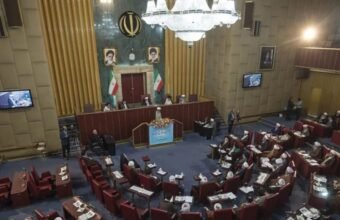
Moreover, the secrecy surrounding the new leadership may point to a deeper crisis within Iran’s ruling elite. Following Khamenei’s death, various political and security factions may have begun competing for influence. The Islamic Revolutionary Guard Corps, the clerical establishment, the government, and other centers of power could hold different views on the country’s future direction.
If these internal disagreements do exist, concealing the name of the new leader could be an attempt to buy time while negotiations—or even a quiet struggle for power—continue behind closed doors. In that case, the issue would go beyond security concerns and point to a structural crisis in governance.
For a state that has long positioned itself as a major power in the Middle East, the situation sends a striking signal of weakness. Iran has actively participated in regional conflicts, supported allied forces across the region, and repeatedly declared its ability to stand up to the world’s most powerful nations.Yet a country that cannot publicly reveal the identity of its leader inevitably creates the impression of a state experiencing political turbulence.
This uncertainty also affects how Iran is perceived internationally. Both partners and adversaries closely watch the internal stability of the Islamic Republic. When leadership structures appear opaque and uncertain, it raises additional risks for diplomacy, economic cooperation, and regional security.
The absence of clarity about the new leader may also suggest that decisions are currently being made collectively by several competing centers of authority. Under such circumstances, the country’s strategy becomes less predictable, and internal coordination may become significantly more complicated.
History shows that strong states do not hide their leaders. On the contrary, they demonstrate the stability of power and confidence in their institutions. When the identity of a country’s leader becomes a secret, it inevitably fuels speculation, rumors, and doubts about the durability of the political system.
Today’s developments in Iran may represent a turning point for the country. Khamenei’s death has already altered the balance of power within the ruling elite, and the decision to conceal the name of his successor only deepens the sense that Tehran is navigating one of the most challenging moments in its modern history.
If Iranian authorities truly aim to maintain stability and public trust, they will eventually have to step out of the shadows and reveal the individual who is assuming responsibility for the nation’s future. For now, however, the secrecy surrounding the new leadership appears less like a sign of strength and more like an indication of uncertainty within the system of power.