






















The move comes at a sensitive moment, as Armenia continues expanding political and economic engagement with the European Union while relations with its traditional Russian ally remain strained, News.az reports.
***
The recall of Ambassador Sergei Kopyrkin is not the severing of diplomatic relations, but it is one of the strongest diplomatic signals Russia can send short of taking more severe measures. The development reflects broader geopolitical changes unfolding across the South Caucasus, where Armenia, Azerbaijan, Russia, the European Union, the United States and Türkiye are increasingly competing or cooperating within a rapidly changing regional landscape.
What happened?
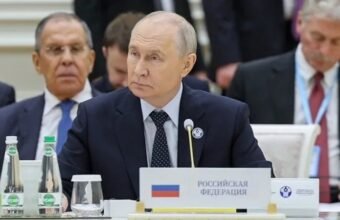
Russia announced that Ambassador Sergei Kopyrkin had been recalled from Yerevan to Moscow for consultations. Russian officials linked the decision to Armenia’s growing cooperation with the European Union and concerns that Yerevan’s foreign policy trajectory is moving away from Russia-led regional structures.
The announcement followed a series of increasingly sharp statements from Russian officials regarding Armenia’s foreign policy direction. Moscow has repeatedly warned that deeper European integration could eventually conflict with Armenia’s commitments within Russian-led economic and security organizations.
Why is recalling an ambassador significant?
In diplomatic practice, recalling an ambassador for consultations is often used to express dissatisfaction without completely downgrading diplomatic relations.
Such recalls can serve several purposes:
• Signaling political displeasure.
• Reassessing bilateral relations.
• Coordinating policy responses.
• Sending a warning before stronger measures are considered.
Countries frequently use this mechanism during periods of political disagreement while keeping diplomatic channels open. The ambassador usually returns after consultations are completed, but the move itself serves as an important political message.
Why is Russia unhappy with Armenia?
The immediate issue appears to be Armenia’s growing engagement with the European Union and the broader West.
Over the past several years, Armenian Prime Minister Nikol Pashinyan has gradually diversified Armenia’s foreign policy. Yerevan has expanded contacts with Brussels, strengthened cooperation with Washington and reduced participation in some Russia-led security structures. Armenia has also initiated political and economic initiatives aimed at closer European integration.
Russian officials argue that Armenia cannot simultaneously deepen integration with the European Union while remaining fully committed to Moscow-led regional projects. From Moscow’s perspective, Armenia will eventually need to make a strategic choice regarding its long-term geopolitical orientation.
What role does the European Union play in this dispute?
The European Union has become increasingly active in Armenia over the past few years.
European institutions have expanded cooperation programs with Yerevan in areas including governance reforms, economic modernization, infrastructure development, energy diversification and security dialogue.
Armenia has also received growing political support from several European governments. These developments have strengthened perceptions in Moscow that Armenia is gradually moving closer to Western political structures.
From the Russian perspective, this trend threatens Moscow’s traditional influence in the South Caucasus and weakens the cohesion of organizations such as the Eurasian Economic Union.
How did relations between Russia and Armenia deteriorate?
The roots of the current tensions stretch back several years.
For decades after the collapse of the Soviet Union, Armenia was considered one of Russia’s closest allies in the South Caucasus. The two countries maintained strong military, economic and political ties. Armenia joined Russian-led organizations and hosted Russian military facilities on its territory.
However, relations began deteriorating following regional conflicts and changing security perceptions.
Many Armenians felt Russia failed to provide sufficient support during major regional crises. After Azerbaijan restored its sovereignty over Karabakh, criticism of Moscow increased significantly inside Armenia. Prime Minister Pashinyan publicly questioned the effectiveness of some Russian-led security arrangements and began pursuing a more diversified foreign policy.
This marked a major shift in Armenian strategic thinking and represented a departure from decades of near-total reliance on Russia.
How important is Russia to Armenia economically?
Despite growing tensions, Russia remains one of Armenia’s most important economic partners.
Armenia continues to rely heavily on Russia in several areas:
• Natural gas supplies.
• Energy infrastructure.
• Trade.
• Investment.
• Labor migration.
• Remittances.
A significant portion of Armenia’s energy needs continues to be met through Russian supplies. Economic links between the two countries remain extensive, creating challenges for Armenian policymakers seeking greater engagement with Europe while maintaining economic stability.
Has Russia threatened economic measures?
Russian officials have repeatedly warned that Armenia could face economic consequences if it continues moving closer to European institutions.
Moscow has signaled that preferential arrangements currently enjoyed by Armenia could come under review if Yerevan’s political orientation continues shifting westward.
In addition, trade disputes and restrictions on certain imports have periodically emerged, fueling speculation that economic leverage could become an increasingly important tool in Russia’s approach toward Armenia.
The possibility of further economic measures remains one of the most important questions surrounding the current dispute.
Is this connected to Armenia’s upcoming election?
Many analysts believe timing is important.
The ambassador recall comes at a politically sensitive moment for Armenia, where geopolitical issues have become increasingly central to domestic political debates.
Questions regarding Armenia’s relationship with Russia, Europe and the United States have emerged as key topics shaping public discussion. As a result, foreign policy has become deeply intertwined with domestic political competition.
The diplomatic dispute therefore carries both foreign policy and internal political significance.
What is the United States’ role?
The United States has expanded engagement with Armenia in recent years.
Washington has supported democratic reforms, increased political dialogue and strengthened cooperation with Yerevan in several areas.
High-level contacts between American and Armenian officials have become more frequent, reflecting broader Western interest in the South Caucasus.
Recent cooperation agreements and diplomatic initiatives have reinforced perceptions that Armenia is developing a more balanced foreign policy rather than relying exclusively on Russia.
Moscow, however, views some of these developments as part of broader Western efforts to reduce Russian influence across the former Soviet space.
What is happening with Armenia’s security partnerships?
Security policy has become another major source of friction.
Armenia has reduced participation in some activities connected to Russian-led security structures while simultaneously expanding military cooperation with alternative partners.
In recent years, Yerevan has diversified defense procurement and sought closer military cooperation with countries such as France and India.
These moves have reinforced Russian concerns about Armenia’s long-term strategic orientation and raised questions about the future of traditional security arrangements between the two countries.
Could Armenia leave Russian-led organizations?
At present, Armenia remains a member of major Russian-led economic and security frameworks.
However, debates regarding future membership have intensified.
Russian officials have repeatedly suggested that deeper integration with the European Union may eventually become incompatible with participation in certain Moscow-led institutions.
Armenian officials, meanwhile, argue that engagement with Europe does not necessarily require abandoning existing regional commitments.
Whether Armenia can successfully balance these competing relationships remains one of the central geopolitical questions facing the country.
How does Azerbaijan fit into the picture?
Regional dynamics involving Azerbaijan are an important part of the broader story.
The transformation of the South Caucasus following the end of the Karabakh conflict has altered strategic calculations for all regional actors. Azerbaijan’s strengthened position, expanding international partnerships and growing importance as a transport and energy hub have reshaped regional geopolitics.
At the same time, discussions regarding regional connectivity projects continue influencing diplomatic debates. These projects are increasingly viewed through the lens of competition among Russia, the European Union, the United States, Türkiye and other regional powers.
As a result, developments in Russia-Armenia relations cannot be separated from the broader geopolitical evolution of the South Caucasus.
Could this lead to a complete breakdown in Russia-Armenia relations?
A complete rupture remains unlikely in the near term.
Despite political disagreements, both countries retain strong historical, economic and social ties. Russia continues to play an important role in Armenia’s economy, while Armenia remains strategically important for Russia’s regional interests.
However, the relationship has clearly entered a more complicated phase than at any point in recent decades.
The recall of an ambassador does not automatically signal an irreversible crisis, but it demonstrates that both sides are reassessing aspects of their partnership.
What happens next?
Several scenarios are possible.
Scenario 1: Diplomatic stabilization
The ambassador returns after consultations, both sides continue dialogue and tensions gradually ease. This would allow Armenia to maintain balanced relations with both Russia and Western partners.
Scenario 2: Continued pressure
Russia could expand economic pressure, introduce additional trade restrictions or increase political criticism if it believes Armenia is moving too quickly toward European integration.
Scenario 3: Strategic realignment
Armenia could deepen cooperation with European and American partners while reducing dependence on Russian institutions. Such a process would likely take years because of Armenia’s existing economic and security connections with Russia.
Scenario 4: Hybrid balancing
The most realistic possibility may involve Armenia attempting to balance relations with multiple partners simultaneously, maintaining practical cooperation with Russia while gradually expanding ties with Europe and the United States.
Why does this matter beyond Armenia and Russia?
The dispute is important because it reflects a larger geopolitical struggle occurring across Eurasia.
Countries that were once firmly within Russia’s sphere of influence are increasingly exploring alternative partnerships. Meanwhile, the European Union and the United States are seeking greater engagement in regions traditionally dominated by Moscow.
The South Caucasus sits at the intersection of Europe, Asia and the Middle East, making it strategically important for energy routes, trade corridors and regional security.
As a result, developments in Russia-Armenia relations are being closely watched far beyond the region.
The bottom line
Russia’s decision to recall its ambassador from Armenia for consultations represents a significant diplomatic warning rather than a complete rupture in relations.
The move highlights growing disagreements over Armenia’s foreign policy direction, particularly its expanding engagement with the European Union and the broader West.
While Armenia remains economically connected to Russia and formally linked to several Moscow-led institutions, its leadership has increasingly pursued a more diversified international strategy. Moscow views that shift with growing concern and has responded through diplomatic pressure, economic warnings and increasingly direct political messaging.
The coming months may determine whether the current tensions evolve into a temporary dispute or a deeper long-term transformation of one of the most important geopolitical relationships in the South Caucasus. The outcome will not only shape the future of Russia-Armenia relations but could also influence the strategic balance across the wider region for years to come.