
















Russian President Vladimir Putin has spoken by telephone with Azerbaijani President Ilham Aliyev. At first glance, there appears to be nothing unusual about this — a routine exchange between the leaders of two friendly states. Yet in the present circumstances, it is anything but routine. Russia and Azerbaijan are indeed friendly countries. Nevertheless, recent years have been far from easy for bilateral relations. For this reason, the very fact that Vladimir Putin called Baku cannot be regarded as an ordinary event.
Relations between Azerbaijan and Russia have now been fully restored. President Ilham Aliyev stated this while answering questions at the Shusha Global Media Forum. His words prompted numerous comments and expert assessments, primarily in Russia. The President of Azerbaijan spoke directly and unequivocally, without adding any qualifications or leaving room for ambiguous interpretations: relations have been fully normalised.
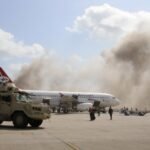
It should be briefly recalled that relations between the two countries, which had remained stable under virtually all circumstances, deteriorated sharply after an Azerbaijani civilian aircraft was shot down by Russian air defence systems in December 2024, resulting in the loss of life. The incident became the first crisis of such gravity in the history of bilateral relations. It was no longer a situation that could be resolved through diplomatic language alone; it required concrete decisions and tangible steps from the Russian side.
A year and a half of tension brought nothing positive either to us or to our northern neighbour. The only ones who celebrated were the ill-wishers of both countries, who made their own calculations and attempted to exploit the tragedy and Baku’s firm position in pursuit of their interests.
Now, as the President of Azerbaijan has stated, relations have been fully normalised. One may assume that Ilham Aliyev’s words had been eagerly awaited in Russia. Moscow understood that Baku’s cooling attitude was not a whim. At the same time, certain circles in Russia obstructed the restoration of justice because confrontation with Baku served their interests.
Their resistance was eventually overcome, after which it was announced that Russia had fulfilled all the obligations arising from the tragedy involving the Azerbaijani aircraft. Azerbaijan had never demanded anything more.
The fact that Baku and Moscow continued to maintain a certain level of mutual understanding even during the latest crisis was also reflected in bilateral trade figures. Trade and economic ties not only remained intact but continued to develop despite the chill prevailing in the political sphere.
Speaking in Shusha, President Ilham Aliyev said that bilateral relations are now demonstrating positive momentum. Despite an occasionally complicated political agenda, Azerbaijan and Russia continued to build effective trade and economic cooperation. Last year, bilateral trade reached an all-time high. Investment and transport projects are also developing, particularly the International North–South Transport Corridor. This was highlighted both in the remarks of the President of Azerbaijan and during the recent meeting between Azerbaijani Foreign Minister Jeyhun Bayramov and his Russian counterpart, Sergei Lavrov.
“Relations have been fully normalised, and contacts are taking place at various levels: at the governmental level, between members of the governments and the co-chairs of the intergovernmental commissions, through the foreign ministries and through the presidential administrations. Therefore, in this respect, I believe everything is proceeding well, and we are pleased about that,” Ilham Aliyev said.
Putin’s call to Baku demonstrates Russia’s desire to develop bilateral relations. It should be emphasised once again that this was not merely a routine telephone conversation intended to discuss one issue or another. In light of the events of the past two years, the call carries particular importance and considerable political significance.
According to official information, the leaders discussed current issues on the bilateral and international agenda. They noted the constructive nature of Russian-Azerbaijani relations and the intensification of dialogue between the two countries’ governments and relevant agencies, reaffirming their mutual commitment to further expanding mutually beneficial cooperation.
Clearly, this is merely the dry language of an official press release. In reality, the two leaders undoubtedly had much to discuss.
Vladimir Putin’s call to Baku revealed the true nature of bilateral relations. It demonstrated that, despite differences over certain issues, particularly the war in Ukraine, the leaders of the two countries hold similar positions on most matters on the bilateral agenda.
They treat each other with clear respect and continue to maintain a frank and trust-based dialogue. Russia understands perfectly well that Azerbaijan is not a weather vane. It does not allow itself to be guided by the interests of external players, nor does it conduct its policies to please anyone else.
The President of Azerbaijan stands by his words and his actions. This is well understood in Russia. The two presidents have communicated with each other for many years, and there is clearly no need for intermediaries or a game of “Chinese whispers” between them. The existence of a direct telephone line between the leaders speaks for itself.
Azerbaijan has always stressed that it does not regard its closest neighbours as enemies. This concerns not only Russia but also Iran. Moreover, in recent times, Armenia has also become our partner in advancing the peace agenda.
The call to Baku is important not only as evidence that the existing disagreements have been finally resolved. It is also a clear message to those forces in Russia that spent the entire period of the crisis attempting to exploit it in order to undermine Russian-Azerbaijani relations.
Everyone remembers how many provocations were directed against Azerbaijanis living in Russia, against the business interests of our compatriots and against Azerbaijan’s own national interests. Particularly harmful in this respect was the activity of certain Russian media outlets, which encouraged hostility towards the Azerbaijani diaspora, invited outspoken Azerbaijanophobes onto disgraceful television talk shows and subjected Baku to relentless attacks.
Pro-Armenian circles effectively broke free of all restraint and rushed to tear Russian-Azerbaijani relations apart, hoping to destroy them once and for all. After all, what they considered to be “favourable” conditions had emerged. Relations, at least in the visible political sphere, deteriorated to such an extent that many no longer believed they could be restored.
Yet they were restored — in defiance of everyone who had worked to prevent this from happening.
Vladimir Putin’s latest call to Baku can therefore be viewed as a blow to the interests of these forces. It is also a message to those journalists, experts, political analysts, bloggers and diplomats within Russia who still refuse to stop and continue searching for opportunities to undermine bilateral relations.
Regardless of who may be commissioning or encouraging such activity, these circles must bring their toxic behaviour to an end. Anti-Azerbaijani narratives, provocations on television and disinformation spread through blogs must become a thing of the past.
Russia gained nothing from two years of confrontation. Moreover, it is not only the Russian Federation that is home to a large Azerbaijani community, whose members were subjected to abuse by local nationalists seeking to exploit the situation. More than 100,000 ethnic Russians live in Azerbaijan.
To Azerbaijan’s credit, it must be stressed that throughout the entire crisis, Russians living in our country never felt the effects of the deterioration in relations between Baku and Moscow. The two communities serve as a kind of bridge connecting our countries.
No comparable bridge exists, for example, between Russia and Armenia. Around one million Armenians live in the Russian Federation, while the number of Russians in Armenia is extremely small. This is despite the fact that, for many years, it was Armenia, rather than Azerbaijan, that was regarded as Moscow’s strategic outpost in the region.
Armenian social media platforms are already discussing the telephone conversation and trying to recall whether Vladimir Putin has called Yerevan. It is known that Nikol Pashinyan had long and persistently attempted to contact the Russian leader and finally managed to do so only recently.
Media reports suggest that the Armenian prime minister asked for restrictions on goods produced by Armenian manufacturers to be lifted. Putin, in response, reportedly emphasised the need for Armenia to determine its foreign policy direction as soon as possible through a referendum. According to these reports, the conversation effectively ended there.
Pashinyan visited Russia in early July, but Putin did not receive him. He met only with Prime Minister Mikhail Mishustin. According to media reports, the conversation was extremely tough, and Yerevan was once again confronted with the same choice: one path or the other.
Against this background, Vladimir Putin’s call to Ilham Aliyev speaks volumes. It reflects Azerbaijan’s role and significance, while also demonstrating that, despite the serious crisis the two countries have experienced, their relations remain at a level at which they cannot be completely destroyed.