




















According to Michael Kratsios, director of the White House Office of Science and Technology Policy, U.S. officials believe Moonshot conducted a “large-scale” effort to extract capabilities from advanced American AI systems, particularly those developed by Anthropic, News.Az reports.
Table Of Content
***
The allegations center on claims that Moonshot used a technique known as model distillation to reproduce the capabilities of proprietary U.S. AI models without authorization. Kratsios argued that while model distillation itself is a legitimate research method, secretly applying it on an industrial scale to replicate commercially protected technology constitutes intellectual property theft. He described the alleged activity as a covert effort to appropriate American innovation rather than develop original technology.
The accusations represent one of the strongest public statements made by the Trump administration against a Chinese AI company. Although no formal legal action has yet been announced, U.S. officials have indicated that investigations are continuing. The dispute also comes at a time when Washington is tightening restrictions on advanced semiconductor exports and expanding scrutiny of Chinese companies operating in strategic technology sectors.
Moonshot AI has not publicly responded to the allegations. Chinese authorities have consistently rejected previous accusations of technology theft, arguing that China’s rapid advances in artificial intelligence result from domestic research, investment and international scientific cooperation rather than unauthorized access to foreign intellectual property.
What is Kimi K3 and why has it attracted so much attention?
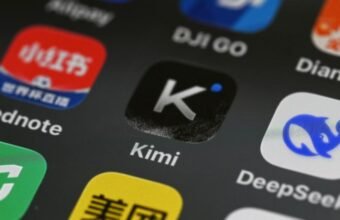
Kimi K3 is the latest large language model developed by Moonshot AI, one of China’s fastest-growing artificial intelligence startups. The model attracted considerable international attention after the company claimed it could compete with leading American AI systems developed by OpenAI and Anthropic in areas such as reasoning, coding, mathematical problem-solving and general language understanding.
The company has announced plans to release the model’s full weights, allowing developers around the world to download, modify and deploy the system for their own applications. Open-weight releases are becoming increasingly significant in the AI industry because they enable researchers, companies and governments to customize advanced models without relying on cloud-based commercial services.
If Moonshot’s performance claims prove accurate, Kimi K3 could strengthen China’s position in the increasingly competitive global AI market. Chinese technology firms have rapidly expanded their AI capabilities over the past two years, producing models that increasingly rival those developed by leading U.S. companies.
The launch has therefore attracted attention not only because of the model’s technical capabilities but also because it reflects China’s growing ambitions to become a global leader in artificial intelligence. Against that backdrop, allegations that the model may have relied on unauthorized use of American technology have intensified concerns within Washington about protecting U.S. technological leadership.
What is model distillation?
Model distillation is a widely used machine learning technique in which a smaller or newer AI model learns by analyzing the outputs generated by a larger, more advanced model. Rather than copying source code or internal model parameters, the student model studies responses produced by the teacher model and gradually learns to generate similar outputs.
The technique is commonly used throughout the AI industry because it allows developers to create smaller, faster and less expensive models while preserving much of the performance of larger systems. Universities, research laboratories and technology companies regularly employ distillation as part of legitimate AI development.
However, the controversy arises when developers allegedly use proprietary commercial models without permission. According to the White House, Moonshot did not merely employ standard research practices but instead carried out large-scale automated interactions with American AI systems to extract valuable capabilities that were then incorporated into Kimi K3.
The distinction is important because U.S. officials argue that legitimate distillation generally occurs with the consent of the model owner or within an organization’s own AI systems. Conducting unauthorized large-scale extraction of proprietary outputs, they argue, crosses the line from scientific research into intellectual property infringement.
Whether the alleged activities violate existing laws will ultimately depend on legal interpretations, contractual terms governing AI usage and evidence produced during any future investigations.
Why is Anthropic involved in the dispute?
The allegations primarily concern Anthropic, one of the leading American artificial intelligence companies and the developer of the Claude family of large language models. According to the White House, Moonshot AI allegedly relied on technology derived from Anthropic’s systems while developing Kimi K3.
Anthropic has previously accused Moonshot of creating fraudulent user accounts that generated more than 3.4 million interactions with Claude AI models. The company alleges those interactions focused on advanced capabilities such as software development, logical reasoning, data analysis and computer control, suggesting that the activity may have been intended to systematically study Claude’s behavior.
Although Anthropic has not publicly disclosed all evidence supporting its claims, the allegations have become part of broader U.S. concerns regarding the protection of American AI technologies. Companies developing frontier AI systems invest billions of dollars in computing infrastructure, engineering talent and research. As a result, protecting proprietary models has become a major commercial and national security issue.
The dispute also reflects growing tensions over how AI companies should prevent automated extraction of their models’ capabilities while continuing to provide legitimate access to customers, researchers and developers.
Why are Nvidia chips part of the controversy?
In addition to allegations involving model distillation, the White House claims that Moonshot AI obtained access to advanced computing hardware powered by Nvidia’s GB300 Blackwell processors, despite U.S. export controls designed to restrict China’s access to cutting-edge AI chips.
Modern artificial intelligence systems require enormous computational resources during training. Nvidia’s most advanced graphics processing units (GPUs) dominate the global AI hardware market because they are specifically designed to handle the complex mathematical operations required by large language models.
The United States has imposed increasingly strict export controls aimed at limiting China’s access to the most advanced AI processors. Washington argues that restricting high-performance chips helps prevent potential military applications while slowing China’s ability to develop frontier artificial intelligence systems.
According to U.S. officials, Moonshot may also have accessed comparable hardware through infrastructure located in Thailand, potentially circumventing existing export restrictions. The White House has not yet presented public evidence supporting these claims, and Moonshot has not commented on the allegations.
If investigations determine that export control rules were violated, companies involved could face sanctions or other regulatory penalties under U.S. law.
What actions could the United States take?
The allegations come as the Trump administration adopts a more aggressive approach toward protecting American artificial intelligence technologies. Treasury Secretary Scott Bessent recently stated that U.S. authorities are examining whether Chinese AI companies have relied on stolen American intellectual property while developing their systems.
If investigators conclude that Moonshot violated U.S. laws or export regulations, the company could face several possible measures. These include financial sanctions, restrictions on business with American companies or placement on the U.S. Commerce Department’s Entity List, which significantly limits access to American technology and suppliers.
Being added to the Entity List has previously affected several major Chinese technology companies by restricting their ability to purchase advanced semiconductors, software and manufacturing equipment from U.S. firms. Such restrictions can substantially slow technological development and complicate international business operations.
The administration could also strengthen export controls, increase scrutiny of cloud computing services used by Chinese AI developers and expand cooperation with allied governments to prevent circumvention of existing restrictions.
Although no formal enforcement action has yet been announced against Moonshot AI, the investigation signals Washington’s determination to closely monitor foreign access to advanced American AI technologies.
What does this dispute mean for U.S.-China AI competition?
The allegations against Moonshot AI illustrate the increasingly strategic nature of artificial intelligence in the broader competition between the United States and China. AI is now widely viewed not only as a commercial technology but also as a key factor influencing economic competitiveness, military capabilities and geopolitical influence.
Both countries are investing heavily in AI research, semiconductor manufacturing and digital infrastructure. The United States continues to lead in frontier AI models, advanced semiconductor design and cloud computing, while China has rapidly expanded domestic AI development through substantial government support and private-sector investment.
As Chinese AI models become more competitive internationally, concerns in Washington about technology transfer, intellectual property protection and export control enforcement have intensified. At the same time, Beijing argues that U.S. restrictions represent efforts to contain China’s technological development rather than protect legitimate security interests.
The dispute could also influence broader diplomatic relations. The allegations emerged shortly before an expected meeting later this year between U.S. President Donald Trump and Chinese President Xi Jinping, adding another contentious issue to an already complex bilateral agenda that includes trade, semiconductors, tariffs and national security.
Regardless of the outcome of the current investigation, the case demonstrates that artificial intelligence has become one of the central arenas of strategic competition between the world’s two largest economies.