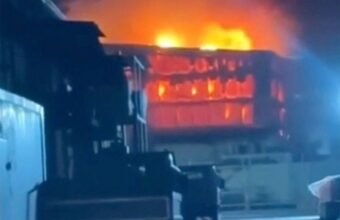








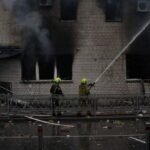











Bahrain’s Defence Force said its air defences intercepted several Iranian aerial attacks late on Saturday. The Ministry of Interior reported material damage at the industrial facility but confirmed that no injuries had been recorded. Civil defence teams were working to extinguish the fire, Al Jazeera reported.
The ministry did not identify the facility or disclose its location.
***
Air raid sirens sounded earlier, prompting authorities to urge residents to seek shelter at the nearest safe location. An all-clear alert was issued later.
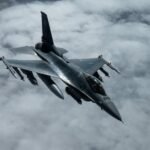
The IRGC said its operation was a response to alleged violations of Iranian airspace by US reconnaissance and combat drones, including MQ-1 and MQ-9 aircraft, as well as an attack on a radar installation on Hengam Island.
In a statement, the force said US military positions at the Al-Riffa and Awali bases in Bahrain had been targeted with missiles and drones. It also claimed that two radars belonging to the US Army’s Patriot air defence systems had been hit.
The IRGC warned that further violations of Iranian airspace would trigger what it called a “harsh and decisive response”.
Bahrain hosts the US Navy’s Fifth Fleet and has faced repeated attacks since the US-Israel war with Iran began in late February. The country has reported three drone attacks in recent days following a lull of several weeks.
Other Gulf states have also come under repeated Iranian fire during the conflict.
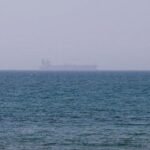
The latest attack on Bahrain came amid reports that several tankers had been struck in the Strait of Hormuz, a key shipping route that has become a major focus of the conflict. Iran has continued efforts to blockade the strategic waterway, while the US military has been escorting vessels through the strait and maintaining a counterblockade of Iranian ports.
The IRGC claimed that US military escort and aerial protection operations in the region had failed to achieve their objectives, resulting in significant losses to equipment and vessels under US protection.
Last month, US Central Command said it had helped Gulf countries export 1.5 billion barrels of oil through the Strait of Hormuz since the summer.
Diplomatic contacts have also continued amid the escalating tensions. Iranian Deputy Foreign Minister Kazem Gharibabadi said on Saturday that a Qatari delegation had visited Tehran the previous evening and held two hours of talks, without providing further details.
Iranian state television quoted Foreign Minister Abbas Araghchi as saying that ongoing regional talks should be given a chance and that the blockade should be lifted through diplomatic means.
Araghchi said Tehran would not consider discussions on reopening the Strait of Hormuz meaningful until its demands were met. These include ending the war on all fronts, unfreezing Iranian assets, lifting oil sanctions and ending the US counterblockade of Iranian ports.
Bahrain’s Foreign Ministry called on the UN Security Council to take firm measures to compel Iran to implement Resolution 2817. Adopted on March 11, the resolution condemned Iranian attacks on Gulf states and Jordan and called for an immediate halt to hostilities and interference with maritime navigation.
Gulf Cooperation Council Secretary-General Jassim Mohamed AlBudaiwi expressed solidarity with Bahrain, saying the country’s security, territorial integrity, facilities and population were integral to the security of all GCC member states. He added that the council supported all measures taken by Bahrain in response to the attack.
Jordan also condemned the strike, describing it as a violation of Bahrain’s sovereignty and a serious threat to regional security.
In a statement carried by the Petra news agency, Jordan’s Foreign Ministry called the attack a dangerous escalation and a breach of international law and the UN Charter.