























***
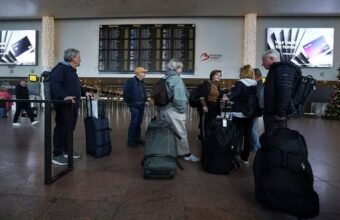
Belgian air navigation service provider Skeyes announced that regular air traffic control services would be unavailable between 7 am and 9 pm local time on Monday, with only emergency and other safety-critical flights permitted.
Brussels Airport had expected approximately 59,500 passengers on 429 flights, including 213 departures and 216 arrivals. The walkout comes amid growing opposition to economic and social reforms introduced by Belgium’s federal coalition government, known as the Arizona coalition, and follows repeated industrial disputes affecting the country’s aviation sector.
Why are Belgian air traffic controllers joining the nationwide strike?
The nationwide industrial action reflects growing tensions between Belgium’s trade unions and the federal government over economic reforms, public spending reductions and the future of social protections.
Belgium’s main labor organizations have called for demonstrations against austerity measures pursued by Prime Minister Bart De Wever’s coalition government. Unions argue that planned reforms could weaken pension protections, reduce purchasing power and place additional financial pressure on working households.
Air traffic controllers employed by Skeyes have joined the broader protest, creating significant operational consequences for the country’s aviation industry.
Although only part of the air traffic control workforce is participating, the provider has determined that the remaining staffing levels are insufficient to maintain normal flight operations safely.
This means the effects extend far beyond the employees directly involved in the strike.
The disruption illustrates how industrial action in essential transport services can have nationwide consequences, particularly when specialized personnel are required to ensure operational safety.
Which Belgian airports and flights will be affected by the November 23 strike?
Belgium’s principal airports are expected to experience extensive disruption because Skeyes cannot provide normal air traffic control services between 7 am and 9 pm local time.
At Brussels Airport, approximately 429 flights were originally scheduled for Monday, carrying an estimated 59,500 passengers.
The schedule included 213 departures and 216 arrivals, although the total number of affected passengers will depend on airline cancellations, alternative arrangements and flights operating outside the suspension period.
Brussels South Charleroi Airport also confirmed that commercial aircraft would be unable to depart or land during the 14-hour interruption.
Airport management had previously arranged staffing to maintain operations despite the national protest, but those preparations could not overcome the absence of air traffic control services.
Only emergency flights and other operations considered essential for safety will be permitted.
Passengers should not assume that flights scheduled outside the closure period will operate normally, as aircraft positioning and airline schedules may also be disrupted.
What should affected passengers do, and are they entitled to refunds or compensation?
Passengers scheduled to travel through Belgian airports on November 23 have been advised to check directly with their airlines before leaving for the airport.
Brussels South Charleroi Airport has specifically urged travelers not to visit the terminal unless their airline has confirmed that their flight will operate.
Airlines are responsible for informing customers about cancellations and providing information about alternative travel arrangements.
Under European Union passenger rights rules, travelers whose flights are canceled generally have the right to choose between ticket reimbursement and rerouting to their destination.
Passengers waiting for alternative flights may also qualify for meals, accommodation and other assistance, depending on the circumstances.
However, financial compensation is not automatically payable when cancellations result from extraordinary circumstances.
Strikes involving air traffic controllers outside an airline’s workforce may fall into this category if the airline demonstrates that the disruption could not reasonably have been avoided.
Passengers should retain booking confirmations and receipts for necessary expenses.
Why have repeated nationwide strikes become a major challenge for Belgian aviation?
Belgium’s aviation sector has experienced repeated industrial disruptions as trade unions challenge the federal government’s economic reforms.
According to the Board of Airline Representatives in Belgium, which represents approximately 25 carriers, the November 23 walkout will be the 11th strike affecting Belgian airspace in 11 months.
The frequency of these disruptions has created operational difficulties for airlines, airports and passengers, particularly when decisions are communicated shortly before scheduled departures.
Brussels Airlines criticized the late notification of the latest air traffic control suspension, saying it had expected minimal disruption until shortly before the announcement.
Airlines must rearrange aircraft schedules, rebook passengers and adjust crew assignments when flights are canceled unexpectedly.
These changes can also affect operations beyond Belgium because aircraft and crews may be scheduled to operate additional flights elsewhere.
The repeated disruptions have intensified tensions between aviation operators and unions, highlighting the competing demands of workers’ rights and transport reliability.
Could the nationwide strike affect Belgium’s economy and force changes in government policy?
The November 23 strike could have economic consequences extending beyond aviation, particularly if public transport, logistics and other essential services experience additional disruption.
Brussels Airport serves as a major international gateway for business travelers, tourists and European institutions. Large-scale flight cancellations can affect hotels, tourism operators, logistics companies and businesses dependent on international connections.
However, the full economic cost cannot be determined before the extent of the disruption becomes clear.
Politically, the demonstrations represent another challenge for Prime Minister Bart De Wever’s government as it attempts to implement spending reductions and structural reforms.
Trade unions argue that austerity measures threaten social protections and household purchasing power, while the government maintains that reforms are necessary to address long-term fiscal pressures.
Continued industrial action could increase pressure for negotiations over the proposed measures.
Nevertheless, there is no indication that the November 23 strike alone will force the government to abandon its reform agenda.
The immediate priority remains ensuring passenger safety and restoring normal aviation operations once air traffic control services resume.