





















***
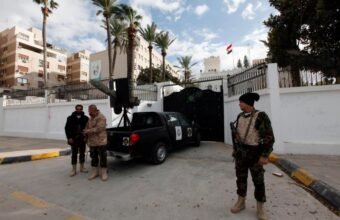
Egyptian Foreign Minister Badr Abdelatty attended the reopening ceremony, emphasizing the longstanding historical and cultural connections between the two neighboring countries.
He said the historical significance of the embassy building “aligns with the deep-rooted human and cultural ties that characterize Egyptian-Libyan relations.”
Egypt closed its embassy in Tripoli in 2014 amid escalating violence and political instability that prompted numerous foreign diplomatic missions to suspend operations.
The closure came as Libya descended into conflict between rival administrations based in Tripoli and the country’s eastern regions.
Cairo has traditionally been one of the strongest regional supporters of eastern-based military commander Khalifa Haftar, a key rival of the internationally recognized government in Tripoli.
The embassy’s reopening therefore represents an important diplomatic development in Egypt’s relations with Libya’s western authorities.
Libya has experienced prolonged political instability since the overthrow of longtime leader Muammar Gaddafi during a NATO-backed uprising in 2011.
The country remains politically divided between rival administrations.
In eastern Libya, military commander Khalifa Haftar leads the Libyan National Army, while the House of Representatives and a government headed by Osama Hammad are also based in the region.
Western Libya is governed by the internationally recognized Government of National Unity, led by Prime Minister Abdulhamid Dbeibah, alongside the High Council of State in Tripoli.
Egypt’s decision to restore its embassy in Tripoli comes amid continued efforts to strengthen diplomatic engagement with Libya despite the country’s longstanding political divisions.