























The Washington Joint Declaration of 8 August 2025 represents far more than another diplomatic agreement between Azerbaijan and Armenia. It marks the culmination of a profound geopolitical transformation that began with Azerbaijan’s victory in the 44-day Patriotic War in 2020 and fundamentally reshaped the strategic landscape of the South Caucasus. More importantly, it symbolises the international recognition of a new regional order founded on the principles of sovereignty, territorial integrity, and the inviolability of internationally recognised borders.
Unlike previous diplomatic initiatives that sought to preserve the status quo or merely manage the conflict without resolving its underlying causes, the Washington process emerged under fundamentally different circumstances. Azerbaijan entered the negotiations having fully restored its territorial integrity and sovereignty, while Armenia came to the negotiating table after gradually acknowledging the political and legal realities created by the outcome of the Second Karabakh War. As a result, the negotiations were no longer centred on questions of territorial status or conflict management, but on establishing a framework for the normalisation of interstate relations, regional stability, and long-term cooperation.
This transformation was neither accidental nor instantaneous. It was the result of a carefully coordinated strategy combining military success, consistent diplomacy, and a long-term political vision. Throughout the post-war period, Azerbaijan maintained that lasting peace could be achieved only through the mutual recognition of internationally recognised borders, respect for sovereignty, non-interference in internal affairs, and the renunciation of territorial claims. These principles ultimately became the foundation of the peace negotiations, reshaping both the diplomatic agenda and the geopolitical dynamics of the South Caucasus.
The end of the 44-day Patriotic War and the signing of the Trilateral Statement on 10 November 2020 created an entirely new political and legal environment in the region. Although the document formally ended active hostilities, its significance extended far beyond a ceasefire arrangement. It established the initial framework for restoring regional transport links, launching the delimitation and demarcation of the border, addressing humanitarian issues, and laying the groundwork for a future peace agreement between Azerbaijan and Armenia.
.jpeg)
Source:aztv.az
In the years that followed, negotiations continued through multiple diplomatic platforms, including Moscow, Brussels, Prague, Chisinau and, ultimately, Washington. Various international actors sought to facilitate the process, yet the substance of the negotiations increasingly reflected Azerbaijan’s strategic priorities. Rather than allowing external mediators to dictate the agenda, Baku consistently promoted a peace process based on internationally recognised legal principles.
One of the defining features of the post-war period was Azerbaijan’s successful transition from military victor to the principal architect of the regional peace agenda. President Ilham Aliyev’s proposal of five basic principles for a peace agreement fundamentally reshaped the negotiations. Based on the mutual recognition of sovereignty, territorial integrity, the inviolability of internationally recognised borders, the non-use of force, border delimitation and demarcation, the establishment of diplomatic relations, and regional cooperation, these principles shifted discussions away from the decades-long debate over the former status of Karabakh and towards internationally accepted norms governing interstate relations.
As President Ilham Aliyev repeatedly emphasised, “Azerbaijan is the author of the peace initiative.” This statement reflected not only diplomatic rhetoric but also the practical reality that the conceptual framework for the negotiations originated in Baku rather than in any external mediation format.
Another major turning point came in October 2022 during the European Political Community Summit in Prague, where Armenian Prime Minister Nikol Pashinyan publicly recognised Azerbaijan’s territorial integrity, including the Karabakh region. This acknowledgement marked a significant departure from decades of previous Armenian policy and created fresh momentum for the peace negotiations.
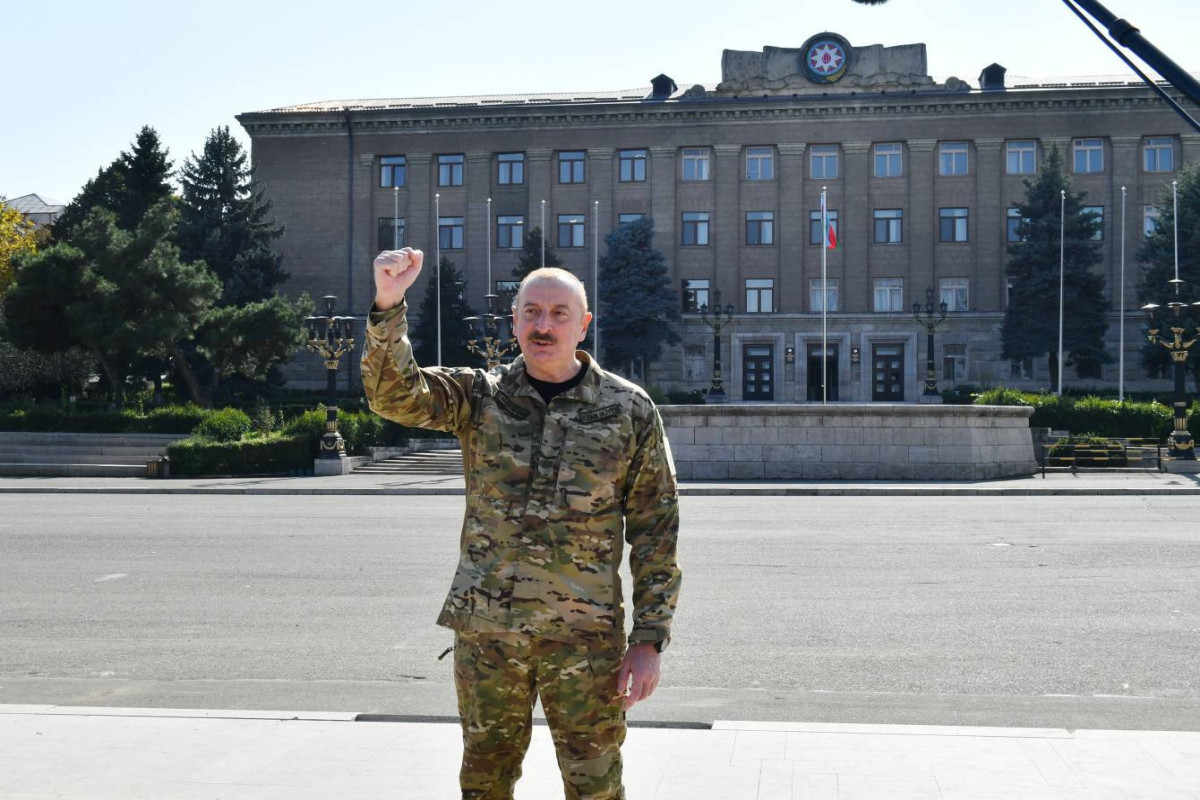
The process reached another decisive milestone in September 2023, when Azerbaijan carried out local anti-terror measures that resulted in the full restoration of its sovereignty throughout its internationally recognised territory. The operation effectively brought one of the longest-running conflicts in the post-Soviet space to an end. For the first time since the early 1990s, Azerbaijan exercised full constitutional authority over all of its territory.
Following these developments, President Ilham Aliyev declared that “the Karabakh issue has been resolved.” In the Azerbaijani leadership’s assessment, the remaining challenge was no longer the restoration of territorial integrity but the establishment of a durable political framework capable of preventing future confrontation.
Source: AzerTAG
Despite these developments, the peace process did not immediately reach its conclusion. Throughout 2024 and much of 2025, negotiations continued amid considerable political challenges. Armenia faced domestic resistance from nationalist and revanchist forces opposed to normalisation, while several external actors continued to pursue policies that complicated the diplomatic process.
Certain political circles in Europe remained reluctant to fully recognise the geopolitical consequences of the Second Karabakh War. Various resolutions, political statements and public campaigns sought to maintain pressure on Azerbaijan despite the emergence of an entirely new reality on the ground. In the United States, several members of Congress closely associated with Armenian advocacy groups also maintained a critical stance towards Azerbaijan.
Nevertheless, the political environment gradually evolved following Donald Trump’s return to the White House. High-level contacts between Washington and Baku intensified, accompanied by exchanges of official correspondence and renewed strategic dialogue. The United States increasingly came to view stability in the South Caucasus as an important component of broader Eurasian connectivity, energy security, and East–West transport corridors.
This evolving diplomatic environment culminated on 8 August 2025, when Azerbaijani President Ilham Aliyev, Armenian Prime Minister Nikol Pashinyan and US President Donald Trump met in Washington. During the summit, the foreign ministers of Azerbaijan and Armenia initialled the agreed text of the future peace treaty, while the three leaders signed the Washington Joint Declaration.
The Declaration reaffirmed the parties’ commitment to the principles of the United Nations Charter, the mutual recognition of sovereignty and territorial integrity, respect for internationally recognised borders, and the rejection of the use or threat of force. It also confirmed their determination to finalise and sign a comprehensive peace treaty, formally bringing to a close one of the most protracted conflicts in the post-Cold War international system.
During the signing ceremony, President Donald Trump described the agreement as “a historic opportunity to replace decades of conflict with lasting peace.” He emphasised that the normalisation of relations between Azerbaijan and Armenia would contribute not only to regional stability but also to broader international security and economic cooperation.
President Ilham Aliyev described the Washington agreements as “a historic achievement” and stressed that “the documents signed today create a solid political foundation for lasting peace in the South Caucasus.” He added that Azerbaijan had consistently demonstrated both the political will and the strategic vision needed to transform military victory into lasting peace.
The political significance of the Washington Joint Declaration extends well beyond bilateral normalisation. For the first time, Armenia formally accepted the political and legal realities established after the Second Karabakh War within a comprehensive international framework. The decades-long debate over the future status of Karabakh effectively came to an end, while relations between the two states were firmly placed within the universally recognised principles of international law.
Source: caspianpolicy
Equally significant was the impact of the Declaration on Azerbaijan’s international diplomatic standing. For years, Azerbaijan had faced political criticism and lobbying campaigns in various international institutions. However, Armenia’s formal recognition of Azerbaijan’s territorial integrity substantially weakened many of the narratives previously advanced against Baku.
The Washington summit also opened a new chapter in Azerbaijan-United States relations. Agreements reached in the fields of energy, transport, strategic investment and regional connectivity reflected Washington’s growing recognition of Azerbaijan as one of the key geopolitical actors linking Europe, Central Asia and the South Caucasus.
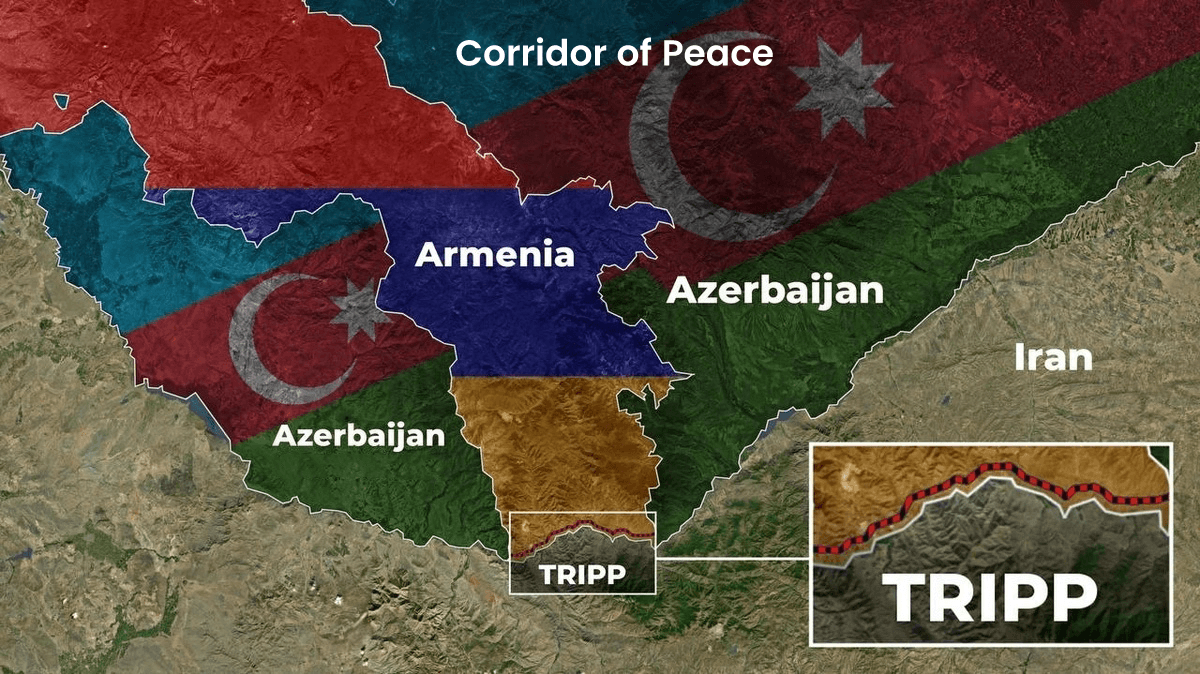
From a broader strategic perspective, the significance of the Washington Declaration extends beyond Azerbaijan and Armenia themselves. Stable relations between the two countries create favourable conditions for the further development of the Middle Corridor, increased regional trade, improved connectivity between Europe and Asia, enhanced energy security, and deeper economic integration across Eurasia. As global competition over transport corridors and supply chains intensifies, peace in the South Caucasus is becoming increasingly important not only for regional actors but also for the European Union, the United States, Türkiye, Central Asia and other international stakeholders.
Ultimately, the Washington Joint Declaration should not be viewed simply as another diplomatic agreement. Rather, it represents the political consolidation of the new regional order that emerged after the Second Karabakh War. It demonstrates how military realities can be translated into internationally recognised political and legal arrangements through sustained diplomacy and strategic leadership.
Five years after the end of the 44-day Patriotic War, the South Caucasus stands at a historic crossroads. Whether the region ultimately becomes a platform for lasting cooperation or returns to geopolitical competition will depend on the implementation of the commitments undertaken in Washington. Yet one conclusion is already clear: the strategic balance that defines today’s South Caucasus differs fundamentally from that of the past, and the Washington Declaration has become one of the principal documents shaping the region’s new geopolitical reality.