


















A serious maritime crisis is unfolding in the Persian Gulf, where hundreds of commercial vessels — including oil tankers and cargo ships — have effectively become trapped near the Strait of Hormuz amid escalating regional tensions, as reported by News.Az.
Real-time ship tracking data show a significant buildup of vessels across the Persian Gulf, particularly near the approaches to the Strait of Hormuz — the strategic maritime corridor linking the Persian Gulf with the Gulf of Oman and the Indian Ocean. Many vessels are either anchored or moving at extremely low speeds, indicating that shipping companies are postponing transit through the strait due to heightened security risks.
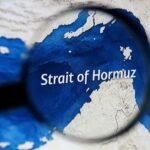
The Strait of Hormuz is one of the most critical chokepoints in global trade. Roughly one-fifth of the world’s oil transported to international markets normally passes through this narrow waterway. Any disruption to navigation in the area immediately affects global energy markets and international logistics.
***
According to maritime sources and shipping industry analysts, the number of vessels passing through the strait has sharply declined in recent days. Maritime traffic has dropped by more than 90 percent compared to normal levels. As a result, dozens — and possibly hundreds — of tankers carrying crude oil and petroleum products have been forced to wait in the waters of the Persian Gulf.
Some vessels are positioned near the coasts of Oman and the United Arab Emirates, while others remain inside the Persian Gulf, hoping to transit the strait later once conditions become safer.
The situation has effectively created a “floating queue” of tankers and cargo ships. In some parts of the Persian Gulf, large clusters of vessels have formed temporary waiting zones for international maritime traffic.
Shipping companies have become increasingly concerned following recent incidents in the region, including reports of attacks on commercial vessels and heightened military activity. Amid these risks, many shipowners and operators are choosing to delay passage through the strategically vital maritime corridor.
Insurance companies have also begun reviewing coverage conditions for ships transiting the Strait of Hormuz. Insurance costs and so-called “war risk premiums” have risen significantly due to the deteriorating security situation.
In addition, ship tracking systems indicate that some vessels have started altering their AIS (Automatic Identification System) messages. In certain cases, crews are adding extra information about the nationality of the crew or the ship’s ownership, which experts believe may be an attempt to reduce the risk of attacks or misunderstandings amid the tense environment.
Meanwhile, ports across the Persian Gulf are experiencing increased pressure as some vessels delay departures and wait for the situation to evolve.
Energy market analysts warn that a prolonged disruption to shipping through the Strait of Hormuz could have serious consequences for global oil supplies. Even a partial reduction in tanker traffic may lead to delivery delays, higher transportation costs, and increased volatility in oil prices.
The growing concentration of vessels near the Strait of Hormuz has become a clear indicator of how geopolitical tensions can directly impact global maritime trade and energy security.