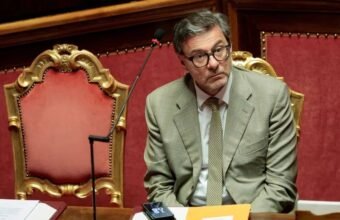























Speaking at a finance conference in Cernobbio, the minister said Italy was entering the crisis from a position of relative strength,” despite mounting global uncertainty linked to tensions involving Iran, News.Az reports, citing Reuters.
***
Deficit outlook offers potential relief
Giorgetti said he remained hopeful that Italy’s 2025 budget deficit could be revised down to 3% of gross domestic product from 3.1%, based on updated data from ISTAT.
Such a revision would allow Italy to exit the European Union’s excessive deficit procedure earlier than expected, marking a significant improvement in fiscal stability.
The government is currently targeting a deficit of 2.8% of GDP for this year.
Growth forecasts trimmed
Despite the relatively stable fiscal position, Italy’s economic outlook has weakened.
The government now expects growth of around 0.5% to 0.6% this year, with a modest recovery to 0.7% projected for 2027. These figures are slightly below earlier forecasts published in September.
Officials noted that the projections do not yet include potential stimulus measures aimed at cushioning households and businesses from rising energy costs.
Energy shock weighs on outlook
Higher energy prices — driven in part by instability in key global supply routes such as the Strait of Hormuz — are expected to remain a key risk for Italy and the wider European economy.
Giorgetti said that while the outlook has darkened, Italy is not currently facing any shortages in energy supply.
To mitigate the impact on consumers, the government has allocated more than €400m to temporarily reduce fuel excise duties, although industry groups have called for more effective measures as prices remain elevated.
Call for coordinated EU response
The minister also urged a coordinated response across the European Union to address the кризис, emphasising the need for joint action in managing energy and economic risks.
Further policy decisions are expected in the coming weeks as officials consult with industry stakeholders and assess the evolving situation.
Cautious stability amid uncertainty
While Italy’s fiscal position offers some buffer against external shocks, analysts say the country — like much of Europe — remains vulnerable to prolonged geopolitical tensions and sustained high energy costs.
As updated forecasts are due in April, attention will focus on whether additional measures can support growth without undermining fiscal discipline in an increasingly challenging economic environment.