
















Iran didn’t lose, Israel will take revenge after US deal, Medvedev says
After the US–Iran deal was concluded, it became clear that Tehran had not lost the war and that Israel, feeling offended, would take revenge, according to Dmitry Medvedev, Deputy Chairman of the Russian Security Council, News.Az reports, citing TASS.
“The notorious ‘deal’ between the US and Iran has nevertheless taken place. Setting aside the verbal chaff, it became obvious to everyone that Tehran, to put it mildly, did not lose this war to Washington, despite the assassination of the head of the Iranian state and devastating missile strikes,” stated the Russian politician. He noted that “the third participant – Israel – is offended in its expectations of the complete defeat of Iran’s political regime, which means it will take revenge, and Trump cannot do anything about it.”
“The unstable agreement [between Iran and the US] is easily blown up by new strikes on Lebanon or other provocations. And this is exactly what Netanyahu’s cabinet, which survives on war, needs,” Medvedev explained.
“It is rash to expect peace, and the Strait of Hormuz has truly turned into a Persian nuke, as I wrote back on April 8. And it will be used,” the politician concluded.
**16:25
UKMTO: Strait of Hormuz open at all times
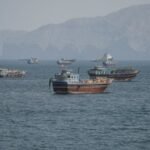
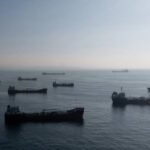
The UK Maritime Trade Operations Centre (UKMTO) said on Friday that the southern shipping route through the Strait of Hormuz remains open at all times and lowered its risk level for the waterway from “substantial” to “moderate,” News.Az reports, citing Iran International.
In its latest advisory, UKMTO said vessels could continue using the route, which runs close to Oman, but warned mariners of the possible presence of mines and ongoing naval clearance operations.
“Mariners should be advised of the existence of mines and expect naval presence as clearance operations continue,” the advisory said.
**15:35
US–Iran technical talks expected to start in Switzerland within days
Technical-level talks between the United States and Iran are expected to begin in Switzerland within the next day or two, according to Pakistani government sources cited by Anadolu Agency, as both sides move to restart negotiations that were delayed earlier in the week due to Israeli strikes in Lebanon.
“Pakistan, together with other mediators, is in touch with both sides that are expected to meet in Switzerland in a day or two to begin the next phase of the Islamabad Memorandum of Understanding,” a source close to the mediation process said.
**23:35 19/06
Iran sets new Hormuz shipping rules following US agreement
Iran’s newly formed Persian Gulf Strait Authority (PGSA) has introduced mandatory online clearance requirements for ships passing through the Strait of Hormuz, following the U.S.–Iran memorandum of understanding.
The PGSA says the only official channels for passage requests are its website and the email address listed on it. Operators must now secure permission via the PGSA.ir portal to transit the maritime chokepoint, Indian Express reported. The corridor handles one-fifth of global oil and liquefied natural gas flows, News.Az reports, citing Outlook India.
***
“With reference to the signing of the Islamabad MOU and the issuance of directives by the authorities, all applicants intending to passage through the Strait of Hormuz are hereby informed that during the period specified in the MOU, vessels that submit their passing requests to the PGSA in compliance with the following points will be cleared for passage promptly. Official Website for submitting passage requests: PGSA.ir. Email for follow-up inquiries: info@PGSA.ir,” the PGSA posted on X.
Vessel movements through the narrow corridor ground to a halt in early March after the West Asia war broke out following US-Israeli strikes on Iran on February 28. The Pakistan-mediated initial pact between the US and Iran is expected to help maritime traffic through the strait pick up and normalise over the coming weeks and months.
**20:50
Iran claims the US is responsible for stopping the war on all fronts
Iran’s Foreign Minister Abbas Araghchi has said that the United States bears a “commitment and responsibility” to help end conflicts across the region, including the war in Lebanon, as part of the recently agreed understanding between Washington and Tehran.
In a call with his Pakistani counterpart, Mohammad Ishaq Dar, the Iranian foreign ministry said Araghchi emphasised that any violations of the MoU would be directed at the US, and “warned of the consequences and repercussions of such an action”.
**18:58
UN experts back US–Iran memorandum, call for prioritising Iranians’ needs
UN human rights experts welcomed the signing of a 14-point memorandum of understanding between the United States and Iran, describing it as a positive step toward de-escalation, but warned that any final agreement would remain incomplete unless it explicitly addresses human rights concerns in Iran.
In a statement, the experts said the memorandum focuses largely on military withdrawal, the reopening of the Strait of Hormuz, nuclear commitments, sanctions relief and a proposed $300 billion reconstruction fund, News.Az reports, citing Anadolu agency.
***
“The Iranian people — who have suffered enormously from both external military aggression and internal repression – are barely visible in this framework,” they said.
The experts said the conflict, which began in late February, has killed thousands of civilians, displaced millions and damaged schools, hospitals, religious and cultural sites, residential areas and critical infrastructure.
They also urged negotiators to ensure that any final deal includes meaningful improvements in human rights conditions in Iran.
The statement highlighted the severe economic consequences of the conflict, noting that a nearly three-month internet shutdown disrupted businesses and livelihoods across the country. Although connectivity has largely returned, heavy restrictions remain in place, hampering recovery efforts.
**14:37
US President Donald Trump and Iranian President Masoud Pezeshkian signed the memorandum of understanding, while Pakistan played the role of mediator through the talks.
The effort brought together formal negotiators, back-channel envoys and senior political leaders. It also involved key figures on all sides as the conflict stretched into its fourth month, with Pakistan hosting crucial rounds of talks in Islamabad and helping carry the process through to its final stages, News.Az reports, citing India Today.
Trump, who has made presenting himself as a peacemaker a major part of his second-term foreign policy, drove the push for a deal with Iran and cast it as a signature achievement of his second term. US Vice President J D Vance was a key figure in the administration’s war cabinet and helped shape Washington’s negotiating position. He was closely involved in discussions over the 14-point memorandum of understanding that became the basis of the deal, and led the US delegation during marathon talks with Iran in Islamabad in early April, though both sides did not reach an agreement then.
**12:10
Iran’s top security authority has issued a warning that it would take unspecified pre-planned countermeasures if the United States breaches the terms of a newly signed memorandum of understanding between the two countries.
The Supreme National Security Council (SNSC) issued a message on Friday, two days after Iranian President Masoud Pezeshkian and his American counterpart Donald Trump remotely signed the MoU that brings about a permanent end to the illegal US-Israeli war of aggression against the Islamic Republic, News.Az reports, citing NourNews.
Leader of the Islamic Revolution Ayatollah Seyyed Mojtaba Khamenei hailed Iranian officials’ efforts to reach the agreement, while noting that Trump used various leverage points out of desperation.
The SNSC’s Secretariat assured the Leader and the Iranian nation that it will show no leniency in carrying out Ayatollah Khamenei’s orders in safeguarding the rights of the Iranian people and the Resistance Front, honoring the blood of martyrs, and advancing future talks on the basis of the Islamic Republic’s interests and welfare.
The secretariat also noted that it “will not rest until the full rights of the Iranian people are secured and the pure and sacred blood of our martyrs is avenged.”
“In this regard, with complete distrust of the treacherous and covenant-breaking enemy, and with precise monitoring of the process of negotiations and the implementation of the agreements, should any violation or breach occur on the American side, a reciprocal measure will be taken according to the predetermined plan.”
**19:47 18/06
Pakistan’s Prime Minister Shehbaz Sharif and Iran’s President Masoud Pezeshkian congratulated each other on the signing of the interim agreement.
In the phone call, Sharif “congratulated President Pezeshkian, the Iranian leadership, and the brotherly people of Iran, on the signing of the historic peace deal”, according to a statement shared by the Pakistani prime minister’s office on social media, News.Az reports, citing Al Jazeera.
“This landmark deal would not only help restore peace in the region, but also go a long way in rebuilding the Iranian nation and further strengthening Pakistan-Iran ties,” it said.
For his part, Pezeshkian “thanked the prime minister and the Field Marshal Syed Asim Munir, for their extremely critical roles in steering the mediation process … that had ensured its success”.
“Iran would always remember Pakistan’s positive and constructive efforts and its support for Iran during these difficult times,” Pezeshkian said.
**17:43
Qatar has welcomed the signing of the memorandum of understanding between the United States and Iran, saying it reflects both sides’ commitment to resolving their differences through dialogue and negotiation.
The deal, which covers the cessation of hostilities and ensures freedom of navigation in the Strait of Hormuz, represents “a solid foundation for advancing to the next stage of negotiations”, the Foreign Ministry said, News.Az reports, citing Al Jazeera.
It called on all parties to “maintain the positive spirit, constructive endeavors, and joint coordination to ensure comprehensive and sustainable outcomes”.
Qatar also praised Pakistan’s role in brokering the agreement. The statement comes as the two sides prepare for talks at Burgenstock in Switzerland on Friday, with Qatar among the mediating parties expected to attend.
**16:55
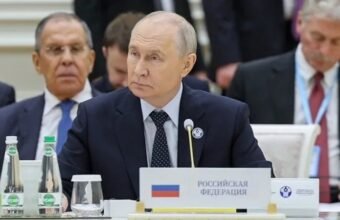
Russian President Vladimir Putin expressed support for the US–Iran agreement that was mediated by Pakistan.
Moscow views the deal as a step towards permanently halting the conflict and could serve as a model for future peace agreements, said Putin, News.Az reports, citing Al Jazeera.
Speaking at the Russia-ASEAN summit in the Russian city of Kazan, he said stabilisation in the Middle East would be beneficial for global energy markets.
**16:41
Iran’s Foreign Minister Abbas Araghchi said he held a phone call with his Kuwaiti counterpart Sheikh Jarrah Jaber Al-Ahmad Al-Sabah to discuss the US–Iran memorandum of understanding (MoU) and other regional developments.
In a post on Telegram, Araghchi said Iran hopes the agreement will help restore peace and stability in the region, and stressed the need to engage in dialogue with Gulf countries to “resolve existing ambiguities”, News.Az reports, citing Al Jazeera.
**16:17
Pakistan Prime Minister Shehbaz Sharif has signed the Islamabad Memorandum of Understanding as mediator after US President Trump and Iranian President Masoud Pezeshkian both endorsed the agreement, News.Az reports, citing Al Jazeera.
**10:36
Initial talks between the United States and Iran are set to take place on Friday at the Bürgenstock mountain resort in Switzerland, following the signing of an interim ceasefire agreement between the two countries, according to the Swiss government.
“As things stand, the plan is still for the U.S. and Iran, along with mediators Pakistan and Qatar and other involved countries, to meet tomorrow at Buergenstock for initial negotiations about implementing the agreement, News.Az reports, citing The Korea Times.
“No further information is currently available regarding the schedule and details of this meeting,” the Swiss foreign ministry said in a statement.
**10:50 17/06
The G7 leaders said the deal provides a “historic opportunity to prevent” Iran from acquiring any nuclear weapons and to address its regional and ballistic activities, News.Az reports, citing Al Jazeera.
– They reaffirmed “the right of transit passage without restrictions or tolls is the bedrock of international trade” and said France and the UK can “play an important role to facilitate the resumption of maritime traffic in the Strait of Hormuz”.
– They committed themselves to “accelerate the diversification of energy supply routes in order to reduce global vulnerability to the Strait of Hormuz”.
– They also expressed support for the Lebanese government’s efforts to disarm Hezbollah.
– They said they will “accelerate humanitarian and reconstruction efforts” in Gaza and called for an end to violence in the occupied West Bank.
**17:17
The US president is giving more comments at the G7 meeting in France.
He said the Strait of Hormuz will be completely open by Friday, News.Az reports, citing Al Jazeera.
**12:56
Iranian Foreign Minister Abbas Araghchi said that Iran and the United States will begin a new round of negotiations on Friday in Switzerland following the start of an interim agreement that day, aimed at reaching a final deal.
Abbas Araghchi also warns that any Israeli attack on Lebanon or continued presence on Lebanese territory from now on constitutes a violation of the interim agreement with the United States, News.Az reports, citing The Times of Israel.
***
Israel has said it will keep troops in Lebanon despite mediators and Iran saying that the US-Iran agreement includes a ceasefire in the conflict there between Israel and the Iran-backed Hezbollah terror group.
“In our view, the two parties to this memorandum are the US and Israel on one side, and Iran and Hezbollah on the other,” Araghchi says.
He calls ending the war in Lebanon was the “most important issue” in the deal with the United States.
“This is perhaps the most important issue in the memorandum — the declaration of an immediate and permanent end to the war on all fronts, including in Lebanon,” he says.
**10:34
The White House says the proposed memorandum of understanding with Iran is only a framework agreement, not a final peace deal.
US officials say negotiations on Iran’s nuclear programme will begin after the June 19 signing, with sanctions relief tied to inspections, News.Az reports, citing Al Jazeera.
**10:12
Political and security actors in Baghdad are closely weighing the implications of the newly announced US–Iran understanding, with reactions remaining divided: some see potential economic and diplomatic gains from reduced tensions, while others warn that the agreement’s durability is uncertain and could be tested quickly by regional flashpoints.
The uncertainty is compounded by Iraq’s own complex political, security, and economic landscape. The country remains deeply affected by shifts in relations between Washingtn and Tehran, as overlapping regional and international interests shape its stability, power dynamics, energy sector, and trade routes, News.Az reports, citing Shafaq news.
According to preliminary announcements, the US-Iran agreement, brokered by Pakistan, includes a halt to military operations across the region, including in Lebanon, the reopening of the Strait of Hormuz to international shipping, the lifting of Iran’s maritime blockade, and the launch of nuclear negotiations within 60 days.
Although implementation details remain incomplete, the announcement has already begun shaping market expectations and regional calculations, signaling that its impact is likely to extend beyond Washington and Tehran to countries such as Iraq.
**20:12
Trump has said the deal with Tehran is “all signed”.
“The deal’s all signed, and the Strait is already partially opened,” Trump said in Evian-Les-Bains, France, appearing alongside French President Emmanuel Macron.
The waterway will be “completely open” by Friday, Trump pledged.
**16:52
French President Emmanuel Macron said ahead of the G7 summit in France that his country and its partners would do everything possible to ensure there are no tolls imposed on ships passing through the Strait of Hormuz, stressing the importance of keeping the key maritime route open and free for global trade.
Speaking to TF1 TV hours after the Iran-US deal was announced, Emmanuel Macron said a joint France-UK mission to ensure the strait opens is prepared to deploy “very quickly”, News.Az reports, citing Al Jazeera.
The French flagship aircraft carrier Charles de Gaulle is ready to be in the area “on a timescale of two to three days”, he added.
**15:37
Canadian Prime Minister Mark Carney welcomed the newly announced US–Iran agreement on Monday, while calling on all sides to keep negotiating and avoid any further escalation.
In a statement, Carney thanked Pakistan, Qatar and other regional partners for their roles in facilitating the talks, News.Az reports, citing Anadolu agency.
***
“Canada welcomes the new agreement between the United States and Iran,” he said.
“We extend our gratitude to Pakistan, Qatar and regional partners for their indispensable roles in facilitating negotiations.”
Carney said Canada has consistently maintained that any lasting ceasefire should ensure the safe and uninterrupted movement of commercial traffic through the Strait of Hormuz while also addressing concerns surrounding Iran’s nuclear program.
“Canada has been clear that a durable ceasefire must both ensure safe and unimpeded transit through the Strait of Hormuz, and address the pervasive threat of Iran’s nuclear program,” he said.
The Canadian premier called on all sides to continue engaging in negotiations in good faith and refrain from actions that could increase tensions.
“As negotiations continue, we urge all parties to maintain good faith dialogue and refrain from escalation,” Carney said.
He added that Canada remains in close contact with international partners and is prepared to support efforts aimed at promoting stability and a lasting peace in the region.
“Canada remains in close contact with partners and is ready to support efforts to bring stability and lasting peace to the region, including in Lebanon,” he said.
US President Donald Trump announced Sunday that an agreement with Iran had been finalized and said he was authorizing the reopening of the Strait of Hormuz and the removal of a US naval blockade.
**12:59
Chancellor Christian Stocker said in a post on X that he welcomes the agreement.
“I call on all parties to ensure the swift and full implementation of the memorandum, including the permanent opening of the Strait of Hormuz in order to guarantee freedom of navigation in accordance with international law,” he said, News.Az reports, citing Al Jazeera.
Stocker said the deal opens a window for negotiations towards “a more stable and secure” Middle East.
“This includes addressing Iran’s nuclear and ballistic missile programmes,” he said. “The stakes are high not only for the region but for all of us.”
**12:01
The strongest endorsements came from regional mediators and European governments, which described the breakthrough as a major step toward restoring stability in the Middle East and preventing further escalation, News.Az reports, citing Iran International.
***
Qatar’s Prime Minister welcomed the memorandum of understanding reached between Tehran and Washington and voiced support for the next phase of negotiations.
Doha has played a central role in diplomatic efforts throughout the conflict and was among the key countries involved in mediation.
UN Secretary-General António Guterres congratulated both sides for reaching what he described as a peace deal providing for “an immediate and permanent ceasefire, the reopening of the Strait of Hormuz, as well as a framework for further negotiations.”
“This represents a critical step towards the peaceful settlement of the conflict,” Guterres said, while thanking Pakistan, Qatar, Egypt, Saudi Arabia, Türkiye and other regional countries for helping facilitate the agreement.
British Prime Minister Keir Starmer also welcomed the deal, saying London stood ready to support the technical negotiations that will now begin.
“I warmly welcome today’s agreement reached between the United States and Iran,” Starmer said, reiterating Britain’s longstanding position that Iran must never acquire a nuclear weapon.
Japan’s Prime Minister Sanae Takaichi also welcomed the announcement, expressing hope that “free and safe navigation through the Strait of Hormuz will be ensured in practice, and that a final agreement on Iran’s nuclear issue and other matters will be reached as soon as possible.”
In a joint statement, Britain, France, Germany and Italy signaled their readiness to ease sanctions on Iran in response to steps addressing its nuclear program.
“Iran must never acquire a nuclear weapon. We stand ready to work with the US, Iran and the IAEA to this end,” the four countries said.
The international reaction followed announcements by Iranian and US officials that they had reached a memorandum of understanding ending hostilities and launching a 60-day period of negotiations on a final settlement.
Tehran has said final negotiations will begin only after implementation of key provisions in the framework agreement, including the lifting of the maritime blockade and the release of Iranian funds.
US President Donald Trump described the agreement as a historic achievement, saying it would bring “peace and security” to the region and allow for the reopening of the Strait of Hormuz, one of the world’s most important energy shipping routes.
While many details remain unresolved, the broad international backing suggests governments across the region and beyond are eager to see the fragile agreement evolve into a lasting settlement.