









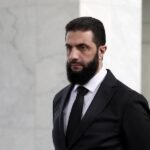















In a televised address to the nation, Iranian President Masoud Pezeshkian stated that Iran has never had, and does not have, any intention of committing aggression against any neighboring country. He apologized to neighboring states that had been struck by Iranian attacks.
Pezeshkian said that the previous day the Interim Governing Council held a meeting during which a decision was adopted and communicated to the armed forces. According to that decision, attacks on neighboring countries must cease immediately, and any retaliatory action will only be taken if Iran itself is attacked from the territory of those states. The president emphasized that existing problems should be resolved through diplomacy rather than military confrontation.
***
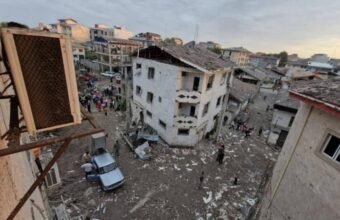
These statements came amid extremely tense regional conditions and a sharp reaction from Baku following strikes on Nakhchivan. Although Azerbaijan was not mentioned directly in the Iranian president’s address, it was clear that what had happened could not be ignored. The strikes on Azerbaijani territory became one of the most sensitive episodes of the current conflict.
Since the beginning of the war, Iran has been launching drone and ballistic missile attacks against countries in the Persian Gulf region. Almost every state in the region has been affected in one way or another. Missile and drone strikes have been recorded across several countries. One projectile even reportedly “accidentally” landed in Türkiye. Incidents like these only heighten tensions and create an atmosphere of uncertainty and risk across the entire region.
At the same time, official Tehran had for a long time avoided acknowledging responsibility for such incidents and had not offered apologies to the affected countries. It is therefore reasonable to assume that Iran’s current statements were prompted in part by the strong reaction from Baku. The strikes on Nakhchivan appear to have crossed a line beyond which the situation could no longer be ignored.
This step would have been difficult to justify even within the framework of Iranian propaganda. There are no military bases hostile to Iran located on Azerbaijani territory, nor is there any foreign military infrastructure there. Moreover, Baku has maintained strict neutrality throughout the conflict. Azerbaijan has not taken part in military operations and has not allowed its territory to be used for any action against Iran.
At the same time, Azerbaijan has sought to support Iran from a humanitarian standpoint. President Ilham Aliyev was essentially the only regional leader who visited the Embassy of the Islamic Republic of Iran in Baku on the day of the funeral of Iran’s Supreme Leader Ali Khamenei. He signed the condolence book, spoke with the ambassador, and emphasized that Azerbaijan stands alongside the Iranian people in their moment of grief.
This was a serious and symbolic gesture, especially considering Azerbaijan’s close relations with Israel as well as Baku’s strategic partnership with the United States. Despite the complicated geopolitical environment, Azerbaijan demonstrated diplomatic restraint and respect.
That makes it all the more striking that the strikes on Nakhchivan occurred almost immediately afterward. In such circumstances, a logical step from Tehran would have been a direct phone call to Baku — to President Ilham Aliyev personally. Such a move could have helped ease tensions and demonstrate respect toward a neighboring state.
Instead, Masoud Pezeshkian delivered what amounted to messages through a televised address.
At the same time, the delay in offering a direct apology to Ilham Aliyev may also reflect the current structure of governance in Iran itself. Following the Supreme Leader’s death, the country appears to be operating under a fragmented system in which power is distributed among several centers of influence.
Today there is no single undisputed center of decision-making in Iran such as the Supreme Leader had been for decades. The absence of such a figure means there is no individual capable of taking full political responsibility for events and making swift decisions, including the decision to directly contact Azerbaijan’s leadership.
In other words, Iran’s system of governance is currently experiencing a period of significant turbulence. In a situation where there is no unified leadership and no single strategic command center, many decisions may be taken by different institutions simultaneously.
This makes the situation even more concerning. Even if the Iranian president announces that attacks on neighboring states will cease, there is no guarantee that such decisions will be fully implemented. Military units, particularly those within the Islamic Revolutionary Guard Corps (IRGC), may act according to their own assessments.
In effect, what we are witnessing may be a crisis of control over the country’s military apparatus. Following Ayatollah Khamenei’s death, the system of unified command appears to have been seriously weakened. As a result, certain military structures may now be capable of making operational decisions independently, guided either by earlier directives or by their own interpretation of the situation.
This was perhaps the most notable element of Pezeshkian’s address: an implicit acknowledgment that the armed forces are not always fully under the control of the political leadership. According to the president, Israeli and U.S. strikes had significantly weakened and, in some cases, decapitated Iran’s military command structure.
Thus, official Tehran effectively acknowledged responsibility for strikes against neighboring countries, including Azerbaijan, and promised that such incidents would not be repeated. Pezeshkian attempted to convey the impression that the situation was gradually returning to state control.
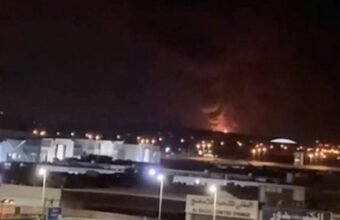
Yet events almost immediately cast doubt on that narrative. Shortly after the president’s address, the IRGC carried out a strike on Dubai airport. This episode again raised questions about the official authorities’ ability to fully control the military’s actions.
The IRGC has traditionally occupied a special position within Iran’s power structure and is widely viewed as being primarily accountable to the country’s clerical establishment. Many analysts believe that the organization possesses significant autonomy and its own channels of decision-making.
This was indirectly acknowledged by Iran’s Foreign Minister Abbas Araghchi. In an interview with Al Jazeera on March 2, he effectively admitted that some military units operate independently of the central government. According to Arab Times, the Iranian foreign minister stated that certain military units are “to some extent independent and isolated” and act on the basis of previously issued instructions.
These remarks were made after the bombing of Oman. “What happened in Oman did not happen by our will. We have already instructed our army and armed forces to exercise caution in selecting targets,” Araghchi said. At the same time, he indicated that some units are acting according to earlier directives. Some observers interpret this as a reference to instructions issued during the lifetime of the late Supreme Leader.
Since then, the situation has not fundamentally changed. Iran continues to strike targets across the region, and these are not always American military facilities. For example, on March 7, almost immediately after Pezeshkian’s address, the IRGC launched an attack on Dubai airport.
This only reinforced doubts about how effectively civilian authorities are able to control the actions of military structures.
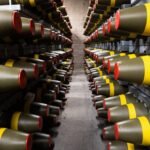
According to Arab Times, it is precisely the IRGC that controls a significant portion of Iran’s ballistic missile arsenal as well as a large fleet of armed drones.
It is clear that both Pezeshkian and Araghchi are trying to keep the conflict within certain limits and avoid a complete rupture with Arab neighbors. According to Iran’s ambassador to Azerbaijan, Tehran is likewise not interested in damaging relations with Baku.
In Azerbaijan, incidentally, few believe that the Iranian president personally ordered drones to be launched toward the airport and a school in Nakhchivan. Baku understands the internal difficulties facing Iran’s leadership.
However, this raises a fundamental question: does that make the situation any less dangerous?
If bombardments continue even after presidential assurances that attacks will stop, there can be no guarantees that another drone will not again cross into Azerbaijani territory.
Masoud Pezeshkian is respected in Azerbaijan. Relations between him and President Ilham Aliyev have been noticeably warmer than during previous Iranian administrations. For that very reason, many in Baku expected not only a televised address but also a direct conversation.
Azerbaijan cannot be placed in the same category as the UAE, Saudi Arabia, or other countries that have been targeted during the conflict. There are no foreign military bases on Azerbaijani territory. President Ilham Aliyev has repeatedly stated that Baku will never allow its territory to be used as a platform for actions against Iran, and Azerbaijan has consistently adhered to that principle.
This is precisely why Azerbaijan’s reaction was so sharp and vocal.
In this situation, remaining silent about what happened for the sake of political correctness would have been inappropriate. Azerbaijan had already exercised considerable restraint.
Source: SSS
Following the Nakhchivan incident, Azerbaijan’s State Security Service released video materials revealing the identities of individuals involved in terrorist plots organized by entities linked to the IRGC inside the country.
Pezeshkian’s televised address therefore cannot be viewed as a full apology. Tehran may choose not to apologize to countries that host military bases hostile to Iran. But Azerbaijan is not one of those states. Baku therefore has every right to expect an apology.
Whoever bears responsibility, whether the authorities or military structures beyond their control, the drones came from Iranian territory and targeted civilian infrastructure.
Attempts to explain the incident by claiming that the IRGC merely “suspected” that Israeli drones had entered Iran’s Julfa region from Azerbaijani territory cannot be taken seriously. Arguments circulating on social media among radical circles and pro-Iran commentators do not stand up to scrutiny. Sending a kamikaze drone toward a school because someone thought something “might have happened” is a crime.
Therefore, even though the Iranian president’s address somewhat eased tensions, Tehran must demonstrate far greater responsibility. Losing good-neighborly relations at such a difficult moment for Iran would be, at the very least, deeply unwise.
By Tural Heybatov