












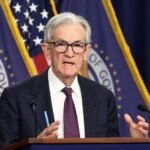











Speaking during a moderated discussion at Harvard University, the Federal Reserve chair reiterated that policymakers are facing a high degree of uncertainty, making immediate adjustments to interest rates unnecessary at this stage.
***
Fed adopts cautious approach amid oil driven risks
Powell emphasized that monetary policy is currently in a “good place,” allowing the Fed to observe incoming data before making any further moves. His remarks reflect growing concern that energy price volatility, driven by geopolitical tensions, could complicate the inflation outlook.
However, he underscored a key limitation of central bank tools. Monetary policy primarily affects demand, while oil shocks are supply driven, meaning rate changes have limited short term effectiveness in addressing such disruptions.
“Energy shocks have tended to come and go pretty quickly,” Powell said, noting that policy actions typically take time to filter through the economy.
Interest rate hikes could backfire, Powell warns
The Fed chair cautioned that raising interest rates in response to an oil driven spike in inflation could prove counterproductive. Because monetary policy operates with what economists describe as “long and variable lags,” any tightening would likely take effect after the energy shock subsides.
This timing mismatch could risk slowing economic growth unnecessarily, particularly if inflation pressures ease naturally as oil markets stabilize.
The comments highlight the delicate balancing act facing policymakers, who must weigh the risk of persistent inflation against the danger of over tightening financial conditions.
Uncertainty dominates Fed projections
The Federal Reserve earlier this month opted to hold interest rates steady, in line with market expectations, while acknowledging significant uncertainty surrounding the economic outlook.
Updated projections from the central bank indicated that policymakers still anticipate at least one rate cut this year. At the same time, forecasts for core inflation, particularly the Fed’s preferred Personal Consumption Expenditures measure, were revised higher.
Powell himself downplayed the reliability of these forecasts, suggesting that the current environment makes precise predictions particularly challenging.
“The thing I really want to emphasize is that nobody knows,” he said, highlighting the wide range of possible outcomes depending on how geopolitical and economic conditions evolve.
Markets reassess rate path amid mixed signals
Investors are closely monitoring the Fed’s next steps, with expectations for interest rate movements shifting in response to both economic data and geopolitical developments.
Powell’s latest remarks have reinforced the view that the Fed is unlikely to rush into further tightening, even as inflation risks remain elevated due to rising energy costs.
At the same time, uncertainty over the duration and intensity of the Middle East conflict continues to cloud the outlook, making it difficult for markets to price in a clear policy trajectory.
Outlook hinges on oil prices and geopolitics
Ultimately, the direction of U.S. monetary policy in the coming months will depend heavily on how oil prices evolve and whether geopolitical tensions escalate or ease.
If energy driven inflation proves temporary, the Fed may maintain its current stance or even proceed with planned rate cuts. However, a prolonged period of elevated oil prices could complicate this path and force policymakers to reconsider their approach.
For now, Powell’s message is clear: patience is essential in an environment defined by uncertainty, where premature policy moves could carry significant economic risks.