





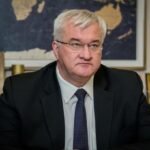
















Ousmane Sonko, a populist with a loyal following among Senegal’s youth, said “points of disagreement” had emerged in discussions with President Bassirou Diomaye Faye, who dissolved the government and sacked Sonko last month, News.Az reports, citing Semafor.
***
Pastef, the party Sonko leads, controls 130 of the 165 seats in Senegal’s only legislative chamber. And Sonko was elected parliament’s speaker after being dismissed as prime minister, giving him huge power over the passing of legislation.
On Monday, the president formed a new government. Faye appointed 30 new ministers, including at least three Pastef members. The ministerial list was announced by his new prime minister, economist Ahmadou Al Aminou Lo.
The rupture between Sonko and Faye, former allies-turned-rivals, has been fanned by a controversy involving the previous administration, which reportedly amassed billions of dollars in undisclosed debt. The discovery caused Senegal’s debt to balloon to more than $40 billion, or 132% percent of its GDP.
The IMF froze its $1.8 billion lending program to Senegal over the controversy, and the latest political upheaval could complicate negotiations for a new lending program, though the government said before Sonko’s ousting that it expects to resume talks with the IMF on June 8 and possibly agree on key points by the end of the month.
Sonko and Faye had diverged on how to resolve the crisis, but the formation of a new government may clarify the path forward, Paul Melly, a consulting fellow at UK think tank Chatham House, told Semafor. “We now have a government that thinks that it makes sense to negotiate with the IMF,” he said, noting that Sonko took a decidedly tougher stance, staunchly opposing a restructuring. Melly said Sonko was not prepared to bend the knee to foreign creditors.
But the former prime minister retains significant political influence, so even if IMF talks do progress, larger questions remain for the economy. “Sonko retains substantial support within parliament, creating uncertainty over the government’s ability to secure consensus on critical fiscal and economic reforms,” Africa Sustainability Matters news site wrote.