




















***
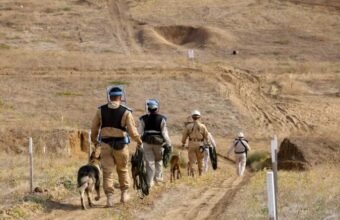
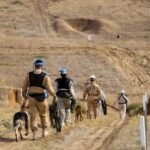
The settlement, located along the former frontline, remains heavily contaminated with landmines and unexploded munitions. Abandoned military positions, trenches and damaged infrastructure serve as reminders of the area’s history.
Rocky, a Belgian Malinois born in 2023 and brought from Croatia, has been trained to identify explosives concealed beneath the ground.
When the dog detects a suspicious object, he signals its location by sniffing repeatedly, wagging his tail, sitting down and focusing on a particular spot.
“We treat every signal as a mine,” Bayramova told AFP.
The deminer, whose family comes from Azerbaijan’s Zangilan district, said she chose the dangerous profession because she wanted to contribute to the country’s recovery and the safe return of displaced residents.
According to ANAMA operations manager Jabir Samadov, more than 309,000 hectares of land have been cleared since 2020, with approximately 69,000 landmines and nearly 200,000 unexploded munitions neutralized.
Despite these efforts, mine contamination continues to pose a serious threat to civilians.
According to Azerbaijani authorities, landmine explosions have killed 73 people and injured another 370 since the 2020 war.
ANAMA specialists follow strict safety procedures when deploying mine-detection dogs. Before entering hazardous areas, the animals must successfully identify sample explosives in designated testing zones.
During operations, handlers guide the dogs using long leads. When a potential explosive is detected, another trained dog checks the area before a deminer conducts a closer inspection.
The animals receive rewards only after a suspected explosive has been confirmed, helping maintain the accuracy of their detection work.
Working conditions are particularly challenging during Azerbaijan’s hot summers, when temperatures in lowland areas can exceed 40 degrees Celsius. Extreme heat, ground temperatures and paw injuries can limit the dogs’ ability to operate safely.
The report also highlights the experiences of landmine survivors who now contribute to public awareness campaigns.
Asif Ahmadov, who was displaced from his home in 1992, lost his brother and one of his legs in a landmine explosion in 2020, shortly after the fighting ended.
While attempting to help his injured brother, Ahmadov stepped on another mine. His father eventually carried him out of the minefield, and he spent three months in hospital.
Today, Ahmadov volunteers with ANAMA, warning local residents and schoolchildren about the dangers of entering potentially contaminated areas.
For Bayramova, the greatest motivation comes from witnessing the reconstruction of settlements where she previously participated in demining operations.
During a recent visit to the Aghdam district, she saw new homes being built in three villages where she had helped clear explosive hazards.
She said the sight of rebuilding, returning residents and renewed agricultural activity gives deminers a strong sense of achievement.
“That makes us proud,” she said.