














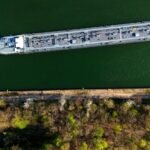



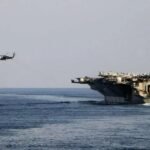


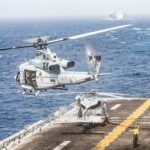

Despite its modest geographic size, the Strait of Hormuz is one of the most strategically significant waterways in the world.
***
It serves as the primary maritime outlet for oil and liquefied natural gas (LNG) exports from the Persian Gulf to global markets. Because of this, it is often described as one of the world’s most critical energy chokepoints.
Why is the Strait of Hormuz considered so strategically important?
The Strait of Hormuz plays a central role in global energy security for several key reasons:
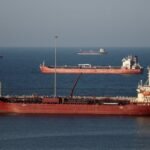
First, it handles roughly 20% of global oil consumption transported by sea. Every day, approximately 18–20 million barrels of crude oil and petroleum products pass through the strait.
Second, it is essential for global LNG trade. Around one-fifth of global LNG shipments move through this route, particularly exports from Qatar, one of the world’s largest LNG suppliers.
Third, it represents the only viable maritime export route for most Gulf energy producers. Without access to the strait, their ability to reach international markets would be severely restricted.
As a result, even limited disruptions in this corridor can trigger immediate volatility in oil and gas prices, shipping insurance costs, and global financial markets.
Which countries depend on the Strait of Hormuz as exporters?
Major energy exporters that rely on the strait include:
Saudi Arabia
United Arab Emirates
Kuwait
Iraq
Qatar
Iran
For several of these countries, the Strait of Hormuz is their primary or only maritime export route.
Qatar, for example, depends almost entirely on this corridor for LNG shipments. Iraq and Kuwait also lack sufficient alternative infrastructure capable of fully compensating for a prolonged closure.
Although Saudi Arabia and the UAE have invested in limited alternative pipeline routes that bypass the strait, their capacity is insufficient to fully replace the massive volumes normally transported by sea.
Which countries depend on the Strait of Hormuz as importers?
On the demand side, the strait is critical for major Asian and European economies.
Key importers include:
China
India
Japan
South Korea
European Union member states
Asian economies are particularly vulnerable. China and India import substantial volumes of crude oil from Gulf producers. Japan and South Korea have long relied on Middle Eastern energy supplies as a core part of their energy mix.
While Europe has diversified its energy sources in recent years, especially after the 2022–2023 energy crisis, it remains dependent on LNG from Qatar and oil from Gulf states.
Any disruption in the strait therefore carries global implications, affecting both emerging and advanced economies.
What happens when tensions rise in the Strait of Hormuz?
Even without a formal closure, rising geopolitical tensions can have immediate consequences.
Recent reports indicate that some major oil companies and traders have temporarily suspended shipments through the strait amid escalating regional tensions involving Iran. The primary concern is maritime security and the safety of commercial vessels.
When tensions increase, the following effects typically occur:
Shipping insurance premiums rise sharply
Freight rates increase
Transit times may be delayed
Energy prices spike due to perceived supply risks
Markets respond not only to actual disruptions but also to risk expectations. In energy markets, fear alone can drive significant price movements.
Could the Strait of Hormuz be completely closed?
In theory, yes. In practice, a full and sustained closure would be extremely difficult and highly destabilizing.
Iran controls the northern side of the strait and possesses military capabilities, including coastal missile systems, naval forces, drones, and sea mines. These assets could threaten commercial shipping.
However, a full closure would likely trigger:
Direct military confrontation with the United States and its allies
Severe economic consequences for Iran itself
Diplomatic backlash from major energy importers such as China and India
Therefore, most scenarios involve partial disruptions, increased risk, or limited attacks rather than a long-term total blockade.
Are there alternative routes to bypass the Strait of Hormuz?
Some Gulf states have developed partial alternatives:
Saudi Arabia operates the East-West pipeline, allowing oil to be transported to the Red Sea and shipped from there.
The UAE has a pipeline that carries crude oil to the port of Fujairah on the Gulf of Oman, bypassing the strait.
However, these alternatives have limited capacity and cannot fully replace the volume of oil and LNG normally transported through Hormuz.
Qatar, Kuwait, and Iraq remain especially dependent on the strait, with few viable alternatives.
How would a disruption affect global oil and gas prices?
Historically, even the threat of disruption has pushed oil prices up by 10–20% in short-term spikes.
In a severe scenario involving a prolonged closure, analysts have previously suggested that oil prices could surge to $120–150 per barrel or even higher, depending on the duration and scale of supply disruption.
Such a spike would:
Increase fuel costs globally
Raise transportation and production expenses
Add inflationary pressure to already strained economies
Potentially slow global economic growth
Gas markets would also be affected, especially in Europe and Asia, where LNG supplies from Qatar are crucial.
Why does the Strait of Hormuz have geopolitical significance beyond economics?
The strait is not merely a trade route; it is a strategic lever.
Control over or influence in the strait provides geopolitical leverage. It can be used as a deterrent, a bargaining chip, or a tool of asymmetric pressure.
For the United States, ensuring freedom of navigation in the strait is central to maintaining global leadership and protecting regional allies.
For Iran, its geographic position provides strategic depth and a means of responding to sanctions or military pressure.
For Gulf monarchies, the strait underpins their entire economic model based on energy exports, financial stability, and investment security.
Thus, the Strait of Hormuz sits at the intersection of energy security, military strategy, and global power competition.
Why are Gulf states particularly vulnerable?
The Gulf monarchies have built economic models centered on:
Hydrocarbon exports
Financial services
Foreign investment inflows
Infrastructure and logistics development
Their long-term stability depends on predictable maritime trade routes.
Even isolated incidents near the Strait of Hormuz can damage investor confidence and raise risk perceptions. For economies positioning themselves as stable global hubs, reputational risk can be nearly as damaging as physical disruption.
How critical is the strait for China and India?
For China, the Strait of Hormuz is central to energy security. Although Beijing has diversified supplies through Russia and Central Asia, Gulf oil remains a key component of its import structure.
India is similarly dependent on crude imports from Saudi Arabia, Iraq, and the UAE.
A prolonged disruption would increase import costs, pressure currency reserves, and contribute to domestic inflation in both countries.
Because of this, stability in the strait is a shared interest not only of Western powers but also of major Asian economies.
Could a crisis in the Strait of Hormuz trigger a broader global energy shock?
Yes — particularly if disruptions last for several weeks or longer.
A sustained crisis could:
Reduce available global supply
Trigger panic buying
Drive insurance markets to restrict coverage
Disrupt LNG contracts
Push inflation higher worldwide
In such a scenario, the global economy could face a shock comparable to past oil crises.
What is the long-term significance of recurring tensions in the Strait of Hormuz?
Even if immediate tensions subside, repeated crises reinforce structural changes in global energy policy:
Greater diversification of supply routes
Increased investment in strategic reserves
Acceleration of renewable energy development
Expansion of alternative pipeline infrastructure
The Strait of Hormuz remains a critical artery of global energy flows. However, each crisis underscores the vulnerability of concentrated maritime chokepoints and encourages countries to reduce reliance on a single strategic corridor.
Conclusion
The Strait of Hormuz is far more than a narrow waterway. It is a pivotal node in the global energy system, linking major exporters to the world’s largest consuming economies.
Any instability in this corridor reverberates across oil markets, gas supplies, inflation trends, and geopolitical alignments. For exporting states, it is an economic lifeline. For importing powers, it is a matter of energy security. For global markets, it is a barometer of geopolitical risk.
In today’s environment of heightened tensions, the strategic significance of the Strait of Hormuz has once again moved to the forefront of global attention.