






















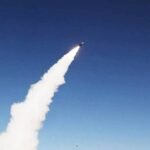





The attacks targeted areas of the city that serves as the temporary seat of Yemen’s internationally recognised government, raising concerns about civilian aviation, essential infrastructure and the widening confrontation between Houthi forces and the Saudi-backed government, News.Az reports.
***
Yemeni authorities reported that three ballistic missiles struck Coast Guard facilities in the Khormaksar and Al-Tawahi districts. Separate government statements said Aden International Airport and the city’s port had also come under attack.
Houthi military spokesperson Yahya Saree claimed that the group’s operations targeted Saudi-backed military gatherings at Al-Nasr camp and a naval military base in Aden. The competing accounts have not fully established the exact locations and extent of all impacts.
Residents reported loud explosions across several neighbourhoods, while emergency personnel and security forces responded to affected areas.
No confirmed casualty figures were immediately available, and authorities were continuing to assess the damage.
The latest strikes followed several attacks on Aden during October, including missiles reportedly targeting the airport, nearby military facilities and the Al-Ma’ashiq Presidential Palace compound.
News.Az examines where the missiles struck, why Aden has become a major target, the Houthis’ military objectives, the risks to civilians and the potential consequences for Yemen’s wider conflict.
What happened during the latest Houthi ballistic missile attacks on Aden?
The latest attacks occurred on Saturday, October 24, when a series of powerful explosions shook Aden, Yemen’s principal southern port city and the temporary seat of its internationally recognised government.
According to Yemen’s Interior Ministry, Houthi forces launched three ballistic missiles against Coast Guard facilities.
Two missiles reportedly struck the Coast Guard headquarters within the ministry’s compound in Khormaksar, while a third hit a separate Coast Guard building in the Al-Tawahi district.
Other government statements reported missile attacks affecting Aden International Airport and the port area.
A local security source cited by Xinhua estimated that approximately four ballistic missiles had been launched towards the city, although subsequent official accounts differed over the total number and targets.
Witnesses reported hearing explosions powerful enough to shake buildings in nearby residential neighbourhoods.
Emergency vehicles were subsequently observed responding to the affected areas.
Houthi military spokesperson Yahya Saree offered a different description of the operation, claiming that the group had targeted Saudi-backed military concentrations at Al-Nasr camp and a naval installation.
The Houthis alleged that Saudi officers were involved in supervising military preparations at those sites.
However, independent confirmation of that allegation was not immediately available.
Yemeni authorities said they were collecting evidence and evaluating damage to government facilities.
No verified casualty figures had been released in the immediate aftermath of the attacks.
The incident represented another escalation in a month marked by repeated missile strikes against strategic locations in Aden.
Why is Aden strategically important to Yemen’s government and the Saudi-led coalition?
Aden occupies a central position in Yemen’s political, military and economic landscape.
Located on the Gulf of Aden near the entrance to the Red Sea, the city serves as an important maritime gateway linking Yemen with regional and international shipping routes.
Its port facilities support commercial activity, humanitarian deliveries and the movement of essential goods.
Aden International Airport also provides vital connections for passengers, government officials, humanitarian organisations and emergency medical transportation.
The city gained additional political importance after Houthi forces captured Sanaa, Yemen’s capital, in late 2014.
Following the escalation of the conflict, Aden became the principal base for Yemen’s internationally recognised government.
Government institutions and security organisations continue to operate from the city, despite the complexity of political and military relationships in southern Yemen.
Saudi Arabia has supported the internationally recognised government and played a major role in military operations against the Houthis since 2015.
As a result, military installations in Aden have strategic significance for government forces and their regional partners.
The Houthis have repeatedly identified facilities associated with Saudi-backed military operations as targets.
However, the proximity of military installations to civilian infrastructure creates substantial risks.
Aden’s airport, port facilities and densely populated neighbourhoods are closely interconnected, meaning attacks on nearby military positions can also endanger civilian activity.
Repeated missile strikes could disrupt transportation, undermine public confidence and place additional pressure on essential services.
For Yemen’s government, maintaining security in Aden is therefore important not only militarily but also for preserving administrative functions and economic stability.
How do the latest missile strikes fit into the wider Houthi military campaign?
The October 24 attacks followed a series of Houthi operations targeting military and strategic facilities in Aden during the preceding weeks.
Earlier in October, missiles reportedly struck or landed near Aden International Airport, military installations and the Al-Ma’ashiq Presidential Palace compound.
Yemeni government officials reported that an October 15 attack on the presidential compound killed five people and injured 16 others.
On October 21, the Houthis claimed responsibility for a ballistic missile operation against a Saudi military command facility at Badr camp near the airport.
The repeated attacks suggest that Aden has become a central focus of the movement’s renewed military pressure against forces associated with Yemen’s internationally recognised government.
The Houthis also claimed responsibility for attacks against Saudi Arabian oil installations, airports and other strategic facilities on October 24.
Their military spokesperson identified targets including energy infrastructure in Yanbu and Rabigh, as well as military and aviation facilities elsewhere in Saudi Arabia.
Saudi-led coalition forces reported intercepting ballistic missiles aimed at locations in the kingdom.
The widening geographical scope of these operations reflects the increasingly regional dimensions of the conflict.
However, Houthi claims about military targets and successful strikes require independent verification.
Different parties to the war have offered conflicting accounts of operational results.
The latest escalation also comes amid broader regional hostilities connected to the conflict involving Iran, the United States and Israel.
These developments have increased the risks of military confrontation affecting several countries and critical transport routes.
For Yemen, the renewed strikes threaten to reverse periods of reduced cross-border violence and complicate efforts to establish a lasting political settlement.
What risks do the attacks pose to civilians, aviation and humanitarian operations?
The renewed missile attacks on Aden have raised concerns about civilian safety because several reported targets are located near populated districts and essential transportation infrastructure.
Aden International Airport is particularly important because it serves as a major aviation gateway for southern Yemen.
The facility supports civilian travel, humanitarian operations and the movement of patients requiring specialised medical treatment abroad.
Repeated attacks near the airport could disrupt flight schedules, complicate emergency evacuations and discourage international airlines from operating services.
Yemen’s Transport Ministry said the October 24 incident represented the fourth attack against the airport during the month.
The ministry warned that missile strikes could threaten civil aviation safety and cause humanitarian and economic consequences.
The danger extends beyond the airport.
Aden’s port facilities are important for importing food, fuel, medicine and other essential commodities.
Any prolonged disruption could affect supply chains in a country already facing severe humanitarian pressures after years of conflict.
Missile attacks near residential neighbourhoods also increase the risk of civilian casualties, even when the declared target is a military installation.
Explosions, falling debris and secondary fires can damage nearby homes and public infrastructure.
Under international humanitarian law, parties to armed conflicts must distinguish between military objectives and civilians or civilian objects.
They must also take feasible precautions to minimise civilian harm.
The presence of military facilities near civilian infrastructure does not remove these obligations.
Although no confirmed casualties were immediately reported following the October 24 strikes, the absence of initial figures does not establish that civilians were unaffected.
A fuller assessment will require verified information about the impact locations, damage and any injuries.
Could renewed Houthi attacks on Aden trigger a broader military escalation in Yemen?
The latest strikes have increased concerns that Yemen could enter another period of intensified military confrontation.
The conflict began escalating in late 2014 when Houthi forces seized Sanaa and expanded their control across significant parts of northern Yemen.
In March 2015, a Saudi-led military coalition intervened in support of the internationally recognised government.
Years of fighting caused extensive destruction, displacement and economic hardship.
A United Nations-brokered truce introduced in 2022 helped reduce major cross-border hostilities, although it did not produce a comprehensive political settlement.
The renewed missile attacks on Aden and Saudi Arabia have raised questions about the durability of subsequent efforts to contain the fighting.
Houthi forces retain ballistic missile and drone capabilities that allow them to threaten military facilities and strategic infrastructure beyond areas under their direct control.
The Saudi-led coalition also maintains substantial military capabilities and has responded to Houthi operations with defensive and offensive measures.
Continued exchanges could therefore increase pressure for further military retaliation.
The broader regional conflict involving Iran adds another dimension to the situation because the Houthis maintain close ties with Tehran.
However, those ties do not automatically establish that every Houthi military operation is directly ordered by Iran.
A wider escalation could threaten Red Sea shipping, energy infrastructure, regional aviation and humanitarian access.
It could also complicate negotiations intended to address Yemen’s longstanding political divisions.
The immediate consequences will depend on the responses of government forces, Saudi Arabia and the Houthis, as well as whether diplomatic efforts can contain further attacks.