



















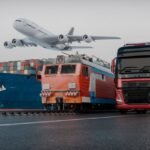







This reshaping reflects a broader effort by countries and companies to adapt to disruptions caused by conflicts, sanctions, and changing market dynamics. The goal is to create more resilient and flexible logistics networks that can withstand external shocks.
***
Why are global logistics routes changing now
Several factors are driving these changes. Geopolitical tensions, including conflicts and trade disputes, have exposed vulnerabilities in existing routes. Sanctions and restrictions have also forced companies to seek alternative pathways.
In addition, the experience of supply chain disruptions in recent years has encouraged diversification. Businesses no longer want to rely on a single route or region.
Economic competition is another factor, as countries invest in infrastructure to position themselves as key transit hubs.
What are the main emerging transport corridors
One of the most discussed emerging corridors is the Middle Corridor, also known as the Trans Caspian International Transport Route. This route connects China to Europe through Central Asia, the Caspian Sea, and the South Caucasus.
Azerbaijan plays a crucial role in this corridor, acting as a bridge between East and West. Infrastructure such as the Port of Baku and the Baku–Tbilisi–Kars railway enhances connectivity.
Other corridors, including North South routes linking Russia, Iran, and India, are also gaining importance.
How has geopolitics influenced logistics routes
Geopolitics has become a central factor in logistics planning. Conflicts and political tensions can disrupt traditional routes, making them less reliable or more costly.
For example, restrictions on certain transit corridors have increased interest in alternative paths that bypass high risk areas. Countries are also using infrastructure projects as tools of influence, strengthening their strategic positions.
This has led to a more fragmented but also more diversified global logistics system.
What role does Azerbaijan play in new logistics networks
Azerbaijan has emerged as a key transit hub in Eurasia due to its strategic location. Positioned between Asia and Europe, it facilitates the movement of goods across multiple transport modes, including rail, road, and maritime routes.
Projects such as the Port of Baku and the Baku Tbilisi Kars railway have strengthened Azerbaijan’s role in regional connectivity. The country is also involved in initiatives to improve logistics efficiency and capacity.
This positioning allows Azerbaijan to benefit economically while contributing to the stability of regional trade routes.
How are technological advancements affecting logistics
Technology is transforming logistics by improving efficiency, transparency, and coordination. Digital platforms, real time tracking, and data analytics are enabling better management of supply chains.
Automation in ports and warehouses is reducing costs and increasing speed. Innovations such as blockchain are being explored to enhance security and traceability.
These advancements are helping to optimize routes and reduce delays, making logistics systems more resilient.
What challenges do new logistics routes face
While new routes offer opportunities, they also face challenges. Infrastructure gaps, regulatory differences, and political risks can limit their effectiveness.
Coordination between countries is essential, but differing priorities and standards can create obstacles. Investment requirements are also significant, requiring long term commitment.
In addition, competition between routes can lead to fragmentation rather than integration.
How do logistics changes affect global trade
Changes in logistics routes have a direct impact on global trade patterns. They influence shipping times, costs, and reliability.
More efficient routes can enhance trade by reducing barriers and improving access to markets. Conversely, disruptions or inefficiencies can hinder trade and increase costs.
The evolution of logistics networks is therefore closely linked to economic growth and development.
What is the role of maritime transport in this shift
Maritime transport remains a cornerstone of global trade, handling the majority of international shipments. However, its role is evolving as alternative routes and multimodal transport systems gain importance.
Ports are being upgraded to handle increased volumes and integrate with rail and road networks. This creates more flexible and efficient logistics systems.
Despite these changes, maritime routes continue to be essential for long distance trade.
How are countries competing to become transit hubs
Countries are investing heavily in infrastructure and policy reforms to attract transit traffic. This includes developing ports, railways, and logistics centers.
Incentives such as reduced tariffs and streamlined customs procedures are also used to attract businesses. Strategic partnerships and regional agreements further enhance competitiveness.
This competition is reshaping the global logistics landscape, with new hubs emerging alongside established ones.
What are the environmental implications of changing routes
The reshaping of logistics routes also has environmental implications. New routes and technologies can reduce emissions by improving efficiency and shortening distances.
However, increased infrastructure development and transport activity can also have negative environmental impacts.
Balancing economic benefits with sustainability is an important consideration for policymakers.
What scenarios could shape the future of logistics
Several scenarios are possible. Continued geopolitical tensions could accelerate diversification and the development of new routes.
Technological advancements may lead to more integrated and efficient systems. Alternatively, economic slowdowns could reduce demand for transport and delay investments.
The future of logistics will depend on how these factors interact.
Why does this transformation matter globally
The reshaping of transport and logistics routes is a fundamental change that affects global trade, economic development, and geopolitical dynamics.
Efficient and resilient logistics systems are essential for the functioning of the global economy. Changes in these systems can create opportunities and risks for countries and businesses.
Understanding these trends is key to navigating the evolving global landscape.
Conclusion
Global transport and logistics routes are undergoing a period of significant transformation. Driven by geopolitical, economic, and technological factors, this shift is redefining how goods move around the world.
While challenges remain, the development of new routes and systems offers opportunities for greater resilience and efficiency. The outcomes of this transformation will shape the future of global trade and connectivity.