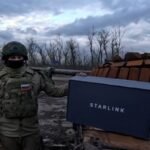


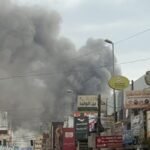



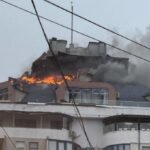
















The latest fighting reportedly left at least two people dead and several others wounded, underscoring the fragile security situation in one of Syria’s most sensitive regions, News.az reports.
***
The renewed hostilities reflect deeper political and sectarian tensions that have intensified since the fall of former Syrian President Bashar al-Assad in December 2024. While Damascus accuses Druze factions of pursuing separatist ambitions, Druze leaders say they are defending their communities against government attacks and inadequate security.
Here are the key questions and answers.
What happened in the latest clashes in Suwayda?
Renewed fighting broke out in Syria’s southern Suwayda province between government security forces and Druze-led National Guard units, resulting in casualties on both sides.
According to Syrian authorities, two people were killed and around 16 others were wounded among what officials described as “rebel groups” after internal security forces repelled an attempted advance on the Tal Hadid area in western Suwayda.
The Druze-led National Guard offered a different account of the events. In a statement, it accused the Syrian army of launching the offensive first, claiming government forces carried out overnight attacks using drones, heavy machine guns and other weapons. The group said it responded to the attacks and inflicted confirmed casualties on government forces.
As is common in Syria’s conflict, the competing claims could not immediately be independently verified.
Where is Suwayda, and why is it important?
Suwayda is a province in southern Syria bordering Jordan and is home to the country’s largest Druze population.
For decades, the region remained relatively insulated from the worst violence of Syria’s civil war. Unlike many other provinces, Suwayda avoided prolonged large-scale combat and maintained a degree of local autonomy through community-based security arrangements.
Since the political transition that followed the collapse of Bashar al-Assad’s government in late 2024, however, Suwayda has become one of Syria’s most volatile regions. The province is now a focal point for tensions between the new authorities in Damascus and Druze community leaders seeking greater local control over security.
Because of its location near the Jordanian border and its strategic importance in southern Syria, stability in Suwayda is considered essential for both domestic security and regional relations.
Who are the Druze?
The Druze are a small Arabic-speaking religious minority whose faith emerged in the 11th century from Ismaili Islam but developed into a distinct religion with its own beliefs and traditions.
Today, Druze communities are concentrated mainly in Syria, Lebanon and Israel, with smaller populations in Jordan and elsewhere.
In Syria, the Druze have historically maintained a cautious relationship with successive governments, often prioritizing local autonomy and community self-defense over direct involvement in national political struggles.
Following Assad’s fall, many Druze leaders have insisted on maintaining independent local security structures rather than fully integrating into the new national military and security institutions.
Why are Syrian government forces and Druze groups fighting?
The current conflict stems from disagreements over security, governance and political authority following the collapse of the Assad government.
The new authorities in Damascus have sought to establish centralized control across Syria, including integrating local armed groups into national security institutions.
Many Druze leaders have resisted those efforts, arguing that local forces are better positioned to protect their communities. They accuse the government of failing to guarantee security and of pursuing policies that discriminate against religious minorities.
The government, meanwhile, accuses some Druze factions of rejecting state authority and pursuing separatist objectives that threaten Syria’s territorial unity.
These competing visions have repeatedly produced armed confrontations despite attempts to negotiate ceasefires.
Why do both sides blame each other?
Each side presents the conflict through a different political and military narrative.
Government officials describe military operations as efforts to restore state authority and respond to attacks by armed groups that refuse to recognize the government’s legitimacy.
Druze leaders, by contrast, argue that government forces initiate military operations against their communities and that local fighters act only in self-defense.
The absence of independent observers in many combat areas makes it difficult to establish exactly how individual clashes begin, meaning competing accounts frequently emerge after each confrontation.
How did the fall of Bashar al-Assad change the situation?
The overthrow of Bashar al-Assad in December 2024 fundamentally reshaped Syria’s political landscape.
The collapse of the long-standing government created a power vacuum in several regions, including Suwayda, where local armed groups assumed greater responsibility for maintaining security.
The new Sunni-led authorities inherited a country fragmented by years of civil war, with numerous local militias controlling territory and reluctant to surrender their weapons.
As Damascus attempted to reassert nationwide authority, tensions grew with communities seeking to preserve local autonomy, particularly in areas with distinct ethnic or religious identities.
Suwayda has become one of the clearest examples of these post-Assad political challenges.
Why did violence escalate despite a ceasefire?
Syrian Defense Minister Murhaf Abu Qasra announced a ceasefire in Suwayda in mid-July in an effort to halt widespread fighting.
Although the agreement reduced large-scale hostilities, it failed to resolve the underlying political disagreements between Damascus and Druze leaders.
Both sides continued accusing each other of violating the ceasefire through isolated attacks, troop movements and armed patrols.
Without a broader political settlement addressing local governance, security arrangements and the role of Druze armed groups, sporadic violence has continued despite the formal ceasefire.
What happened during the July fighting?
The violence that erupted in July represented the deadliest fighting in Suwayda since the political transition.
According to the Syrian Observatory for Human Rights (SOHR), more than 1,600 people were killed during clashes involving Druze fighters, Damascus-backed Bedouin tribesmen and government-linked forces.
The monitoring group said more than 700 of those killed were residents of Suwayda city, the majority of them Druze.
The fighting caused extensive destruction, displaced civilians and deepened mistrust between the Druze community and Syria’s new authorities.
Although casualty figures from conflict monitoring organizations cannot always be independently verified, the July violence highlighted the scale of instability in southern Syria.
Could the conflict spread beyond Suwayda?
There are concerns that continued instability could have broader consequences for Syria.
Persistent fighting in the south risks undermining the country’s fragile political transition and could encourage renewed violence in other regions where local armed groups remain influential.
The conflict may also affect neighboring Jordan by increasing security concerns along the border and potentially creating new displacement pressures.
For Syria’s leadership, stabilizing Suwayda has become an important test of its ability to govern a country that remains politically divided after more than a decade of conflict.
What could happen next?
The immediate outlook remains uncertain.
Both the Syrian government and Druze leaders have expressed support for dialogue at various points, but repeated clashes demonstrate the lack of trust between the two sides.
Future stability will likely depend on negotiations over local security arrangements, political representation and the integration—or continued independence—of Druze self-defense forces.
Without a durable political agreement, observers warn that temporary ceasefires may continue to collapse, leading to further cycles of violence in one of Syria’s most strategically and politically sensitive provinces.