





















The incident comes amid escalating military tensions between the United States and Iran, raising fresh concerns about the security of one of the world’s most strategically important maritime chokepoints, News.Az reports.
***
Here is what happened and why it matters.
What happened in the Strait of Hormuz?
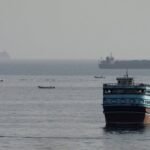
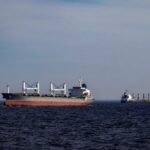
On Tuesday, two UAE-flagged oil tankers—the Mombasa and Al Bahiyah—were struck while sailing through the southern shipping lane of the Strait of Hormuz in Omani territorial waters. According to the UAE Ministry of Defense, the vessels were hit by Iranian cruise missiles during their transit.
The attack resulted in the death of one crew member and injuries to eight others. The deceased was identified as an Indian national serving aboard the Mombasa. Six other Indian crew members and two Ukrainian nationals were also injured, with four of the injured reported to be in serious condition.
The incident marks another dangerous escalation in the increasingly volatile waters surrounding the Strait of Hormuz, a region that has become the focal point of rising military confrontation between the United States and Iran.
Why did India summon Iran’s deputy envoy?
Following the attack, India’s Ministry of External Affairs summoned Mohamed Javad Hosseini, Iran’s deputy chief of mission in New Delhi, to formally convey New Delhi’s concerns over the incident.
Diplomatic summons are among the strongest official tools governments use to protest another country’s actions without immediately escalating to more severe diplomatic measures. By calling in Iran’s senior diplomat, India signaled that it views the death of one of its citizens as a matter requiring an immediate explanation and accountability.
Although India has traditionally maintained balanced relations with both Iran and Western countries, the killing of an Indian national in an international maritime incident compelled New Delhi to adopt what officials described as a firm diplomatic position.
Who were the victims?
According to the UAE Ministry of Defense, the attack claimed the life of one Indian crew member aboard the tanker Mombasa. Eight additional crew members sustained injuries.
Among the injured were six Indian nationals and two Ukrainian citizens. Four of those injured suffered serious wounds and required urgent medical treatment.
India is one of the world’s largest suppliers of maritime labor, with hundreds of thousands of Indian seafarers working aboard commercial vessels worldwide. As a result, attacks on international shipping frequently involve Indian nationals, making maritime security a significant concern for New Delhi.
Why is the Strait of Hormuz so important?
The Strait of Hormuz is one of the world’s most strategically vital maritime chokepoints. Located between Iran and Oman, it connects the Persian Gulf with the Gulf of Oman and the Arabian Sea.
Roughly one-fifth of global oil consumption and a substantial portion of the world’s liquefied natural gas exports pass through this narrow waterway each day. Major energy exporters including Saudi Arabia, the United Arab Emirates, Kuwait, Iraq, Qatar, and Iran rely heavily on the strait to reach international markets.
Any disruption to shipping through Hormuz can rapidly affect global energy prices, insurance costs, freight rates, and international trade. Consequently, military incidents in the area are closely monitored by governments, energy markets, and shipping companies around the world.
What is the connection to the recent US-Iran conflict?
The tanker attack occurred against the backdrop of rapidly escalating military tensions between Washington and Tehran.
The United States had launched a third consecutive day of military strikes against Iranian targets, stating that the operations were intended to reduce Iran’s military capabilities and limit its ability to threaten navigation in the Strait of Hormuz.
The strikes followed weeks of heightened confrontation in the region, increasing the likelihood of retaliatory actions and raising concerns that commercial shipping could become caught in the crossfire.
The attack on the UAE tankers illustrates how quickly regional military tensions can spill over into international maritime trade, affecting countries that are not directly involved in the conflict.
What has Iran said about the incident?
Iran’s Islamic Revolutionary Guard Corps (IRGC) Navy issued a statement claiming that the US military had encouraged two supertankers to use an unauthorized shipping route through the Strait of Hormuz before the vessels were struck and disabled.
However, the statement did not explain how the tankers were hit, nor did it explicitly acknowledge or deny Iranian responsibility for the missile strikes.
The absence of a clear admission or denial has added to uncertainty surrounding the circumstances of the attack, even as regional tensions continue to intensify.
Why is the incident significant for India?
The attack highlights India’s vulnerability to instability in the Middle East. India imports a large share of its crude oil from Gulf countries and depends heavily on secure maritime routes through the Arabian Sea and the Strait of Hormuz for its energy supplies.
In addition, Indian nationals make up one of the largest groups of seafarers employed in the global shipping industry. Any escalation that threatens commercial vessels directly affects Indian citizens working at sea.
The incident therefore has both humanitarian and strategic dimensions for New Delhi, combining concerns over the safety of Indian nationals with broader worries about energy security and uninterrupted maritime trade.
Could this affect global shipping and oil markets?
Yes. Even isolated attacks on commercial vessels in the Strait of Hormuz can have significant consequences for global shipping.
Such incidents often prompt shipping companies to reassess sailing routes, increase security measures, or temporarily suspend operations in high-risk areas. Insurance premiums for vessels transiting the Gulf may also rise sharply, increasing transportation costs.
If military confrontations continue or expand, the resulting disruption to one of the world’s busiest energy corridors could contribute to higher global oil prices and greater volatility in international energy markets.
What happens next?
Attention is now focused on several parallel developments. India is expected to continue diplomatic engagement with Iran while seeking full clarification regarding the death of its citizen. Regional governments and international shipping operators are likely to reassess security measures for vessels operating in the Strait of Hormuz.
Meanwhile, further escalation between the United States and Iran could increase the risk of additional incidents involving commercial shipping. The safety of civilian crews, freedom of navigation, and the uninterrupted flow of global energy supplies will remain central concerns as the crisis unfolds.