
























Table Of Content
Eurasianet
Eurasianet is an independent news organization that covers news from and about the South Caucasus and Central Asia, providing on-the-ground reporting and critical perspectives on…
Set us as your preferred Google source
Premium Content
By Eurasianet – Jan 23, 2026, 1:00 PM CST
- New SOCAR supply deals with Austria and Germany lack transparency on volumes and may represent rerouted gas rather than additional EU exports.
- Recent production data and stalled upstream investment cast doubt on Azerbaijan’s ability to reach its pledged 20 bcm annual gas exports to the EU.
- Pipeline constraints across the Southern Gas Corridor remain a major bottleneck, with no clear commitments to expand capacity to promised levels.
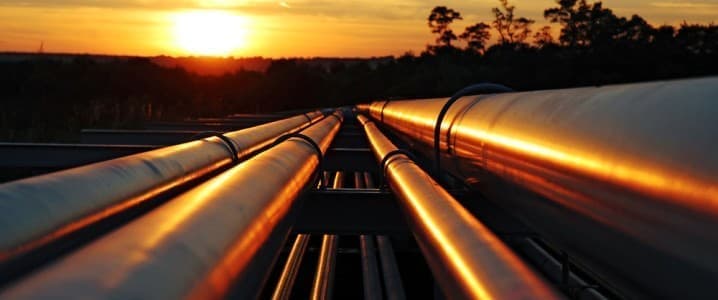
The Azerbaijani state energy company SOCAR has announced it is selling natural gas to Austria and Germany. But it remains an open question whether Baku can hit its promised target of delivering 20 billion cubic meters (bcm) of gas to the European Union in the near future.
Azerbaijani leader Ilham Aliyev, speaking on the sidelines of the World Economic Forum in Davos, said the new export arrangements bring to 16 the number of countries Azerbaijan supplies with gas, 10 of which are EU members.
Yet the announcement sheds little light on whether Baku remains on track to meet its 2022 commitment to double gas exports to the EU within the next few years to 20 bcm. The original target for fulfillment was 2027, though Azerbaijan has already rolled back on that date.

SOCAR released few details about the supply deals with Austria and Germany: it is uncertain, then, if Baku is increasing EU-bound gas exports or merely redirecting gas already being exported to new buyers. The company has stated only that deliveries will be made via the Trans Adriatic Pipeline (TAP), the westernmost section of the Southern Gas Corridor that carries Azerbaijani gas to Europe.
The Austrian/German supplies may be linked to a recent announcement by the TAP operating company that it expanded pipeline capacity by 1.2 bcm per year, starting this January. Similarly, the exports to Germany may be part of a deal with SEFE, a state-owned German energy entity, announced in mid-2025. Under the terms of that deal, SOCAR is supposed to supply up to 1.5 bcm per year for 10 years.
Neither SOCAR, SEFE, nor TAP have confirmed details of SOCAR’s new exports, while Baku has also been silent on the identity of the Austrian importer and the volume it will import.
This lack of transparency from Baku seems par for the course. The past year has seen a marked reduction in the amount and quality of energy news and data released by both Azerbaijan government agencies and energy companies operating there.
Azerbaijan’s Energy Ministry used to release regular monthly bulletins on oil & gas production and exports. But since April 2025 only three bulletins have been issued.
The most recent data, released January 12, shows that Azerbaijan’s overall annual gas production in 2025 was 51.5 bcm, up just 2.4 percent on 2024’s total, and a far lower rate of growth than needed if Baku hopes to significantly expand exports to Europe. Azerbaijani exports to the EU actually declined slightly in 2025, totaling 12.8 bcm, a 1 percent drop over the previous year’s volume.
The most recent data raises concerns that Azerbaijan will not only have trouble meeting its EU commitment but also have enough gas to meet fast-growing domestic demand.
Most of Azerbaijan’s gas exports come from one field, the BP-operated Shah Deniz, production from which is currently being expanded via a second phase of development. However, BP has never confirmed the anticipated expanded rate of Shah Deniz production or disclosed how much gas it expects to produce from the deep gas reserves identified below its ACG oil field. Less than 18 months ago the company was happily trumpeting the ACG discovery, and less than three months ago confirming it expects production to start during the first half of 2026.
The only operator offering clearer targets has been TotalEnergies, whose Absheron field produced 1.6 bcm in 2025. A second phase of Absheron development is planned that could raise annual production to 6 bcm, if TotalEnergies agrees to make the necessary investment. To date an investment decision has not been announced.
The uncertainty about timelines has not stopped Baku from promising a large part of the extra Absheron output to Turkey. Turkish Energy Minister Alparslan Bayraktar announced January 4 that Ankara had agreed a new deal to take 2.25 bcm per year of gas starting in 2029. With Ankara keen to reduce dependence on Russian gas, the deal is good news for Turkey, assuming the planned expansion of the Absheron field goes ahead.
The lack of information on reserves and future production is matched by a lack of clarity over plans to expand the three pipelines that make up the Southern Gas Corridor. Azerbaijan needs the corridor’s overall volume to expand to facilitate any additional exports to the EU.
News of the expansion of the TAP pipeline to facilitate an overall export volume of 11.5 bcm per year does offer some limited confirmation of Azerbaijan’s commitment to boost exports to Europe. Still, TAP’s current capacity falls far short of the route’s maximum potential of 20 bcm per year, the same volume Baku promised to Europe back in 2022.
There is no indication about when or if investments will be forthcoming to expand TAP to its maximum capacity. The same holds true for the TANAP and the South Caucasus Pipeline (SCP). Both routes require new compressor stations, with the SCP also requiring the laying of an additional pipeline, to enable Baku to increase EU-bound annual exports to even 16 bcm.
By Eurasianet
More Top Reads From Oilprice.com
- Japan’s Largest Nuclear Plant Hit by New Halt After Brief Restart
- India Deepens Energy Ties With the Gulf While Balancing Russian Oil Risk
- Indian Refiners Boost Middle East Supply To Offset Lost Russian Oil
Download The Free Oilprice App Today


Eurasianet
Eurasianet is an independent news organization that covers news from and about the South Caucasus and Central Asia, providing on-the-ground reporting and critical perspectives on…
Related posts