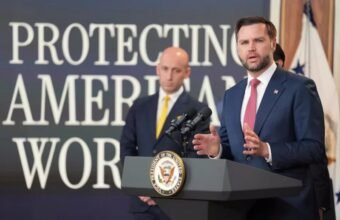






















Trump signed the order Thursday during a White House event, saying the name change would take effect immediately. The order directs the US secretary of the interior to work with the US Board on Geographic Names over the following 30 days to implement the change, Al Jazeera reported.
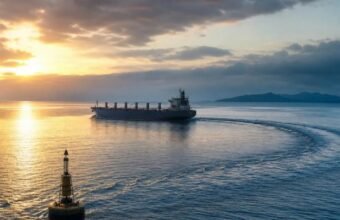
Lake Ontario is shared by the US and Canada, with the Canadian province of Ontario to its north and New York state to its south.
***
The lake’s existing name has centuries-old roots. “Ontario” is widely believed to come from a Wendat Indigenous word associated with meanings such as “lake of shining waters,” “great lake” or “beautiful lake.”
Geography professor Derek Alderman of the University of Tennessee described the renaming as more than a symbolic change, arguing that it could erase Indigenous history and reflect an “America-first” approach to geography.
Trump linked the decision to his increasingly strained relationship with Canada, saying Canadian officials had treated the US unfairly and connecting the renaming to the ongoing trade dispute between the two countries.
The US and Canada are currently locked in a renewed tariff conflict. Washington recently imposed 50% tariffs on nearly $20 billion worth of Canadian goods, while Canadian Prime Minister Mark Carney has promised retaliatory tariffs.
Alderman said the renaming was unlikely to help resolve the trade dispute and could instead make negotiations more difficult by provoking further resentment in Canada.
Canadian officials have already rejected the new name.
Prime Minister Carney said the lake’s name predates both the Canadian Confederation and the US Declaration of Independence, insisting that Canadians would continue to call it Lake Ontario.
Ontario Premier Doug Ford similarly said the lake would remain Lake Ontario “to Canadians and the rest of the world.”
Opposition has also emerged within the US. New York Governor Kathy Hochul said New York would not use Trump’s proposed name.
So can Trump actually rename a lake shared with another country?
The answer is complicated.
The US government can establish an official geographic name for federal purposes within the United States, and Trump’s executive order can direct federal agencies to adopt “Lake America.” However, the US president cannot force Canada or other countries, international organizations, private companies or news organizations to use the name.
There is also no single international authority with the power to impose one universal name on every shared body of water.
The US Board on Geographic Names is responsible for geographic naming within the United States and operates under the Department of the Interior. Its procedures provide a formal mechanism for considering geographic name changes.
International organizations can provide guidance and standardization, but they generally cannot compel sovereign countries to adopt a particular name.
That means the lake could effectively have different names depending on where it is being referred to.
Canada has made clear that it will continue using “Lake Ontario,” while US federal agencies may eventually be instructed to use “Lake America.”
Similar disputes already exist around the world.
Japan calls the body of water between Japan and the Korean Peninsula the Sea of Japan, while South Korea and North Korea refer to it as the East Sea.
The South China Sea is also subject to competing names, with the Philippines using “West Philippine Sea” for parts of the waterway and Vietnam referring to it as the East Sea.
The Persian Gulf is another long-running naming dispute, with Iran using “Persian Gulf” while some Arab countries use “Arabian Gulf.”
Trump has previously pursued similar geographic renamings.
In 2025, he ordered Alaska’s Denali to be renamed Mount McKinley, reversing a 2015 decision by former President Barack Obama to restore the mountain’s Indigenous name. He also ordered the Gulf of Mexico to be renamed the Gulf of America in the United States.
Those changes demonstrated the limits of unilateral geographic naming: a US administration can change how federal agencies refer to a place, but it cannot automatically determine what the rest of the world calls it.
Mapping services have responded differently to contested geographic names. Google Maps, for example, has used different names depending on the user’s location, displaying locally recognized names in some countries while showing multiple names elsewhere.
The same approach could eventually apply to Lake Ontario if the dispute persists.
For now, Trump can direct the US government to call the lake “Lake America,” but he cannot make Canada, international institutions or the rest of the world follow suit.
And that leaves the lake with something its name has rarely lacked: controversy.