
























The insights highlight how geopolitical disruption is reshaping long-haul networks, with established hubs benefiting from scale and flexibility, with implications for broader loaviation and cargo connectivity, News.Az reports, citing foreign media.
***
The analysis is supported by comparative visuals showing Asia–London seat capacity across a 20-year period, highlighting a clear shift in hub dominance. In 2006, Hong Kong was the leading gateway to London, with more than 1.1 million seats, followed by Singapore and other major Asian hubs such as Mumbai, Bangkok and Tokyo. At the time, Singapore ranked second, while airports like Delhi and Kuala Lumpur had more limited capacity.
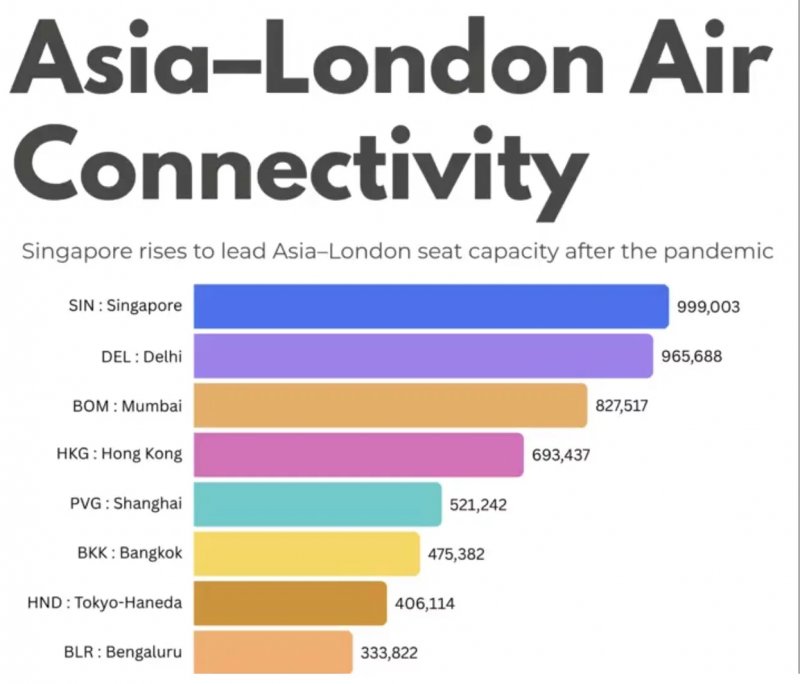
By 2026, the picture has notably changed. Singapore has moved into the top position with approximately 999,000 seats, overtaking Hong Kong, which has dropped to fourth place. Indian hubs have gained prominence, with Delhi rising to second place and Mumbai maintaining a strong position.
The data also shows broader diversification across the market, with cities such as Shanghai, Tokyo-Haneda and Bengaluru strengthening their presence in the Asia–London corridor.
Historically, Hong Kong dominated Asia–London seat capacity, but Cirium data shows Singapore has strengthened its position in recent years, emerging as a leading gateway as long-haul travel recovers post-pandemic. This shift in passenger connectivity also has implications for air cargo, as increased long-haul capacity strengthens bellyhold freight options through major hubs such as Singapore.