




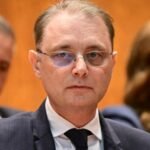












The high-stakes diplomatic maneuvering comes ahead of the NATO summit scheduled for July 7–8 in Ankara. Ambassador Dzhelialov expressed optimism that Ukrainian President Volodymyr Zelenskyy will attend the summit in person, adding that Kyiv’s primary objectives remain securing a structural financial lifeline and pushing the alliance to firmly reaffirm its long-term commitment to accepting Ukraine as a full NATO member, News.Az reports, citing Reuters.
Kyiv remains profoundly dependent on international economic and military aid to stabilize its state budget and self-fund its defense architecture against Russia. Last June, President Zelenskyy urged Western allies to allocate a fixed 0.25% of their gross domestic product (GDP) toward ramping up Ukrainian arms manufacturing. While NATO Secretary General Mark Rutte actively floated a variation of the rule—proposing that all alliance members, excluding the United States, commit to that threshold—the initiative hit a wall of political resistance.
***
Rutte recently acknowledged that the mandatory spending rule is unlikely to find consensus before July. NATO diplomats confirm that behind-the-scenes negotiations are ongoing to find an alternative, symbolic method to project unified Western solidarity at the Ankara summit.
Despite the setback, Ambassador Dzhelialov emphasized that Ukraine is standing firm on the core concept. Acknowledging that many alliance members are already financially strained as they rush to meet NATO’s internal defense spending targets to protect their own borders, the envoy argued that the requested contribution is intentionally modest. Ukraine is not asking for an overwhelming allocation, but rather a tiny piece of member states’ capital to systematically reinforce the region’s broader security umbrella.
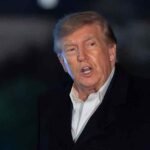
The upcoming summit arrives amid compounding friction between Washington and its European counterparts. U.S. President Donald Trump has repeatedly demanded that European partners sharply increase their domestic defense budgets, arguing that the American administration expects Europe to take primary financial and conventional responsibility for its own continental security.
In light of these shifting Western dynamics, Dzhelialov noted that Ukraine highly values Turkiye’s unique position as a mediator. He confirmed that Kyiv is fully prepared for leader-level peace negotiations with Russia and views Turkiye as the ideal venue for a potential summit, given Ankara’s history of hosting successful diplomatic tracks and its balanced ties with both warring capitals.
With domestic military manufacturing constantly disrupted by relentless Russian missile and drone bombardments, Ukraine is pivoting toward deep industrial integration with Turkiye to scale up its frontline equipment.
Following a strategic meeting between Zelenskyy and Turkish President Recep Tayyip Erdogan in Istanbul in April, Kyiv has submitted a formal defense proposal to Ankara. The pitch outlines plans for the outright sale, collaborative joint production, or comprehensive technology transfer of Ukraine’s combat-tested drone systems, alongside an offer to train Turkish drone operators.
The envoy candidly explained that while Ukraine possesses the advanced engineering, blueprints, and combat-tested technology, Russia’s systematic targeting of Ukrainian industrial infrastructure makes scaled domestic manufacturing incredibly difficult. Turkiye offers the protected, large-scale industrial factories and production capacity needed to rapidly churn out these advanced systems.