







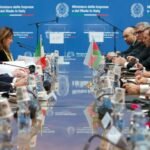









Serbian President Aleksandar Vučić arrived in Beijing on May 24 for a state visit that will last until May 28. The visit is taking place at the invitation of Chinese President Xi Jinping and marks Vučić’s first state visit to China. It comes at a politically sensitive moment for Serbia, which is trying to preserve its European path while deepening cooperation with China and maintaining room for maneuver between competing centers of power.
This visit should not be viewed as a routine diplomatic event. It reflects the broader direction of Serbian foreign policy under Vučić: Belgrade wants to avoid dependence on any single geopolitical bloc. Serbia remains formally committed to European integration, but it is also strengthening ties with China, preserving traditional links with Russia, and trying to use its strategic position in the Balkans to attract investment and diplomatic support from different directions.
For Serbia, China has long ceased to be merely a distant Asian partner. Over the past decade, it has become one of the most important external economic players in the Serbian economy. According to data cited by China Observers from the Statistical Office of the Republic of Serbia, trade in goods between Serbia and China rose from $1.5 billion in 2014 to $6 billion in 2023. This is almost a fourfold increase in less than a decade and shows how rapidly China has expanded its economic presence in Serbia.
However, behind this growth lies a serious structural problem: the relationship remains heavily imbalanced. Serbia imports far more from China than it exports there. In 2023, Serbian exports to China exceeded €1.1 billion, while imports from China reached €4.5 billion. Chinese goods, equipment, vehicles, electronics, industrial components and infrastructure solutions occupy a significant place in the Serbian market, while Serbian exports to China remain more limited and are concentrated mainly in raw materials, agricultural products and selected industrial categories.
After the China-Serbia Free Trade Agreement entered into force on July 1, 2024, Belgrade hoped to improve this balance by gaining broader access to the Chinese market. The agreement is China’s first free trade agreement with a country in Central and Eastern Europe. According to the WTO database, the China-Serbia Free Trade Agreement is in force, with implementation expected to continue until 2038. For Beijing, the deal strengthens China’s economic footprint in the Balkans. For Belgrade, it offers a chance to position Serbia as a special gateway for Chinese economic influence in Europe, even though the country is not yet a member of the European Union.
The agreement provides for tariffs on more than 95% of products to be gradually reduced to zero. It covers almost 20,000 product categories, including agricultural, food, industrial and technological goods. Among Serbian products expected to benefit from better access to the Chinese market are apples, blueberries, dried plums, jams, seeds, beef and some industrial goods. China, in turn, gains broader opportunities to export machinery, equipment, industrial components and finished goods to Serbia.
At first glance, the logic is clear: a relatively small European country receives preferential access to the world’s second-largest economy. In reality, however, the challenge for Serbia is more complicated. To truly benefit from the agreement, Serbian producers must be able to supply the Chinese market in sufficient volume, at competitive prices and with consistent quality. Without that, the agreement may reinforce existing trade asymmetry rather than reduce it.
This is why the political significance of the free trade agreement may currently be even greater than its immediate economic effect. It shows that Beijing is ready to single out Serbia among European countries and build a special format of relations with Belgrade. For Vučić, this is useful both externally and domestically. It allows him to argue that Serbia is not isolated, not dependent only on Brussels, and capable of attracting the attention of one of the world’s strongest economies.
China sees Serbia not only as a market, but also as a production, infrastructure and logistics platform. Chinese companies are already active in Serbian infrastructure, metallurgy, energy, road construction and railway development. One of the most visible symbols of this cooperation is the Belgrade-Budapest railway, which is designed to improve regional connectivity and strengthen Serbia’s role as a transport hub between Central Europe and the Balkans. The project also fits into China’s broader approach to building transport and trade routes across Eurasia.
For Vučić, the Chinese vector is important because it gives Serbia additional leverage in relations with the European Union. Serbia remains a candidate country for EU membership, but the accession process has moved slowly. Brussels expects Belgrade to make progress on rule-of-law reforms, democratic standards, media freedom and the normalization of relations with Kosovo. The EU also expects greater alignment with its foreign policy, especially on Russia. Vučić, however, is trying to demonstrate that Serbia is not a state without alternatives.
This is where China becomes a political resource. Beijing supports the principle of Serbia’s territorial integrity and does not recognize Kosovo’s independence. For Belgrade, this is a matter of fundamental importance. Against the background of constant Western pressure over the Kosovo issue, Chinese support at the UN Security Council and on other international platforms has both symbolic and practical value. Vučić can present China as a major power that respects Serbia’s position on one of its most sensitive national questions.
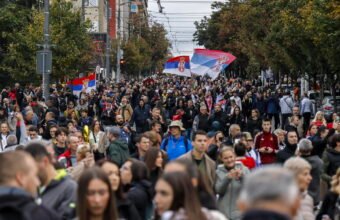
The visit to Beijing is also important in the domestic political context. Serbia has been going through a period of serious political tension, including anti-government protests, criticism of the authorities and calls from opposition forces for early elections. Against this background, a high-level visit to China allows Vučić to shift attention from internal pressure to the international agenda. It helps him reinforce the image of a leader who is received at the highest level by global powers and who can secure investment, diplomatic support and international recognition for Serbia.
***
For China, Serbia also has special significance. It is one of the few countries in Europe where Beijing is not primarily perceived as a strategic threat, but as a major partner. In May 2024, China and Serbia announced the building of a “community with a shared future,” making Serbia the first European country to agree to such a format with China. Beijing also describes Serbia as China’s first comprehensive strategic partner in Central and Eastern Europe. These formulations are not accidental. They show that China views Serbia as one of its closest political and economic partners on the European continent.
But this policy also has a downside. The deeper Serbia becomes integrated into Chinese economic projects, the more questions arise in Brussels and Washington. The European Union and the United States have long viewed China’s growing presence in the Balkans with caution, especially in infrastructure, energy, telecommunications and other strategic sectors. For the West, China in the region is not simply an investor. It is also a geopolitical competitor whose influence may weaken the position of the EU and NATO in Southeast Europe.
Vučić is therefore trying to balance between several centers of power. He is not abandoning Serbia’s European path, but he is also not ready to fully subordinate Serbian foreign policy to Brussels. He is strengthening relations with China, while continuing to rely heavily on European markets. He preserves relations with Russia, while trying to avoid a complete rupture with the West. This balancing act is risky, but it has allowed Serbia to extract benefits from all sides.
This is why the current visit to Beijing matters not only for Serbian-Chinese relations. It reflects a broader trend in international politics: small and medium-sized states are increasingly trying to use rivalry among major powers to protect their own interests. Serbia is acting pragmatically. It receives investment and infrastructure support from China, political backing on Kosovo from China and Russia, and an economic perspective from the European Union. At the same time, Belgrade tries to preserve enough flexibility to avoid being forced into one camp.
The main question now is whether Serbia can turn its Chinese partnership into a real economic advantage, rather than merely a political symbol. The rise in trade from $1.5 billion in 2014 to $6 billion in 2023 is impressive. But the imbalance remains clear. If Serbian exports grow more slowly than imports, the free trade agreement may benefit China more than Serbia. Belgrade needs to use the agreement to expand exports, attract investment into higher-value sectors and strengthen domestic production capacity.
After the free trade agreement entered into force, Serbian exports to China reportedly rose to $1.9 billion, while imports from China increased to $5.5 billion. These figures show that the scale of bilateral trade is growing, but they also confirm that asymmetry remains a central challenge. For Serbia, the key task is not only to trade more with China, but to trade better — with more value-added exports and less dependence on imported Chinese goods and equipment.
If Serbia manages to use the Chinese market for its agricultural, food, metallurgical and industrial products, Vučić’s current visit could become an important stage in strengthening the country’s economic sovereignty. If not, Belgrade may find itself increasingly dependent on Chinese capital, technology and imports, while still facing political pressure from the West and economic constraints at home.
Therefore, Vučić’s trip to China is not simply a diplomatic ceremony. It is a demonstration of Serbia’s foreign policy formula: do not break with Europe, do not abandon Russia, but increasingly rely on China as a strategic partner. For Belgrade, Beijing is becoming a source of investment, a market, a political ally on Kosovo and a counterweight to Western pressure. For China, Serbia is a reliable entry point into the Balkans and a politically friendly partner in Europe.
This is why Vučić’s visit to Beijing should be seen as part of a broader geopolitical game. Serbia is trying to prove that even a relatively small state can pursue an independent line if it knows how to use competition among global centers of power. China, in turn, is showing that its influence in Europe is not limited to relations with large economies. Sometimes it is strategically more valuable to have a reliable partner in a sensitive region such as the Balkans.