

























Ukrainian officials said air defense systems intercepted most of the incoming aerial threats, but several missiles and drones reached their targets, causing damage in multiple locations, News.Az reports.
***
The attack comes as Moscow continues its campaign of long-range strikes while also seeking new ways to counter Ukraine’s military capabilities.
What happened during Russia’s overnight attack on Ukraine?
According to the Ukrainian Air Force, Russia launched a combined missile and drone attack during the night of July 9. The assault involved two Iskander-M ballistic missiles and 94 drones of various types, making it one of the latest large-scale aerial attacks in Russia’s ongoing campaign against Ukraine.
The ballistic missiles were launched from Russian-occupied Crimea, while the drones were deployed from multiple launch sites, including Russia’s Bryansk, Millerovo and Orel regions, as well as Russian-controlled areas in Crimea and the occupied part of Ukraine’s Donetsk region. By using several launch points simultaneously, Russian forces sought to complicate Ukraine’s air defense response and increase the likelihood that some aerial targets would penetrate defensive systems.
Such combined attacks have become a regular feature of the war, as Russia attempts to overwhelm Ukrainian defenses by launching missiles and drones at the same time.
What types of drones did Russia use?
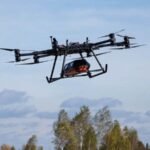
Ukraine said the attack involved a mix of strike drones and decoy unmanned aerial vehicles designed to confuse and exhaust air defense systems.
The assault included Shahed loitering munitions, including newer jet-powered variants believed to be faster and more difficult to intercept than earlier models. Russia also used Gerbera, Italmas and Parodiya drones, which Ukrainian officials describe as decoys intended to imitate attack drones and force defenders to expend valuable interceptor missiles.
Military analysts say Russia has increasingly relied on this tactic, combining genuine attack drones with cheaper decoys in an effort to overload radar systems, electronic warfare equipment and missile batteries.
How many aerial targets did Ukraine intercept?
The Ukrainian Air Force said its air defense forces neutralized 72 aerial targets by 8:30 a.m. local time.
According to the military, the intercepted targets were destroyed or otherwise neutralized using a combination of fighter aircraft, anti-aircraft missile systems, electronic warfare equipment, unmanned aerial vehicle units and mobile fire groups deployed across northern, southern and eastern Ukraine.
Electronic warfare systems played a significant role by disrupting drone navigation and communications, causing some drones to lose control before reaching their intended targets.
The Ukrainian military continues to rely on a layered air defense network that combines Western-supplied systems with domestically produced capabilities to defend cities and critical infrastructure.
Did any missiles or drones reach their targets?
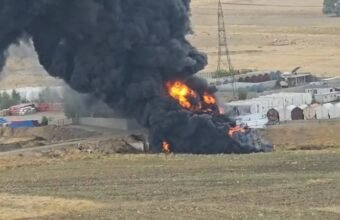
Yes. Although Ukrainian forces intercepted many of the incoming aerial threats, officials confirmed that both Iskander-M ballistic missiles and 19 drones struck targets at 13 separate locations.
In addition, debris from intercepted drones fell at four other locations, illustrating one of the continuing risks associated with large-scale air defense operations. Even when drones are successfully destroyed, falling wreckage can damage buildings, vehicles and infrastructure or pose dangers to civilians.
Authorities have not yet released a comprehensive assessment of casualties or the full extent of the damage caused by the overnight attack.
Which areas were affected?
The Ukrainian Air Force said intercepted drones were brought down over northern, southern and eastern regions of the country, indicating that the attack covered a broad geographical area.
One of the most serious incidents occurred in Kharkiv, Ukraine’s second-largest city, where Russian troops reportedly carried out a double strike on a gas station. A double strike typically involves hitting the same location more than once, sometimes after emergency responders have already arrived, increasing the danger for rescue personnel and civilians.
Officials are continuing to assess damage in the affected areas as emergency services respond to the aftermath of the attacks.
How did Ukraine respond to the attack?
Ukraine activated multiple layers of its integrated air defense system to counter the assault. The response involved Air Force aircraft, anti-aircraft missile units, electronic warfare systems, drone units and mobile fire groups working together to detect, track and destroy incoming missiles and drones.
Military officials warned that the threat had not ended even after the initial wave of attacks. The Ukrainian Air Force stated that several Russian drones remained in Ukrainian airspace and urged residents to continue following air raid alerts and official safety instructions.
Such warnings have become common during large-scale attacks because drones are often launched in multiple waves over several hours.
Why is Russia using combined missile and drone attacks?
Military experts say Russia increasingly combines ballistic missiles, attack drones and decoy drones to maximize pressure on Ukraine’s air defenses.
Ballistic missiles travel at extremely high speeds and are difficult to intercept, while drones can approach targets from different directions over extended periods. Decoy drones further complicate the defensive picture by forcing Ukrainian forces to distinguish between genuine threats and inexpensive imitation targets.
The strategy aims to overwhelm Ukraine’s limited air defense resources, increase the chances that some weapons will penetrate defenses and inflict damage on military facilities, energy infrastructure and other strategic targets.
What is Russia’s reported plan regarding Starlink?
Alongside the overnight attack, Ukrainian officials reported that Russia intends to jam Starlink satellite communications used by Ukrainian forces.
Starlink, operated by SpaceX, has become an essential component of Ukraine’s military communications network since the beginning of Russia’s full-scale invasion. The satellite internet system supports battlefield communications, drone operations, reconnaissance and command coordination, particularly in areas where conventional communications infrastructure has been damaged or destroyed.
If Russia succeeds in disrupting Starlink signals, it could complicate Ukrainian military operations, particularly drone missions that rely on stable communications links. However, neither side has publicly disclosed the effectiveness of any reported jamming efforts.
What does this attack indicate about the current stage of the war?
The latest overnight assault highlights the continuing intensity of the conflict and Russia’s reliance on long-range missile and drone strikes to pressure Ukraine. Large-scale aerial attacks remain a central element of Moscow’s military strategy, particularly as ground fighting continues along several sections of the front line.
For Ukraine, maintaining an effective air defense network remains one of its highest priorities. While intercepting a large proportion of incoming drones demonstrates the capability of Ukrainian defenses, the fact that missiles and some drones still reached their targets underscores the ongoing challenge posed by sustained Russian attacks.
The latest strike also reflects the technological dimension of the conflict, with both sides increasingly relying on drones, electronic warfare and satellite communications as key components of modern warfare.