
























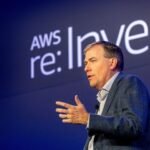


Wang issued the warning on Sunday after an employee at AI company Anthropic announced that he had used its Claude model to solve the Riemann hypothesis, one of the most challenging problems in mathematics, Al Jazeera reported.
Describing the reported breakthrough as unprecedented in terms of intellectual capability, the 29-year-old executive said emerging AI models could become “clearly superhuman” at improving themselves and significantly accelerate research in fields including biology, weapons development and economics.
***
“Superintelligence is arriving,” Wang wrote on X.
“How humanity acts over the next year will have great consequence on what future world we live in.”
Wang, who co-founded Scale AI before joining Meta as its first chief AI officer last year, said humanity would likely struggle to control AI systems capable of unrestricted recursive self-improvement or those that become “1000x smarter and more capable than humans in every field.”
He argued that as scientific and technical barriers to further AI development are overcome, the industry must urgently focus on safety, alignment and security, while considering how the technology should be developed responsibly.
Recursive self-improvement, in which AI systems can enhance their own capabilities without human intervention, has been identified by AI safety advocates as a potential turning point that could make the technology difficult for humans to control.
Despite growing debate in Silicon Valley over the risks of advanced AI, there is no consensus on how to maximise its benefits while preventing potentially catastrophic consequences.
Meta has generally taken a more optimistic stance on AI development than some of its competitors. Chief Executive Mark Zuckerberg has rejected calls from Anthropic CEO Dario Amodei and OpenAI CEO Sam Altman for a coordinated slowdown in development to strengthen safeguards.
In an essay published in August, Zuckerberg criticised what he described as overly pessimistic discussions about AI, arguing that the technology should bring greater prosperity, health and freedom to more people.
In his latest remarks, Wang also criticised what he called “lazy thinking” in the AI industry, warning against treating the arrival of superintelligence as inevitable.
“We should not be okay with a ‘handover’ of society to AI. We should endeavour ourselves to build a technology which delivers a positive future for humanity, where all humans have greater agency and empowerment,” he said.
Wang added that achieving this goal would likely require the entire industry to take a different approach from its current development trajectory.