


























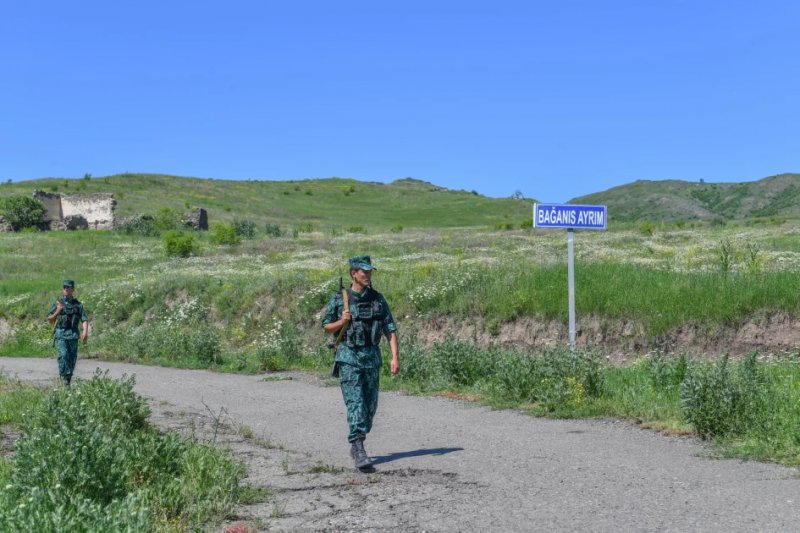
The 24th of May 2026 marks two years since the return of four villages of Azerbaijan’s Gazakh district — Baghanis Ayrim, Ashaghi Askipara, Kheyrimli, and Gizilhajili — to Azerbaijani control. On 24 May 2024, these villages were placed under the control of Azerbaijan’s State Border Service as part of the delimitation and demarcation process of the Azerbaijani–Armenian border.
This event became an important chapter in Azerbaijan’s modern history. It was not merely about the return of several settlements, but also an act of restoring historical justice, a confirmation of Azerbaijan’s sovereign rights over its territories, and the result of the consistent, decisive, and long-term policy pursued by President Ilham Aliyev.
***
What makes this event especially significant is that the four villages were returned without a single shot being fired. After decades of conflict, the displacement of local populations, and the disruption of normal life in border communities, Azerbaijan achieved this result through political and diplomatic means. This once again demonstrated that the strength of modern Azerbaijan lies not only in its armed forces, but also in strong political will, effective diplomacy, and the ability to achieve strategic goals within the framework of international law.
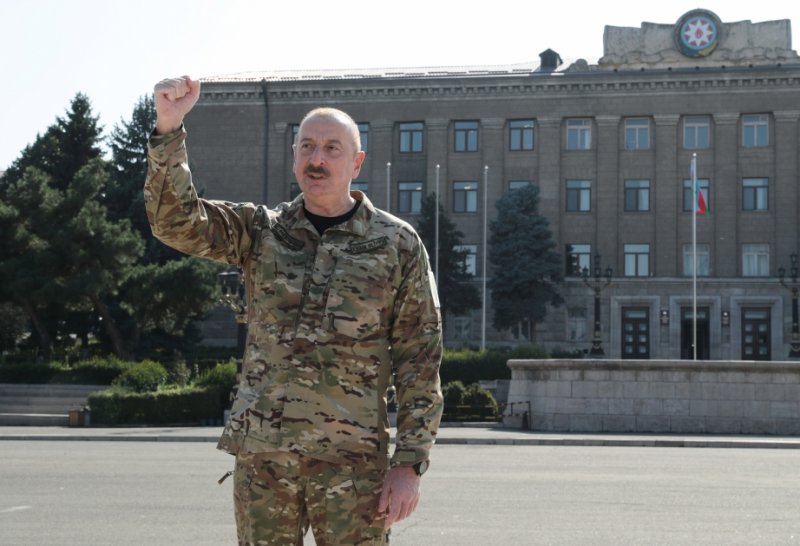
The return of Baghanis Ayrim, Ashaghi Askipara, Kheyrimli, and Gizilhajili was a logical continuation of the new reality shaped by Azerbaijan after the 44-day Patriotic War and the full restoration of the country’s sovereignty. Baku made it clear that the issue of Azerbaijan’s territorial integrity is settled, and that all future processes in the region must be based on respect for sovereignty, internationally recognised borders, and the principles of international law and justice.
The history of these villages is inseparable from the tragic events of the early 1990s. During that period, residents of Azerbaijan’s border districts faced violence, forced displacement, and tragedies that remain part of the nation’s collective memory. Baghanis Ayrim holds a particularly important place in this history. On the night of 23–24 March 1990, the village was attacked; civilians were killed, homes were burned, and it became one of the first settlements in the region to suffer from armed violence.
The tragedy of Baghanis Ayrim was not only the pain of one community, but also a warning of the consequences of hatred, territorial claims, and impunity. That is why, decades later, the return of these lands is seen not only as a political achievement, but also as a moral restoration of justice for the memory of those who were killed, for the families of displaced people, and for those who waited for years to return to their native land.
It is important to emphasise that Azerbaijan has not forgotten, and cannot forget, the crimes committed against civilians. Historical memory is not a call for revenge; it is a foundation for a just peace. Without acknowledging the suffering of victims, respecting established facts, and taking an honest approach to the past, it is impossible to build a stable future in the South Caucasus. For this reason, materials, testimonies, and footage related to the tragedy of Baghanis Ayrim and other incidents affecting the Azerbaijani population in the early 1990s continue to hold public and international significance.
The return of the four Gazakh villages also highlighted a fundamental difference between Azerbaijan’s approach and the former logic of occupation. Azerbaijan does not seek instability and is not interested in renewed conflict. Instead, it promotes a regional order based on recognised borders, responsibility, mutual recognition, and peaceful coexistence. However, this peace cannot be built on forgetting past injustices or disregarding the rights of those who were deprived of access to their land for decades.
This is where the historical role of President Ilham Aliyev becomes particularly evident. In recent years, Azerbaijan has transitioned from a country whose territories were under occupation to a state that has restored its territorial integrity, strengthened its sovereignty, and helped shape a new geopolitical reality in the region. The return of the four Gazakh villages without the use of force further confirmed the effectiveness of this approach.
This event also carries major international significance. It demonstrated that the process of delimitation and demarcation must not be used as a tool for delay or political manipulation. On the contrary, it should serve genuine normalisation, the elimination of the consequences of past conflict, and the establishment of a clear, recognised, and secure border between states. In this sense, the return of the four villages was a practical step towards peace — a just peace, not one achieved at the expense of Azerbaijan’s interests.
For the residents of Gazakh, this day carries special emotional significance. Behind the formal language of delimitation and demarcation lie human destinies — families forced to leave their homes, generations raised with the pain of a lost homeland, and elderly people who spent decades dreaming of seeing justice restored. For them, 24 May is not simply a date on the calendar. It is the day when the state reaffirmed that not a single inch of Azerbaijani land has been forgotten, not a single tragedy has been erased from memory, and not a single right has been lost.
Today, two years after the return of Baghanis Ayrim, Ashaghi Askipara, Kheyrimli, and Gizilhajili, it can be said with confidence that this event has become a symbol of a new era — one in which Azerbaijan no longer seeks justice, but achieves it. It is an era in which Baku’s diplomacy is underpinned by a strong state, national unity, and a clear strategic course.
The return of the four Gazakh villages represents a victory of historical truth over occupation, memory over oblivion, and state will over decades of injustice. It is not a final point, but part of a broader process of restoration, return, and the strengthening of Azerbaijan as a confident, sovereign, and powerful state.
That is why 24 May 2026 should be seen not merely as the anniversary of an administrative event. It is a reminder that justice may be delayed, but it cannot be denied. Azerbaijan has demonstrated that it is capable of restoring what belongs to it — calmly, confidently, consistently, and without compromising its national interests.