






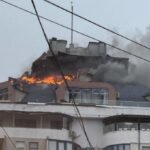















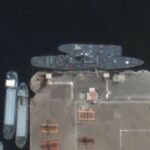





According to Ukraine’s Security Service (SBU), drones struck the Saky airbase for the second time in a week, damaging aircraft shelters and destroying or damaging several combat aircraft. Another strike reportedly hit the Hvardiiske airbase, targeting facilities used to store Iranian-designed Shahed drones and aviation equipment, News.az reports.
***
The attacks are part of Kyiv’s broader strategy of weakening Russia’s ability to launch missile, bomb and drone attacks from occupied Crimea. While the full extent of the damage has yet to be independently verified, the operation highlights Ukraine’s growing capability to strike high-value military targets deep behind the front line.
What happened in the latest Ukrainian strike on Crimea?
According to Ukraine’s Security Service (SBU), drones carried out coordinated strikes against two major Russian military airbases in occupied Crimea—Saky and Hvardiiske. Ukrainian officials said the operation focused on damaging aviation infrastructure that Russia relies on to conduct air operations against Ukraine.
At the Saky airbase, seven aircraft storage hangars were reportedly hit. These shelters housed several types of combat aircraft, including Su-30SM multirole fighters, Su-30 fighters and Su-24 frontline bombers. Preliminary Ukrainian estimates suggest that at least seven aircraft were either destroyed or sustained damage as a result of the attack.
The operation also targeted the Hvardiiske military airbase, where Ukrainian officials said two hangars containing Shahed attack drones and aviation support equipment were struck. Kyiv believes these facilities play a significant role in supporting Russian air operations over southern Ukraine.
Although Russia has not confirmed Ukraine’s assessment of the damage, the reported attacks represent another example of Kyiv’s increasing ability to carry out long-range drone operations against strategically important military installations.
Why is the Saky airbase considered so important?
The Saky airbase is one of Russia’s most valuable military aviation facilities in occupied Crimea. Located on the western coast of the peninsula, it has served as a major operating base for tactical aviation since the beginning of Russia’s full-scale invasion of Ukraine in February 2022.
Aircraft stationed at Saky regularly participate in missions targeting Ukrainian military positions, infrastructure and logistics hubs. Because of its location, the base allows Russian aircraft to reach southern Ukraine within a relatively short flight time while remaining under the protection of Russia’s layered air defense network.
Beyond serving as a launch point for combat aircraft, Saky also functions as a maintenance and logistics center where aircraft can be serviced, refueled and rearmed before carrying out additional missions. This makes the installation considerably more valuable than a simple runway, as it supports the sustained operation of Russia’s tactical aviation forces.
Repeated attacks on such an installation can complicate maintenance schedules, reduce aircraft availability and force Russia to disperse its aircraft to alternative locations farther from the battlefield.
What aircraft were reportedly damaged?
According to Ukrainian officials, the targeted hangars contained several important types of Russian military aircraft.
Among them were Su-30SM multirole fighters, which are capable of carrying out air superiority missions while also striking ground targets with guided missiles and precision bombs. These aircraft have been extensively used throughout the war to escort bombers, patrol contested airspace and launch stand-off weapons against Ukrainian targets.
The hangars also reportedly housed Su-30 fighters and Su-24 frontline bombers. The Su-24 has played a particularly important role in Russia’s air campaign because it can carry a wide variety of guided and unguided munitions. The aircraft has frequently been used to launch glide bombs and precision strikes against military targets.
If Ukraine’s assessment proves accurate, the loss or damage of several aircraft could temporarily reduce Russia’s operational capacity in Crimea. Replacing damaged aircraft is neither simple nor quick, particularly given Western sanctions affecting Russia’s defense industry and the limited production rate of advanced combat aircraft.
Why did Ukraine strike the airbase twice in one week?
The SBU described the latest operation as the second strike against the Saky airbase during the same week and said it forms part of a broader 40-day campaign targeting Russian military infrastructure.
Repeated attacks on the same military installation often serve several strategic purposes. The first strike may damage aircraft, infrastructure or fuel supplies, while follow-up attacks can target repair crews, replacement equipment or aircraft that have returned to the base after initial repairs.
Military planners also recognize that repeated attacks force the defending side to devote additional resources to air defense, engineering work and logistics. Instead of restoring normal operations, commanders may be compelled to relocate aircraft, redistribute maintenance equipment or suspend operations altogether.
Such a strategy aims not only to destroy physical assets but also to create persistent disruption that limits the effectiveness of enemy air operations over an extended period.
Why was the Hvardiiske airbase also targeted?
The Hvardiiske military airbase is another important component of Russia’s aviation network in Crimea. Like Saky, it supports operations conducted by Russian tactical aviation and provides facilities for storing equipment and drones.
According to Ukrainian officials, the latest strike damaged two hangars that contained Shahed drones and aviation equipment. Shahed drones, originally developed in Iran and now widely used by Russia, have become one of Moscow’s primary tools for conducting long-range attacks on Ukrainian cities and infrastructure.
Russia frequently launches large groups of Shahed drones to overwhelm Ukrainian air defenses before following up with cruise or ballistic missile strikes. Destroying drone storage facilities before launches occur is therefore considered a highly effective method of reducing Russia’s strike capability.
If confirmed, damage to drone storage infrastructure could temporarily slow Russian drone operations until replacement equipment is moved into the area.
Why are aircraft hangars valuable military targets?
Aircraft shelters may appear less important than combat aircraft themselves, but military analysts consider them among the highest-value infrastructure targets on an airbase.
Modern hangars protect aircraft from weather, surveillance and attack while also providing secure locations for maintenance, repairs and weapons loading. Damaging these structures can make it significantly more difficult to keep aircraft operational even if the aircraft themselves survive.
Without adequate shelter, aircraft become more vulnerable to follow-up drone strikes, missile attacks and satellite surveillance. Maintenance crews may also struggle to repair aircraft exposed to the elements or lacking specialized equipment housed inside protected facilities.
Consequently, destroying hangars can produce operational effects that last much longer than the initial attack itself.
Why has Crimea become a major focus of Ukrainian strikes?
Although active ground fighting largely takes place elsewhere, Crimea has become one of the most strategically significant regions in the war.
Since Russia annexed the peninsula in 2014, it has transformed Crimea into a heavily militarized hub hosting naval forces, fighter aircraft, missile units, logistics centers and command headquarters. Following the full-scale invasion in 2022, these facilities became essential for supporting Russian operations across southern Ukraine.
Crimea also serves as a logistical bridge between mainland Russia and occupied territories in southern Ukraine. Supplies, personnel and military equipment pass through the peninsula before reaching the front.
By targeting military infrastructure in Crimea, Ukraine seeks to undermine Russia’s ability to sustain operations while demonstrating that even heavily defended rear areas remain vulnerable to long-range drone attacks.
How has Ukraine’s long-range strike capability evolved?
Early in the war, Ukraine’s ability to strike deep inside Russian-controlled territory was relatively limited. Over the past two years, however, Kyiv has significantly expanded its domestic drone industry and improved the range, accuracy and survivability of its long-range unmanned systems.
Rather than relying solely on missiles supplied by Western partners, Ukraine has increasingly used domestically produced drones capable of traveling hundreds of kilometers to attack military airfields, ammunition depots, fuel facilities, command centers and strategic infrastructure.
These operations have become an important component of Ukraine’s military strategy because they force Russia to divert air defense systems away from the battlefield and toward protecting military facilities throughout occupied Crimea and even within Russia itself.
The growing frequency of such attacks indicates that Ukraine intends to maintain pressure on Russian military infrastructure rather than focusing exclusively on frontline combat.
What impact could these strikes have on Russia’s military operations?
The destruction of several aircraft alone is unlikely to dramatically alter the course of the war. However, repeated strikes against aviation infrastructure can gradually erode Russia’s operational capabilities.
Each damaged aircraft requires repair resources, replacement parts and maintenance personnel. Destroyed hangars reduce the efficiency of maintenance operations, while repeated attacks increase the psychological pressure on military personnel stationed at affected bases.
Russia may also decide to relocate aircraft farther from Ukraine to reduce their vulnerability. Although this improves aircraft survivability, it also increases flight times, fuel consumption and logistical complexity while reducing the number of sorties that can be flown each day.
Over time, these cumulative effects can reduce the tempo of Russian air operations and make it more difficult to sustain continuous missile and bombing campaigns.
Have Ukraine’s claims been independently verified?
As with many developments during wartime, independent verification remains limited immediately after the attack. Ukrainian officials have released preliminary assessments indicating that at least seven aircraft were destroyed or damaged, while Russia has not publicly confirmed those figures.
Open-source intelligence analysts will likely examine satellite imagery, commercial photographs and other publicly available information in the coming days to assess the scale of the damage. Previous Ukrainian strikes against Russian military facilities have often been confirmed through satellite imagery after official claims were initially disputed.
Until additional evidence becomes available, the exact extent of the damage should be regarded as preliminary. Nevertheless, the reported operation demonstrates Ukraine’s continuing ability to conduct long-range strikes against some of Russia’s most important military installations in occupied Crimea, reinforcing a campaign aimed at steadily degrading Moscow’s air power rather than seeking a single decisive blow.