

























Research commissioned by the Forests & Finance coalition found that banks extended approximately $595 billion in loans to companies operating in industries associated with forest destruction and ecosystem damage between 2020 and 2025, Reuters reports.
***
The coalition’s annual Banking on Biodiversity Collapse report revealed that $351 billion was directed toward high-risk agricultural commodity companies, while another $244 billion went to mining businesses.
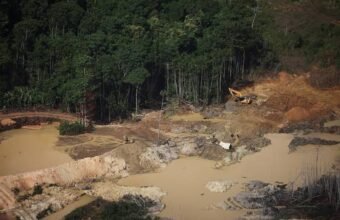
According to the report, these sectors are among the principal drivers of deforestation, land degradation and conflicts affecting local communities across tropical forest regions in South America, Southeast Asia, and Central and West Africa.
Environmental organizations warned that many banks providing substantial financing to high-risk industries have failed to implement adequate safeguards to prevent serious environmental and social harm.
The research also identified a significant increase in financing for mining companies operating in countries with extensive tropical forests.
Annual lending and underwriting for these businesses increased by 55 percent between 2016 and 2025, rising from $23.7 billion to $36.7 billion.
The largest increases were recorded in financing associated with lithium and nickel production.
Meanwhile, annual financing for agricultural commodity industries linked to forest-related risks rose by 71 percent over the same period, climbing from $37.9 billion in 2016 to $64.7 billion in 2025.
Financing for the beef industry increased by more than 50 percent, while funding for soybean production surged by 137 percent and financing for the pulp and paper sector jumped by 157 percent.
Indonesia was identified as a particularly significant destination for financing associated with tropical forest risks.
According to the coalition, banks have provided approximately $67.1 billion to the country’s pulp and palm oil industries since 2020.
The report linked this financing to deforestation and peatland drainage, which have increased the vulnerability of regions such as Kalimantan and Sumatra to wildfires and flooding.
Indonesia is currently experiencing its most severe El Niño-related wildfire season in 11 years, with smoke spreading across parts of Southeast Asia.
The resulting haze has contributed to deteriorating air quality and an increase in respiratory illnesses in neighboring Singapore and Malaysia.
The findings come ahead of a new round of international biodiversity negotiations scheduled to begin in Yerevan, Armenia, on October 19.
The talks are expected to include an assessment of global progress toward conservation targets established for 2030.
Recent research indicates that countries remain significantly behind schedule in meeting those commitments, highlighting continuing challenges in efforts to protect ecosystems and halt biodiversity loss.
The Forests & Finance coalition’s findings underscore concerns over the continued flow of financial resources into industries associated with tropical forest destruction, despite international efforts to strengthen environmental protection and sustainable financing practices.