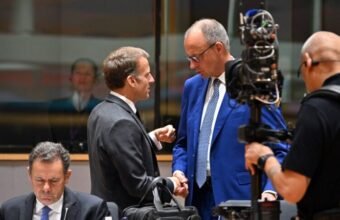



























German Chancellor Friedrich Merz and French President Emmanuel Macron have reportedly approved a deal combining greater flexibility on vehicle emissions targets with stricter requirements to support European-made cars and components, according to the Handelsblatt business newspaper, Anadolu Agency reported.
Under the reported agreement, the EU’s target of reducing carbon dioxide emissions from new cars by 90% would remain in place, but manufacturers would no longer have to offset the remaining 10% through climate-neutral fuels or low-carbon steel.
***
This could allow vehicles with petrol or diesel engines to remain on sale after 2035, provided they meet the applicable emissions limits. Vehicles capable of running exclusively on renewable fuels could also be treated as emission-free where technical restrictions prevent the use of fossil fuels.
The proposed changes would give automakers additional flexibility in meeting emissions targets. Excess emissions recorded in 2030 could be offset by reductions in 2031, while manufacturers could begin accumulating carbon credits in 2029. The calculation of greenhouse gas emissions for plug-in hybrid vehicles would also be more favorable than under the European Commission’s previous plans.
In return for the concessions on climate policy, France secured stronger “Made in EU” requirements. Under the reported deal, purchase incentives and public contracts would favor vehicles manufactured in Europe, while a greater share of batteries and key vehicle components would be required to come from European production.
The agreement would also remove plans to require member states to promote the electrification of large corporate vehicle fleets through mandatory quotas. British-made vehicles could qualify as European if the UK aligns its trade protection measures with EU standards, Handelsblatt reported.
Berlin and Paris intend to push the proposed changes through the Council of the European Union. The reported agreement would still need to be reflected in the relevant EU measures before the new rules could take effect.