
























The defeat of Viktor Orbán in Hungary’s parliamentary elections marks one of the most consequential political developments in Europe in recent years. This was not merely a routine change of government, but a broader reassessment of a political model that, for more than a decade, positioned Hungary as a distinct voice within the European Union—combining national sovereignty, pragmatic diplomacy, and selective confrontation with Brussels.
At first glance, it may appear that Orbán’s foreign policy was the decisive factor behind his loss—his distancing from the European mainstream, prolonged disputes with EU institutions, and efforts to balance relations between the West, Russia, and other global players. However, a closer examination suggests that the primary driver was economic. The erosion of economic stability ultimately undermined the sustainability of his broader political strategy.
It is important to note that Orbán’s foreign policy line had long enjoyed considerable domestic support. His firm stance on illegal migration, criticism of the EU’s economic model, emphasis on energy sovereignty, and relatively cautious approach to the war in Ukraine resonated with a significant portion of Hungarian society. For many voters, Orbán represented a leader willing to challenge dominant narratives and defend national interests.
Beata Zawrzel/Getty Images
Yet this model proved highly dependent on economic performance. As long as the economy maintained relative stability, voters were willing to tolerate political tensions with Brussels. However, once economic growth slowed and access to EU funds became increasingly restricted, public sentiment began to shift.
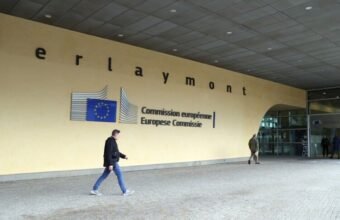
Formally, the European Commission justified the freezing of funds on the grounds of rule-of-law concerns and corruption. In practice, however, the dispute reflected a deeper political and strategic clash. The suspension of financial flows had tangible consequences—slowing growth, weakening investor confidence, and putting pressure on living standards.
This is where the turning point emerged. Hungarian voters in 2026 made a fundamentally pragmatic choice: to prioritize economic stability over political confrontation. In effect, they signaled a willingness to accept compromises with the European Union in exchange for the unblocking of critical funding.
In this context, Orbán’s foreign policy should not be seen as the direct cause of his defeat, but rather as a structural factor that, under economic pressure, worked against him. It is a clear example of how foreign policy becomes politically costly when it is not supported by sustained economic success.
The victory of Peter Magyar and the Tisza party opens a new chapter for Hungary. The country is likely to move away from its role as an outlier within the EU and toward greater alignment with the European mainstream. This does not necessarily imply a complete abandonment of national interests, but it does suggest a shift toward compromise, coordination, and predictability.
Importantly, this transition should not be interpreted as a purely ideological shift. Hungary’s pro-Atlantic orientation was never fundamentally in question. Rather, what is changing is the degree of confrontation with European institutions and the willingness to operate within collective frameworks.
One of the most significant adjustments is likely to occur in Hungary’s policy toward Russia. The new government is expected to adopt a more critical stance, aligning more closely with EU positions—even at the cost of economic drawbacks, particularly in the energy sector, where Hungary has traditionally relied on Russian supplies. This signals a strategic choice: deeper political integration with Europe, even if it comes with short-term economic trade-offs.
At the same time, relations with Azerbaijan are likely to remain pragmatic. Budapest has a clear interest in diversifying its energy sources, and cooperation with Baku fits into that broader strategy. However, Hungary’s participation in wider formats such as the Organization of Turkic States may be reconsidered or scaled back, as the new leadership seeks to avoid policies that could be perceived as diverging from the European line.
AP Photo/Petr David Josek
More broadly, Hungary’s 2026 elections reflect a fundamental dynamic within the European Union. Even governments that pursue independent or unconventional policies ultimately face structural constraints imposed by economic interdependence. Sovereign decision-making has limits—particularly when it leads to measurable economic costs.
Orbán’s defeat, therefore, carries significance beyond Hungary itself. It sends a clear signal to other European states: political autonomy within the EU is viable only as long as it does not undermine economic stability. When that balance is disrupted, voters tend to favor predictability and financial security over political distinctiveness.
In the end, the Hungarian electorate made a rational choice. It opted for economic recovery and institutional normalization, even if that means stepping back from a more independent political path. In today’s Europe, economic pragmatism continues to outweigh political experimentation—and Hungary’s election result is a powerful reminder of that reality.