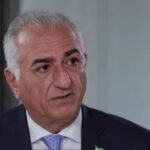



























Speaking in an interview, Pahlavi said any decision on whether Iran should become a monarchy, republic or adopt another form of government must be made by the Iranian people through free and democratic means, News.Az reports.
“My position as a transitional leader is I’m not the destination. I’m a bridge to the destination,” Pahlavi said.
***
The longtime opposition figure stressed that he has deliberately avoided taking a position on what Iran’s eventual political structure should look like, saying his priority is ensuring a fair transition rather than promoting a specific ideology.
“In order to be a neutral arbiter, I’m completely above the fray,” he said. “I’m not taking sides, either for a monarchy or for a republic.”
“My job is to make sure that there’s a healthy debate and at the end, people decide what is it that they actually would prefer to have as the final form.”
Pahlavi also rejected the notion that foreign governments should determine Iran’s leadership or endorse any particular opposition figure.
“This campaign started as a lifetime mission to liberate Iran,” he said. “It has never been about me. It’s been about the Iranian people and their right to self-determination.”
“It is not for a foreign government to decide who or what should be the alternative for Iran. That’s up to the Iranian people. I’ve never asked for any kind of endorsement from any leader or government.”
Seeking to portray Iran’s opposition as increasingly united, Pahlavi said he has worked with people from across the political spectrum, including former ideological opponents.
“In fact, I’ve reached out to people who were at the time my father’s worst enemies. Today, they are fully on board working with me,” he said, citing former Marxists, members of the Tudeh Party, former members of the Fedayeen movement and former members of the Mujahedin-e Khalq (MEK). He said the breadth of that coalition demonstrated “much more unity than ever, certainly inside Iran.”
At the same time, Pahlavi said there were limits to the alliances he was willing to form.
“There are three distinct groups that we simply cannot work with — the pro-regime elements, the MEK, and separatists,” he said.
He said any democratic transition must be grounded in pluralism, tolerance and respect for the rule of law, adding that supporters engaging in abusive or criminal behavior would not have his backing.
“I believe in pluralism. I believe in tolerance. I believe in civility, in debate, in argument, in comportment, respect, and no hostility of any kind or no brutality of any kind,” Pahlavi said.
“Anybody who claims to be my supporter has to understand that these are the guidelines, and anyone who would violate these guidelines, I don’t consider a supporter.”
Pahlavi said Iran’s future should ultimately be decided by its citizens through democratic institutions, arguing that his objective is not to lead the country permanently but to help create the conditions for a peaceful political transition after decades of clerical rule.