


















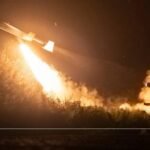
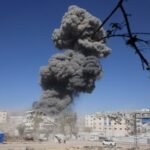

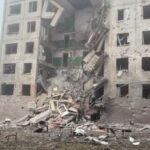



According to the Iranian Army, the attacks targeted facilities used by US forces, including command infrastructure, helicopter parking areas and accommodation buildings. The claims were made through an official military statement carried by Iranian state-affiliated media, News.Az reports.
Table Of Content
***
If confirmed, the alleged strikes would represent another significant escalation in the confrontation between Iran and the United States, extending military activity deeper into the Gulf region. Kuwait hosts several major American military installations that support logistics, intelligence, air operations and regional force deployment. Any attack on these facilities could have implications not only for US-Iran relations but also for the security of Gulf states and the broader Middle East.
At the time of the Iranian announcement, there was no immediate confirmation from US or Kuwaiti authorities regarding the reported attacks or the extent of any damage. As is common during periods of military confrontation, claims made by one side often require independent verification before they can be confirmed.
The latest announcement also illustrates how information warfare has become an important part of modern conflicts, with governments frequently releasing operational claims before independent evidence becomes available. Understanding what Iran claimed, why these bases are important and what the incident could mean for regional security helps place the development in a broader geopolitical context.
What did iran claim happened?
The Iranian Army said it launched one-way attack drones against three US military bases located in Kuwait during the latest phase of Operation Saeqeh. According to the official statement, the operation took place during the early hours of Tuesday morning and targeted facilities that Iran described as playing important roles in US military operations across Southwest Asia.
Iran claimed that drones struck administrative buildings and direction-finding antennae at Camp Arifjan, helicopter parking facilities at Camp Udairi, and a building used to accommodate US military personnel at Ahmad al-Jaber Air Base. Iranian military officials portrayed the strikes as carefully selected attacks against operational military infrastructure rather than civilian targets.
The statement further argued that these installations are key components of the United States’ regional military network. Iranian officials described Camp Arifjan as one of the largest American command and troop deployment centers in the region. Camp Udairi was identified as a base supporting helicopters including Apache, Chinook and Black Hawk aircraft, while Ahmad al-Jaber Air Base was described as an important logistics and surveillance hub.
Iran also framed the operation as a response to what it characterized as repeated American aggression and violations of previous commitments. According to the statement, Tehran believes that the US military presence contributes to regional instability and that military operations against American forces are intended to restore security.
These claims have not been independently verified, and no official assessment of damage or casualties had been released by US or Kuwaiti authorities at the time Iran announced the operation.
Why are these us military bases important?
The three installations identified by Iran occupy significant positions within the United States’ military infrastructure in the Gulf. Kuwait has served for decades as one of Washington’s most important regional partners, hosting thousands of American military personnel and providing logistical support for operations across the Middle East.
Camp Arifjan functions as one of the primary logistics and command centers for US forces operating throughout the region. Military planners use the facility to coordinate troop movements, supply chains and operational planning. Because of its strategic role, it has become one of the best-known American military installations in Kuwait.
Camp Udairi is primarily associated with military training activities and aviation support. According to Iran’s statement, the base hosts helicopters used for transport, reconnaissance and combat operations. Aircraft such as Apache attack helicopters and Chinook transport helicopters play critical roles in supporting military missions throughout the region.
Ahmad al-Jaber Air Base has long been considered an important aviation facility supporting coalition operations. It provides infrastructure for aircraft involved in logistics, intelligence gathering and surveillance while also supporting broader regional security missions.
The concentration of these facilities in Kuwait reflects the country’s geographic importance. Located near Iraq, Saudi Arabia and the northern Gulf, Kuwait provides the United States with rapid access to multiple operational theaters. Any disruption affecting these installations could potentially influence logistics, force deployment and regional military planning, although the actual operational impact would depend on the extent of any verified damage.
Why is kuwait strategically important for the united states?
Kuwait occupies a central position in American military strategy for the Middle East. Since the 1991 Gulf War, the country has developed into one of Washington’s closest regional defense partners, allowing US forces to maintain equipment, personnel and logistical networks capable of responding rapidly to regional crises.
Unlike some military deployments focused primarily on combat operations, many US facilities in Kuwait support transportation, maintenance, intelligence, communications and supply functions. These activities ensure that American forces operating elsewhere in the Middle East can receive equipment, ammunition, medical support and personnel when needed.
Kuwait’s location also makes it strategically valuable. It borders Iraq, sits close to Saudi Arabia and lies near the northern Gulf, allowing military planners to support operations across multiple countries without maintaining identical infrastructure in every location. During previous conflicts in Iraq and against ISIS, Kuwait served as one of the principal staging grounds for coalition operations.
The country’s relatively stable political environment has further strengthened its importance. Long-standing defense cooperation agreements have enabled the United States to maintain a sustained military presence while conducting joint exercises with Kuwaiti forces.
Because of this strategic role, any reported attack involving US military facilities in Kuwait immediately attracts international attention. Even if operational damage proves limited, such incidents can affect regional security perceptions, military planning and diplomatic relations among countries across the Gulf.
Why are iran and the united states in conflict?
The confrontation between Iran and the United States has developed over several decades through political, military and economic disputes. Relations deteriorated sharply following the 1979 Iranian Revolution, after which diplomatic ties were severed and numerous sanctions were imposed.
Since then, disagreements have expanded to include Iran’s nuclear program, regional influence, ballistic missile development and support for armed groups operating across the Middle East. The United States argues that Iran’s activities threaten regional stability, while Tehran maintains that it is defending its national security against foreign military pressure.
Military tensions have increased periodically through attacks on military facilities, maritime incidents in the Gulf, strikes involving regional proxy groups and targeted operations conducted by both sides. Although neither government has sought a full-scale conventional war, both have repeatedly engaged in actions designed to deter or pressure the other.
Iran frequently describes its military operations as responses to American actions, while Washington generally characterizes its military presence as necessary for protecting allies, ensuring freedom of navigation and maintaining regional stability. These competing narratives contribute to continuing tensions that periodically produce military incidents similar to the latest Iranian claims.
As long as broader disputes remain unresolved, the risk of further confrontations involving US forces stationed throughout the Middle East is likely to persist.
What could the latest claims mean for regional security?
If independently confirmed, the reported drone strikes would represent another escalation in an already fragile regional security environment. Even limited attacks on military facilities can influence diplomatic relations, military readiness and strategic calculations across the Gulf.
One immediate consequence could be increased security measures at US military installations throughout the region. Military commanders often review air defense systems, surveillance capabilities and force protection procedures whenever new threats emerge. Regional partners may also reassess their own security arrangements in response to evolving risks.
Diplomatically, the incident could further complicate already strained relations between Washington and Tehran. Future responses would depend heavily on whether independent investigations confirm the attacks, the extent of any damage, and whether casualties occurred. Governments generally avoid immediate conclusions until operational assessments have been completed.
The development also highlights the growing importance of drones in modern warfare. Compared with conventional aircraft or ballistic missiles, one-way attack drones can be deployed at relatively low cost while presenting significant challenges for air defense systems. As a result, drone operations have become an increasingly common feature of conflicts across the Middle East.
Ultimately, the broader significance of Iran’s announcement will depend on independent verification and subsequent political responses. Until additional information becomes available, the reported operation remains an Iranian claim that has not been officially confirmed by either the United States or Kuwait.