



















The remarks reflect a significant hardening of Iran’s public position following renewed military exchanges between the two countries, News.Az reports.
***
While the statements represent Iran’s official rhetoric, they also underline growing concerns that the confrontation could expand beyond direct U.S.-Iran hostilities and involve additional countries across the Middle East.
Who made the warning and what did he say?
The warning was issued by Mohsen Rezaei, a senior military adviser to Iran’s Supreme Leader and a longtime figure within Iran’s security establishment. Speaking to Iran’s judiciary-affiliated Mizan News Agency, Rezaei said Tehran would fundamentally change its military strategy if U.S. attacks continued over the next several days.
According to Rezaei, Iran would move beyond what he described as deterrence and retaliation and enter a phase of “offensive operations and total destruction.” He also warned that U.S. military bases and personnel located outside Iran could become direct targets if military operations against Iranian territory continued.
His remarks represent one of the strongest public statements by an Iranian official since the latest escalation began. Although Iranian officials have previously threatened retaliation against U.S. forces, Rezaei suggested that Tehran is now considering a broader military response rather than limiting itself to proportional counterstrikes.
Such statements are widely viewed as both military signaling and political messaging intended to influence the calculations of Washington and regional governments hosting American military forces.
Why does Iran say its strategy has changed?
Rezaei argued that Iran had previously exercised restraint to prevent a wider regional conflict despite ongoing tensions with the United States. According to his account, Tehran deliberately avoided targeting certain U.S. military facilities during earlier rounds of fighting in an effort to keep the confrontation from expanding.
He claimed that recent U.S. military actions had fundamentally altered Iran’s calculations, leading the country to abandon what he described as its previous strategy of combining military pressure with diplomatic negotiations.
According to Rezaei, Iran’s approach is now based on deterrence, decisive retaliation and what he called an “eye-for-an-eye” response to future attacks. He suggested that continued U.S. military operations would prompt increasingly forceful Iranian responses rather than renewed diplomatic engagement.
While these statements reflect Iran’s official position, analysts note that governments often use strong public rhetoric during periods of military confrontation both to deter adversaries and reassure domestic audiences. Whether such declarations translate into expanded military operations depends on political and strategic decisions that may evolve as the conflict develops.
Why does Iran say negotiations have ended?
Rezaei declared that Tehran’s policy of pursuing both military confrontation and negotiations had effectively come to an end. He accused the United States of undermining previous diplomatic understandings and argued that Washington could no longer be considered a reliable negotiating partner.
Among his allegations, Rezaei claimed that the United States had violated the Islamabad memorandum of understanding by interfering in regional ceasefire arrangements, encouraging shipping through the Strait of Hormuz outside Iran’s supervision and conducting attacks on Iranian territory.
According to Rezaei, these actions effectively invalidated the previous framework for dialogue between the two countries. He also accused Washington of attempting to use negotiations as a means of imposing a new agreement favorable to American interests.
The United States has not publicly endorsed these characterizations. As with many diplomatic disputes, both governments present sharply different interpretations regarding the status of previous understandings and responsibility for renewed hostilities.
The breakdown of negotiations increases uncertainty because diplomatic channels often play an important role in preventing military escalation during periods of crisis.
Why are U.S. military bases in neighboring countries being mentioned?
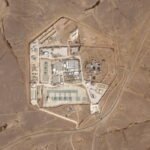
Rezaei specifically warned that U.S. military facilities and personnel located beyond Iran’s borders could become targets if American attacks continue. This statement reflects the broad network of U.S. military installations across the Middle East, including bases in Gulf states and Jordan.
Several regional countries host American forces under long-standing defense cooperation agreements. These facilities support intelligence gathering, logistics, air operations and regional security missions. As a result, they could become increasingly important if the confrontation between Washington and Tehran expands.
At the same time, Rezaei called on the governments of Kuwait, Jordan, Qatar and the United Arab Emirates to prevent further U.S. and Israeli military operations from their territories. Such appeals place additional diplomatic pressure on countries seeking to maintain security partnerships with the United States while avoiding direct involvement in regional conflicts.
None of the governments mentioned by Rezaei immediately responded publicly to his remarks.
What could this mean for the wider Middle East?
Rezaei’s warning highlights growing concerns that the conflict could spread beyond direct exchanges between the United States and Iran. If military operations increasingly target regional bases or involve additional countries, the confrontation could become considerably more difficult to contain.
The Middle East hosts numerous strategic military facilities, energy infrastructure and major international shipping routes. Any expansion of hostilities could therefore affect regional security, commercial aviation, maritime transport and global energy markets.
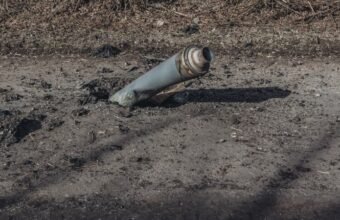
Although Rezaei stated that Iran possesses the capability to launch large numbers of missiles and drones, he also emphasized that such weapons would be used according to a broader military strategy rather than indiscriminately. This suggests that Tehran continues to frame its actions as part of a calculated response rather than immediate escalation.
For now, Rezaei’s remarks remain political and military warnings rather than confirmation of imminent operations. Whether the situation escalates further will largely depend on developments in the coming days, including any additional military actions, diplomatic initiatives and responses from regional governments.